
By: Clemence Velon-Bazzana, Communication Associate
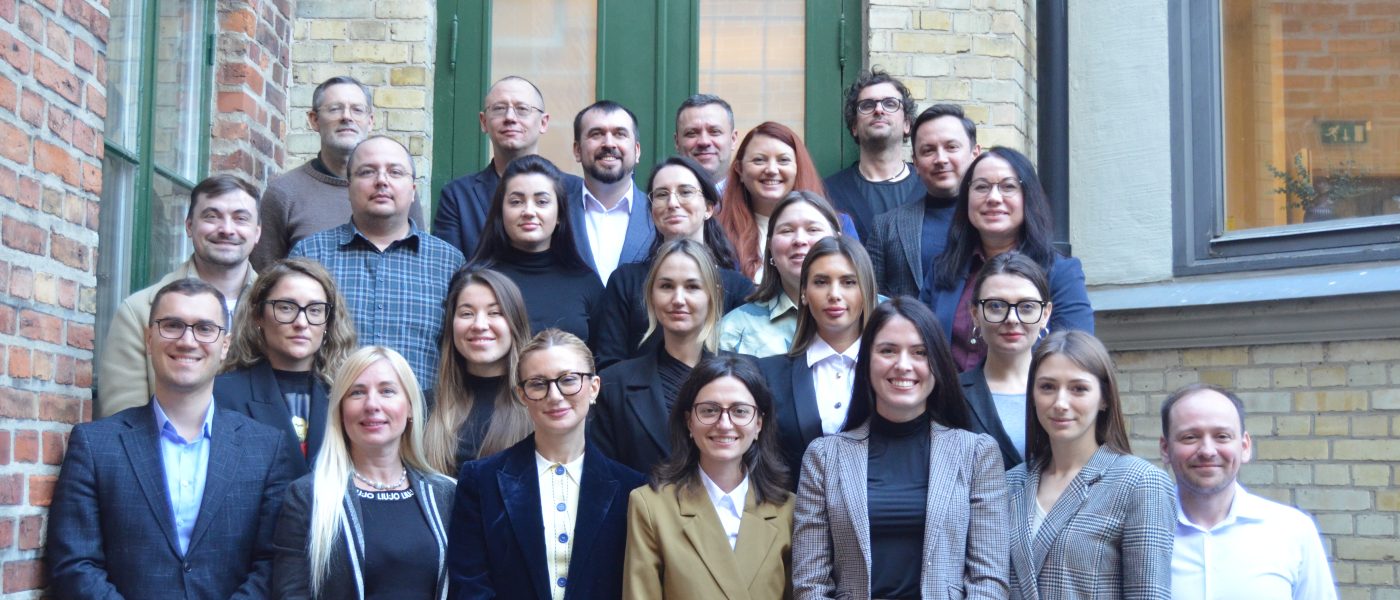
The Raoul Wallenberg Institute brought together legal professionals from diverse backgrounds, including judges, prosecutors, attorneys, and other practitioners from Ukraine and Moldova for a dynamic final workshop in Lund, Sweden from 30 March to 1 April, focusing on strengthening the links between anti-corruption efforts and human rights. This final workshop of our ACT Programme provided a platform for participants to share expertise, develop practical tools, and explore solutions against corruption aligned with EU standards.
Understanding corruption through legal analysis and practical solutions
The workshop opened with two expert-led sessions on the topic: “Multi-disciplinary Approaches and Theoretical Perspectives on (Anti-)Corruption”, by Rustam Urinboyev, Associate Professor in the Department of Sociology of Law at Lund University and “Anti-corruption and Human Rights in the Context of Sweden” by Victoria von Uexküll, Secretary General at the Swedish Anti-Corruption Institute.
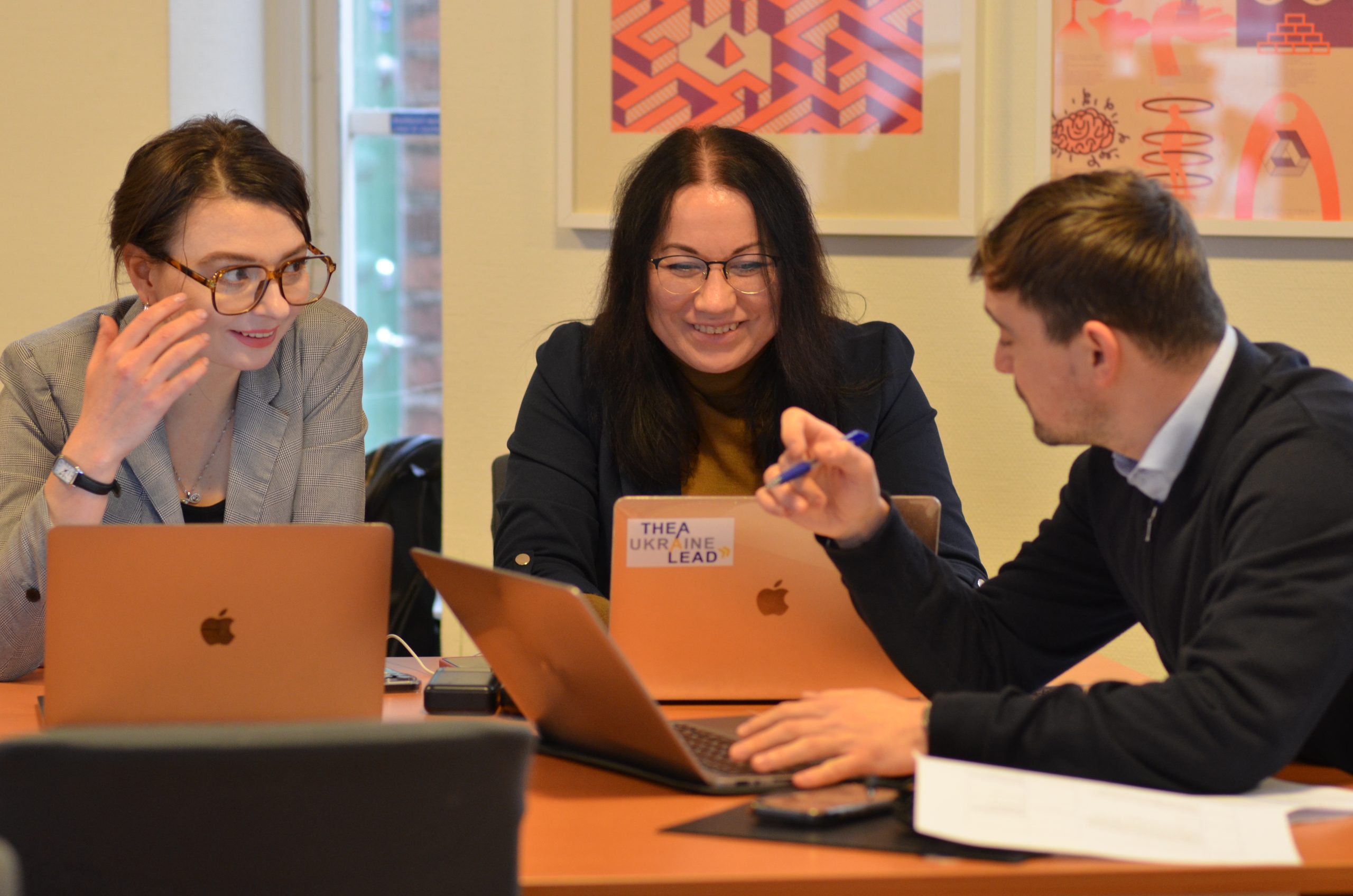
Throughout the programme, participants were guided by mentors, Dr. Raimundas Kalesnykas of Turiba University, Latvia and National Anti-Corruption Association, Lithuania, Morten Koch Andersen of RWI, Ketevan Bolkvadze of Lund University, Sweden, and Juanita Olaya Garcia, an independent expert, to help participants develop practical solutions addressing corruption risks in their respective contexts. Participants’ final group products were presented and discussed during the workshop covering the following topics:
- “Managing Assessed Corruption Risks in the Field of International Assistance for EU Candidate Countries: Comparative Insights from Ukraine and Moldova” by Nataliia Shpak, Artem Ripenko Daria Arman, Marin Chihai, Alina Adelshyna, Dmytro Vozniuk, Armen Oganesean, Victoria Butușanu
- “Conflict of interest – Training syllabus model” by Daria Bulgakova, Oleksiy Kravchuk, Andrei Nasu, Dolores Sanduta, Alexandru Dragulean, Elena Podoleanu, Cristina Troianovschi
- “Compliance lessons for the public sector: a step-by-step guide for Ukraine and Moldova” by Nataliia Smetanina, Maria Gogu, Oleksandr Kurilets, Iuliia Paskevska
- “Youth Leaders Fighting the Culture of Corruption” by Diana Panov, Olena Ladniak, Vasile Buzu, Victor Cimbir, Marcel Chetrari and Viorica Ursu
“The combination of analytics, practical experience and international dialogue contributed to the search for solutions that can actually reduce corruption risks. The comparative approach ensured the formation of more coordinated and effective solutions that meet EU standards and the needs of both countries.” – Nataliia Shpak, Head of the Department of International Activities at Alfred Nobel University, Dnipro, ACT participant from Ukraine
Reflections and takeaways
A central takeaway from the programme was the recognition that corruption is not only a governance issue, but also a human rights concern. By bringing together legal professionals from diverse background, including judges, prosecutors, attorneys, and other practitioners, this continuous, multidisciplinary exchange not only enriched the quality of their outputs but also demonstrated the value of long-term collaboration in addressing complex corruption challenges through a shared human rights lens.
“The ACT Programme was really important for Ukrainian and Moldovan lawyers on the connection of human rights and corruption combating. I am sure that important concepts and ideas obtained during the programme will help to improve the professional skills of many legal professionals from our countries who work in the judiciary, in the sphere of anti-corruption and protection of human rights.” – Oleksiy Kravchuk, Judge of High Anti-Corruption Court, Dr.Hab., Professor, ACT participant from Ukraine

The workshop also provided direct insights into Sweden’s judicial and institutional practices. A presentation led by the representative of the Swedish International Development Cooperation Agency (Sida), helped participants to better understand the role of development cooperation in supporting anti-corruption reforms and efforts. Halyna Kokhan, RWI UkraineProgramme Officer, also presented international anti-corruption standards in the context of EU integration, emphasising alignment with the rule of law principles, institutional capacity, and systemic reforms as key to achieving sustainable results. Finally, Fredrik Bohlin, judge at Ystad district court and Anna Tengberg, judge at Malmö district court, gave a presentation on the work on ethical integrity considerations, independence and accountability in the Swedish Courts.
Through all expert sessions and peer discussions, participants explored how integrating human rights principles into anti-corruption frameworks can lead to more inclusive and sustainable reforms. These exchanges reinforced the importance of aligning national reforms with broader European frameworks, an essential step for both Ukraine and Moldova in their EU accession processes.
Why does it matter?
Beyond technical knowledge, participants highlighted the importance of shared values in driving institutional reform:
“In these difficult times, being in Sweden and meeting professionals, professors, and experts who truly stand for the rule of law, integrity, and ethical behaviour gives me hope. It gives us hope that we are still living in a world where values matter; that fairness, responsibility, and honesty are not lost. It’s a reminder that this world still has a chance – not just to survive, but to remain humane, just, and grounded on the principles that truly matter.” – Elena Podoleanu, Chief of Staff, Office of the Minister of Education and Research, ACT participant from Moldova

The ACT Programme plays an important role in supporting Ukraine and Moldova at a pivotal moment. Implemented by RWI in partnership with the Human Rights Institute of the Ukrainian Bar Association and Action for Justice, and funded by the Swedish Institute (SI), it aims to equip legal professionals with practical skills in terms of practical solutions development, contribute to stronger and more transparent institutions, increase public trust in governance, support progress toward EU integration and create more just and accountable societies.
“Participating in the workshop at the Raoul Wallenberg Institute was a valuable opportunity to engage with young leaders from Ukraine and Moldova alongside leading international experts. Together, we explored real challenges, identified innovative approaches, and practical action plans to strengthen the prevention and fight against corruption for a more just society.” – Armen Oganesean, Prosecutor, General Prosecutor’s Office, PhD, ACT participant from Moldova
As participants return to their respective institutions, the impact of the workshop is expected to extend far beyond Lund, translating ideas into changes that address corruption at its roots.


