
By: Tatsiana Rahozina, Anna Pedash and Cornelia Walles
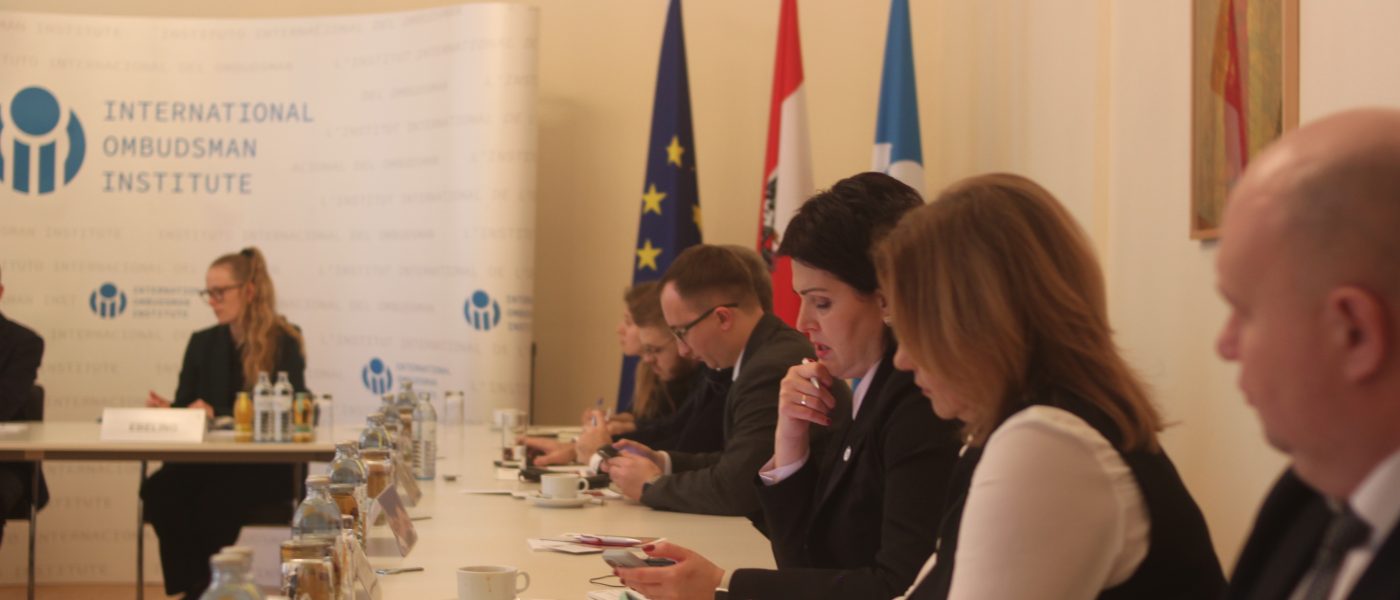
A meaningful and productive week in Austria has come to an end, marking an important step in strengthening the Ukrainian Parliament Commissioner for Human Rights (UPCHR) with practical insights into international and European human rights standards.
The study visit took place within RWI’s programme “Human Rights Infrastructure for Ukraine 2025-2027” (HRIU), funded by Sida. Throughout the week, the delegation, consisting of the UPCHR representatives from 10 regions of Ukraine and the UPCHR Secretariat, took part in exchanges, and in-depth discussions on topics such as human rights protection and implementation at the local level, the rule of law, and public sector reform.
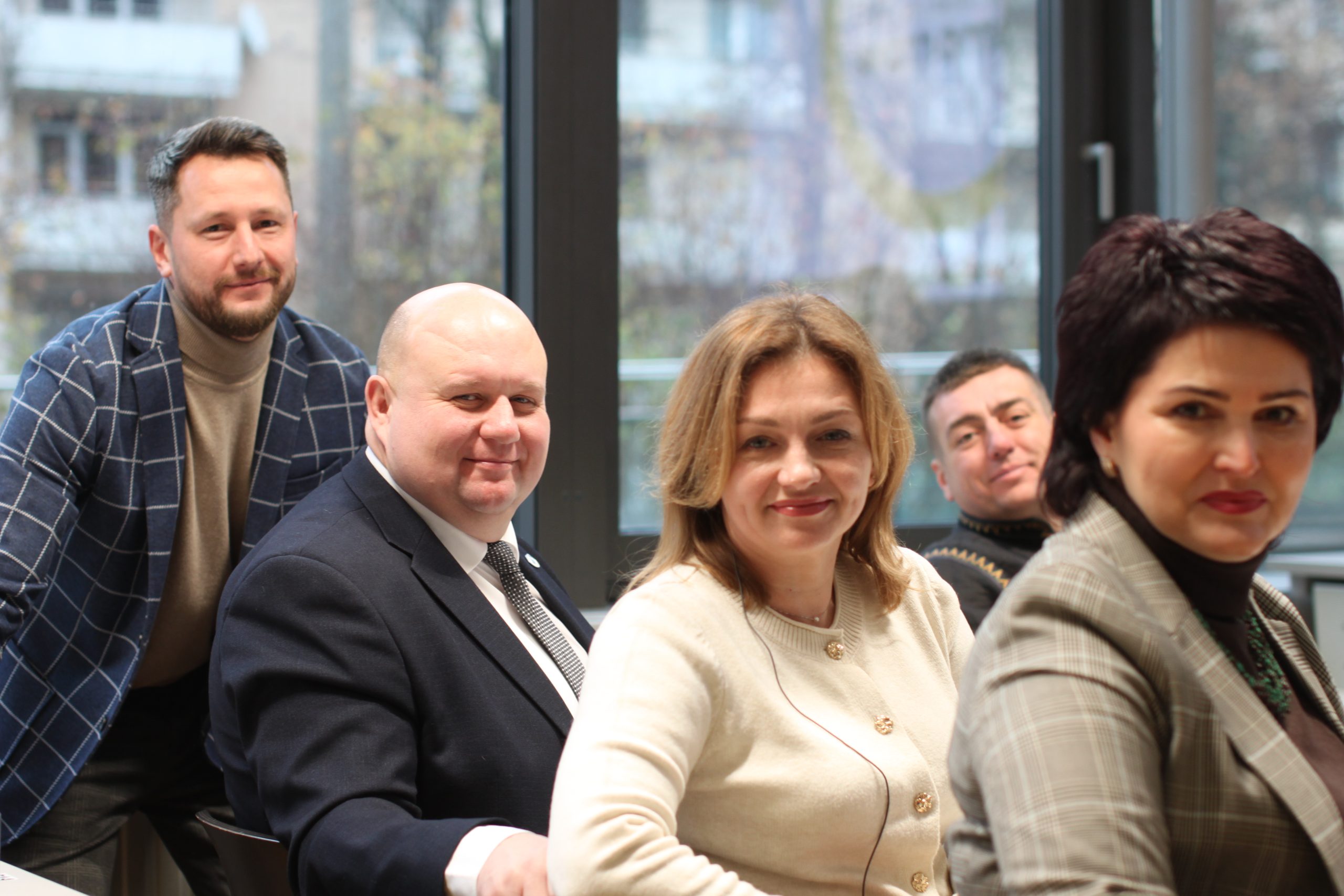
Verveiko Ivan – Head of the Secretariat of the Ukrainian Parliament Commissioner for Human Rights, shared his reflections on the Study visit:
“It is truly a very interesting visit to Austria, as we have the opportunity to see how the Austrian Ombudsman Board actually operates in practice. We are able to understand where our institutions are similar, how our national human rights institutions align, and at the same time, how significant the challenges are that our country faces in protecting human rights during the war. This is probably one of the most difficult tasks imaginable, but it seems clear that we will definitely draw valuable lessons from Austria’s experience that we can apply at home. For example, I really liked the “four-eyes principle” — conducting visits to places of deprivation of liberty with four people. It sounded powerful and convincing, because in Ukraine, we do conduct monitoring visits, we modernise our approaches, we introduce digitalisation, but the experience of international colleagues who have stood guard over human rights for generations is a meaningful contribution to shaping our professional subculture, so to say.”
Daily Recap
Day 1 began in Graz with a visit to the university of Graz, where members of the delegation had an opportunity to learn about the city’s Human Rights Advisory Board, the Austrian National Preventive Mechanism and initiatives from the Chair in Human Rights and Human Security. Participants gained insights into one of the models of human rights monitoring at the local level as exemplified by the Human Rights Advisory Board of the city of Graz.
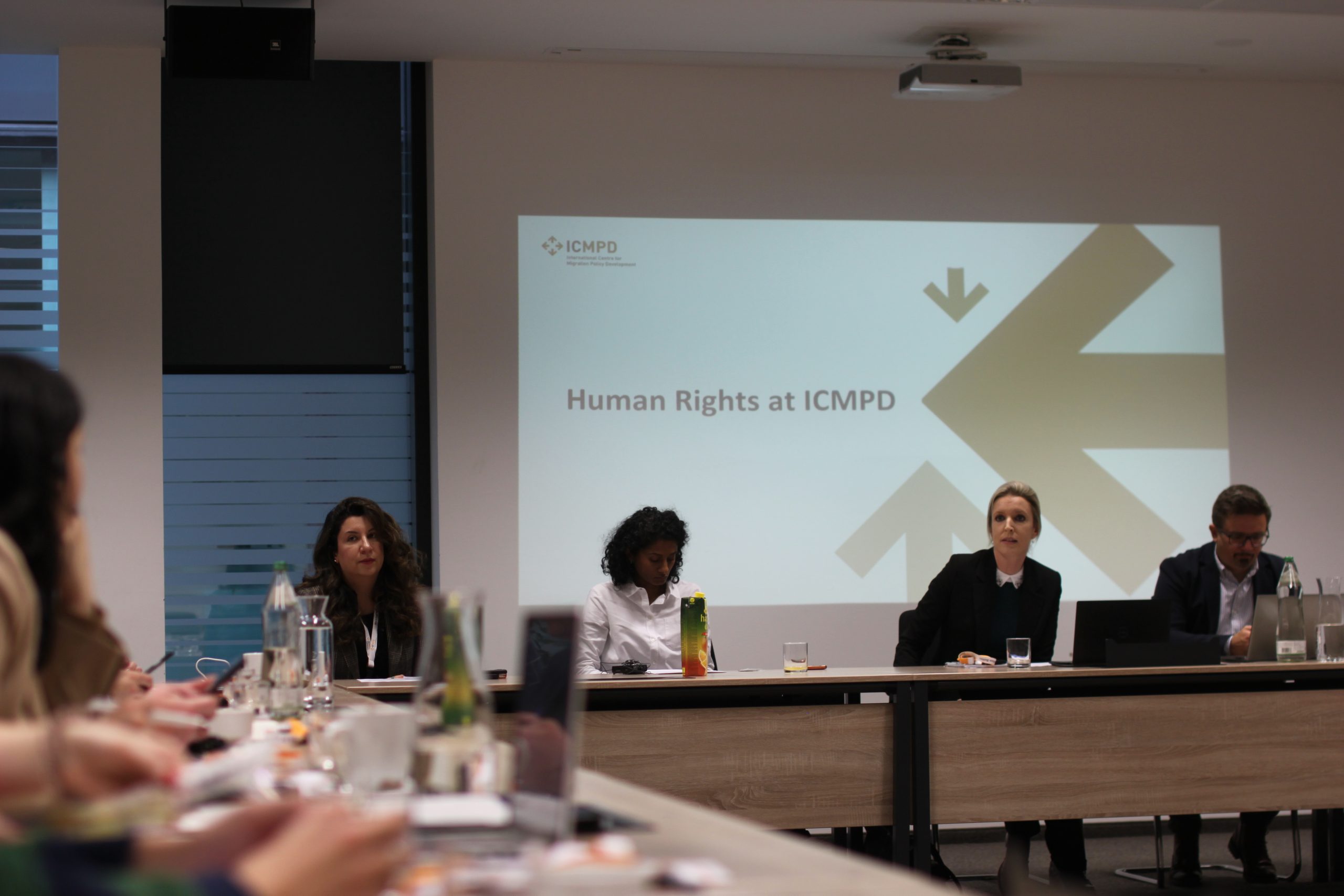
Day 2 included a study visit to the International Centre for Migration Policy Development (ICMPD) where members of the UPCHR were introduced to the ICMPD’s work in Ukraine and with Ukrainian diaspora, through not least Ukrainian Consultation Centres which provide persons fleeing the war in Ukraine with accurate and timely information of safe and orderly migration in the EU Member States and provide in-person (as well as online/phone) consultations on a variety of topics related to their status under temporary protection, residence and potential return home. Moreover, colleagues at ICMPD shared insights on how ICMPD integrates HRBA in their work, as well as findings of the recent qualitative and quantitative studies concerning Ukrainians in Austria.
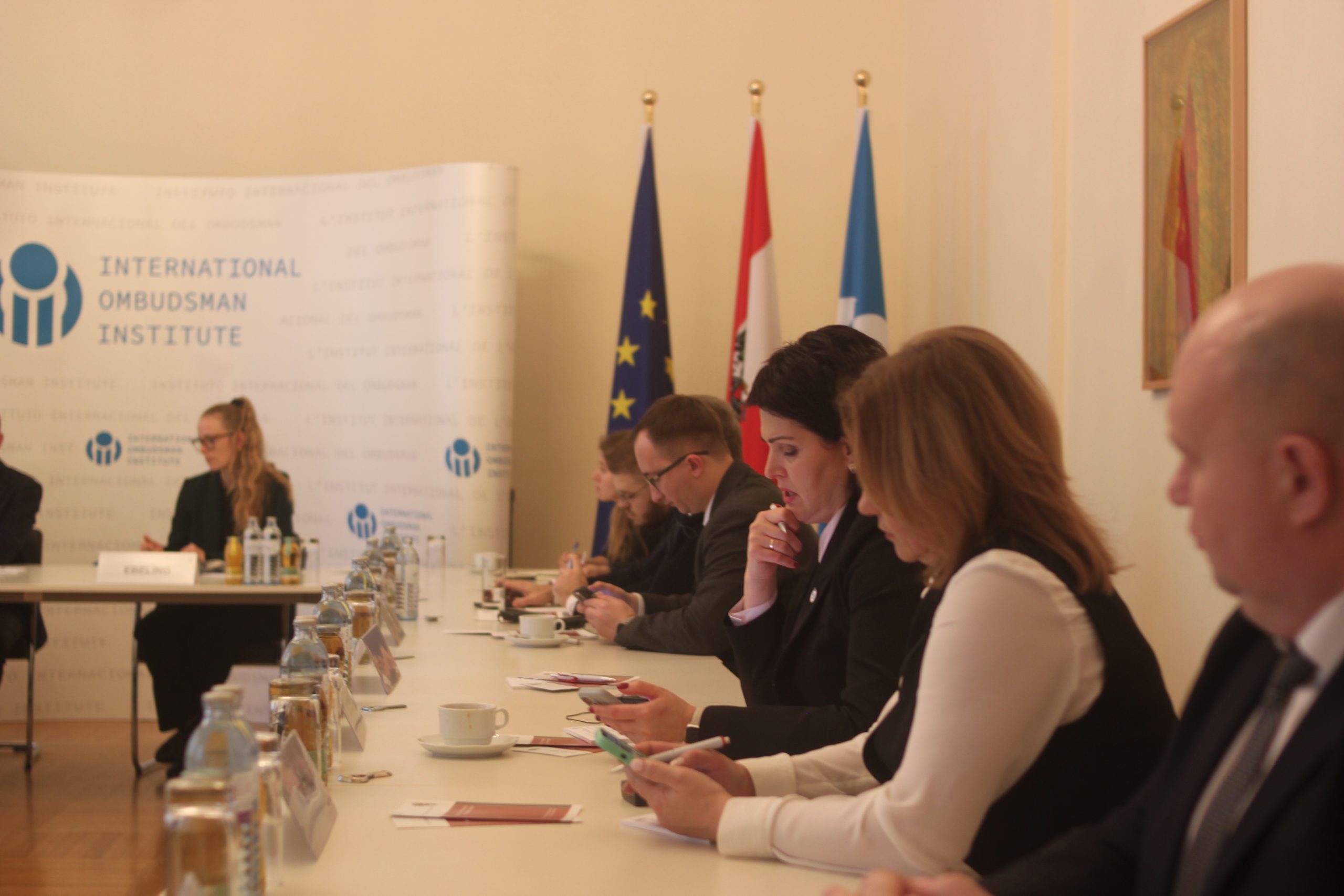
On the second day of the study visit, the UPCHR representatives also visited the City of Vienna’s Human Rights Office where Vienna’s Human Rights Commissioner held an insightful presentation on the mandate of her office grounded in the Declaration “Vienna – the City of Human Rights” and the linkages between the office and other institutions in the human rights protection infrastructure of Austria. Colleagues at the City of Vienna’s Human Rights Office also shared how the city of Vienna implements human rights at the city level, but also the level of districts and neighborhoods, and works with issues such as digital rights of children.
On the final day, the Ludwig Boltzmann Institute of Fundamental and Human Rights (LBI-GMR) hosted a session on their work related to human rights at the local level, equality and non-discrimination, rule of law and public sector reform. Colleagues at LBI-GMR shared how their work contributes to translating scientific research into practice through recommendations, legislation drafting, capacity building, and stakeholder cooperation.
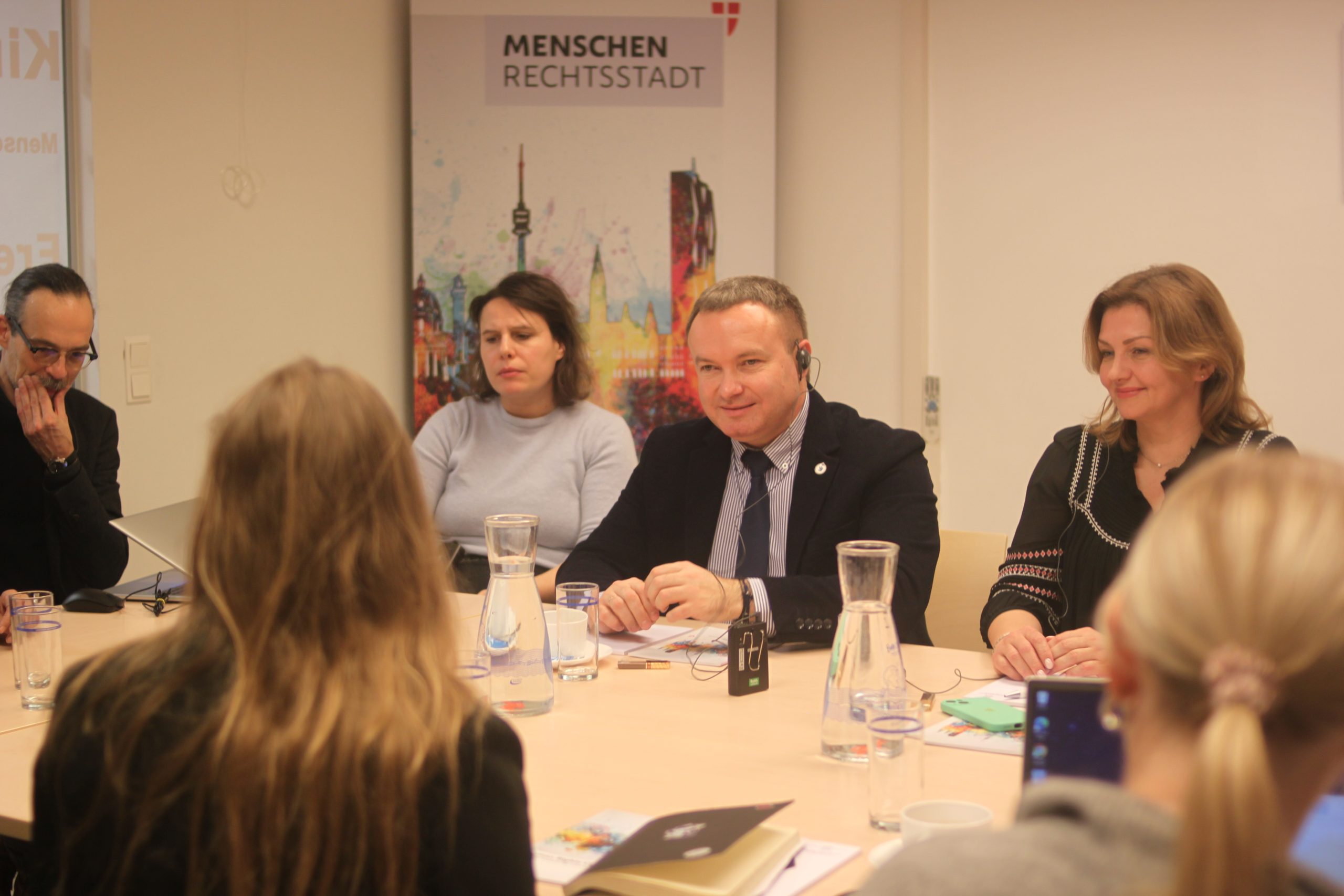
The last meeting of the visit was held with the Austrian Ombudsman Board (Volksanwaltschaft). The meeting started with the representative of the Austrian Ombudsman Board sharing insights on state party reporting to the UN human rights bodies and the procedures for national human rights institutions to submit alternative reports. During the meeting, the UPCHR representatives also learned about how the Austrian Ombudsman Board works with raising awareness and enhancing the trust in their institution so that more individuals reach them
Each meeting also included exchanges between the representatives of the UPCHR and Austrian institutions and organisations. Representing 10 regions of Ukraine, including occupied and frontline ones, delegation members shared about regional challenges specific to their region and also common challenges and problems they face in their human rights protection work due to the ongoing war. Rights of veterans and their families, rights of IDPs, rights of children, rights of national minorities, are some of the highly relevant areas of the UPCHR’s representatives’ everyday work, and about which they shared with Austrian colleagues.
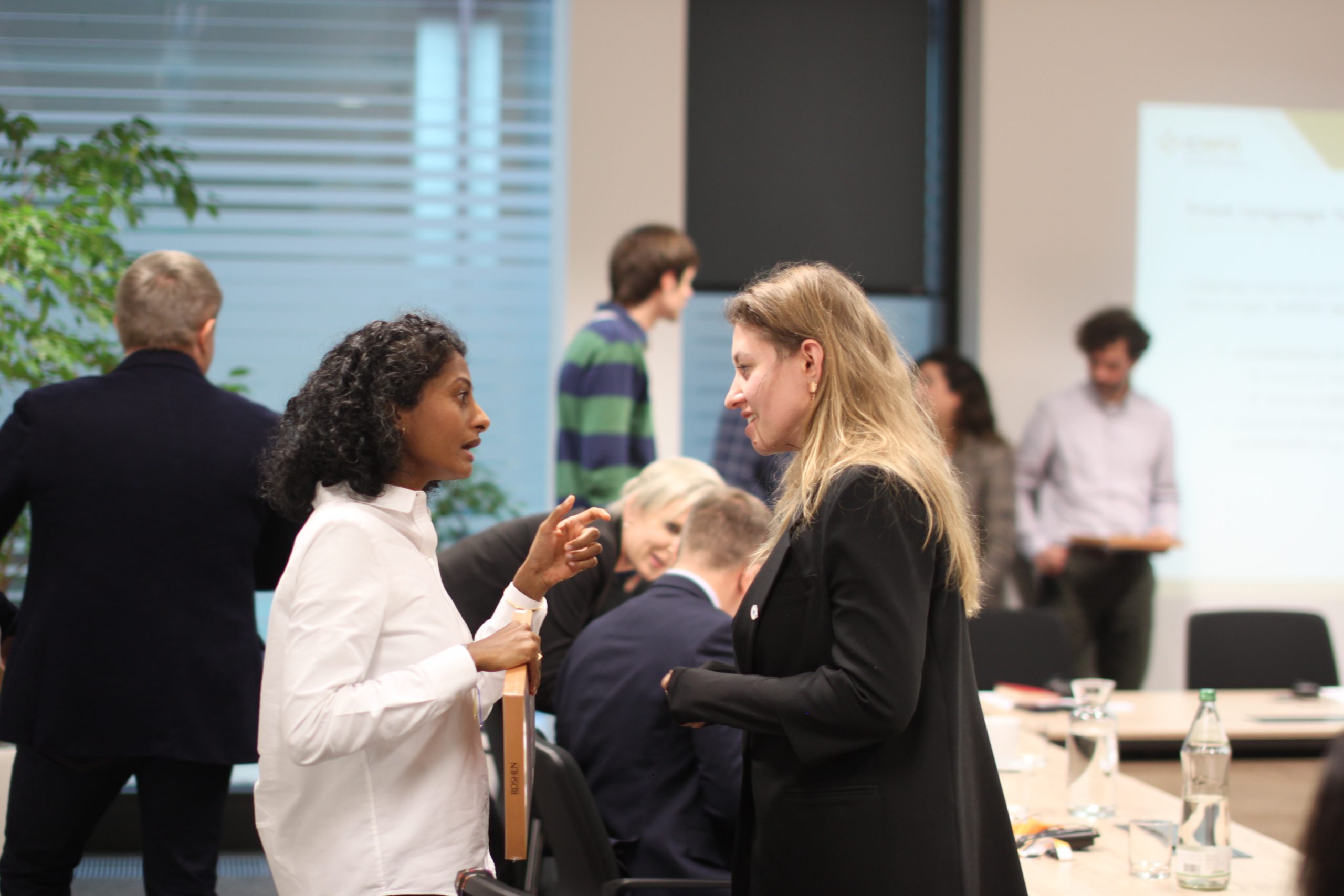
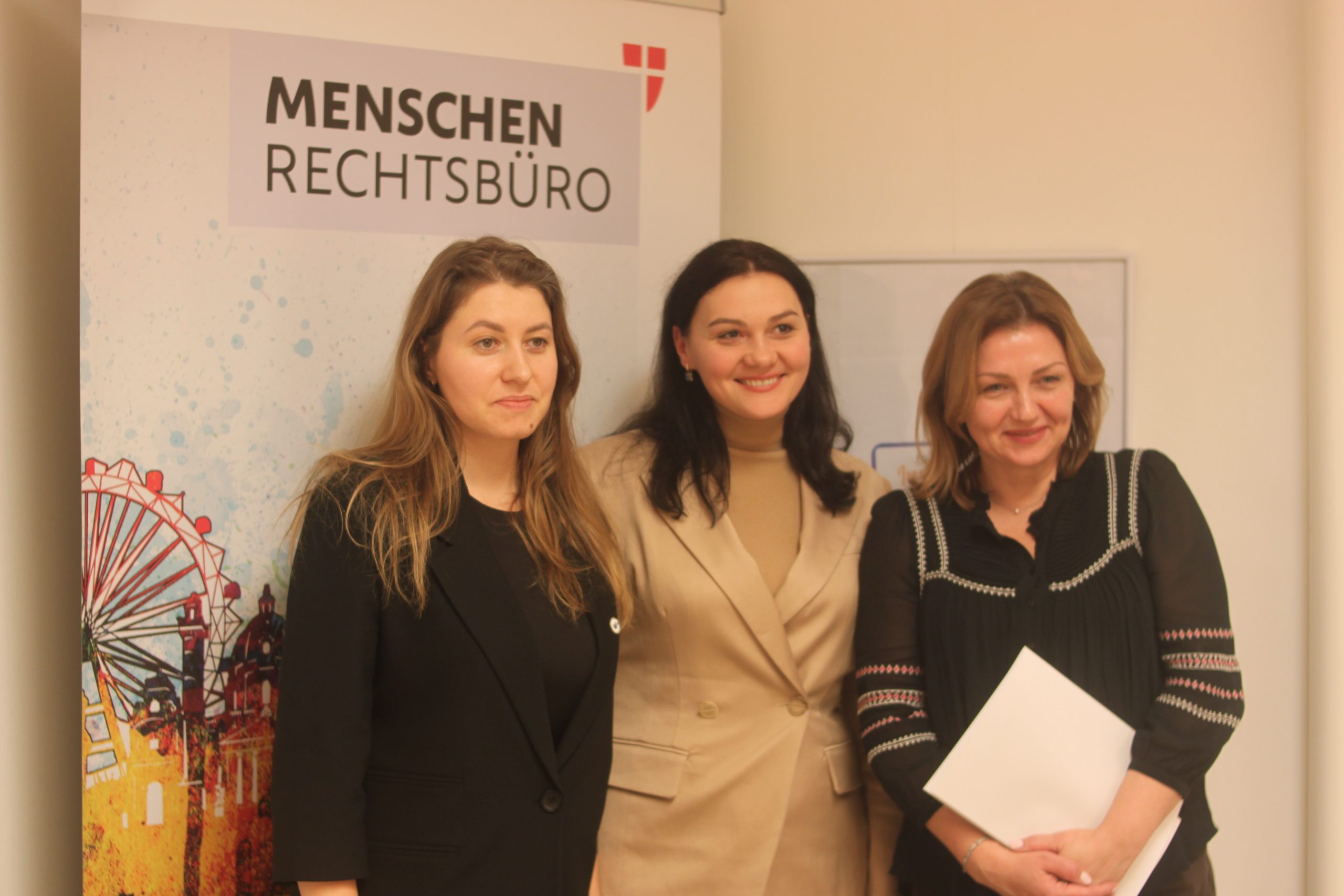
RWI’s programme officer, Tukhan Ediev, closed the visit with a session on key takeaways for the members of the UPCHR delegation. He also noted that thanks to the participants’ active engagement and deep involvement throughout all the meetings, several preliminary understandings had already been reached during the stay in Austria. These included potential cooperation on monitoring border crossing points in the Zakarpattia region, as well as the start of communication between the University of Graz and academic institutions in Ivano-Frankivsk and Khmelnytskyi. In the aftermath of the visit, a follow-up meeting is to be held to discuss and monitor how the takeaways encouraged by the study visit are integrated into participants’ work.
This study visit proved highly successful, filled with constructive dialogue, valuable learning, and important insights for future collaboration.
Read more about RWI’s HRIU programme here: https://rwi.lu.se/ukraine/
Read more about RWI’s study visit team:
- Tukhan Ediev – Programme Officer, Ukraine office
- Tatsiana Rahozina – Junior Programme Officer, Lund Office
- Anna Pedash – Programme Associate, Ukraine Office
- Daniel John Robinson – Programme Associate, Lund Office
Read more about Ukrainian Parliament Commissioner for Human Rights (UPCHR)