
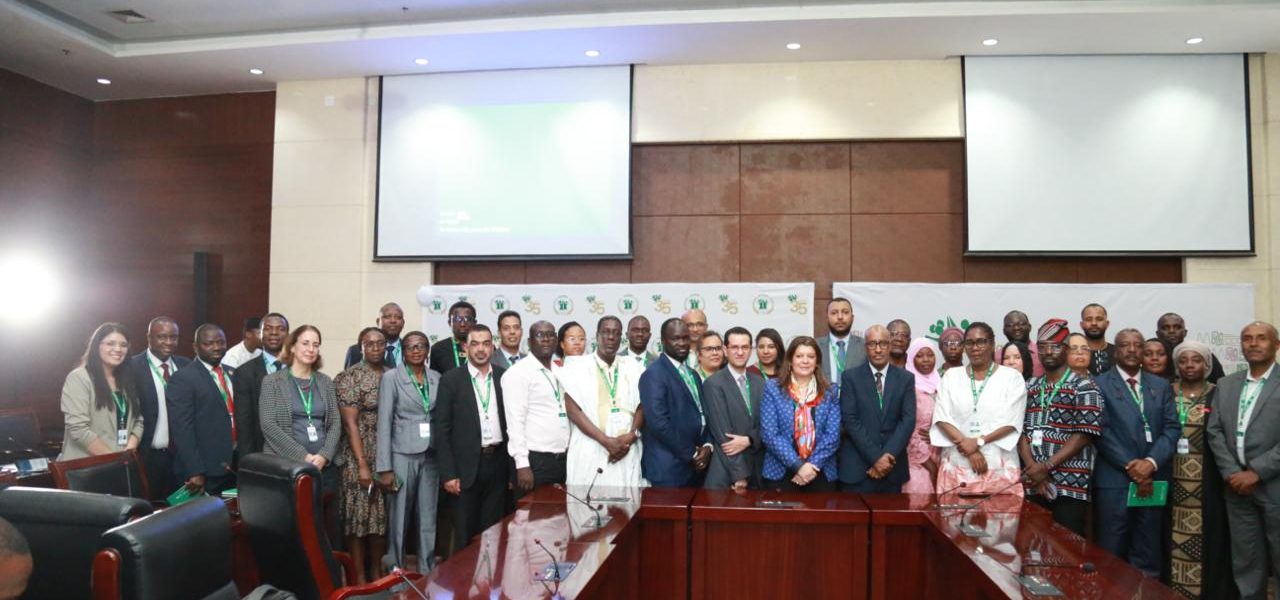
The Raoul Wallenberg Institute of Human Rights and Humanitarian Law (RWI) was proud to participate in and support a series of pivotal events during the 46th Ordinary Session of the African Committee of Experts on the Rights and Welfare of the Child (ACERWC) in Maseru, Lesotho. Marking the 35th anniversary of the African Charter on the Rights and Welfare of the Child (ACRWC), this session—held under the theme “Reflect, Renew, Recommit”—provided a crucial platform to strengthen accountability and collaboration for children’s rights across the continent.
RWI’s engagement, organised under its Regional Africa Programme, focused on three core activities designed to enhance the implementation of the Charter and the Committee’s decisions.

1. State Party Forum on Reporting: Reigniting the Commitment to Accountability
On 1 December, RWI co-convened a State Party Forum with the ACERWC and the African Child Policy Forum (ACPF). The forum primarily targeted representatives from states that have either never submitted a report or whose reports are significantly overdue.
In opening remarks, Chris Muthuri, RWI’s Deputy Regional Director for Africa, underscored that “state reporting is not a bureaucratic burden, but a covenant with Africa’s children—a formal opportunity for dialogue that can transform national policies and lives.”
The forum facilitated frank discussions on the challenges hindering timely reporting, including inadequate resources and weak inter-ministerial coordination. A stark reality highlighted was that while 43 of the 51 States Parties that have ratified the ACRWC have submitted at least an initial report, 8 are yet to submit any, and no reports were received in 2024. The session concluded with concrete recommendations for stronger national coordination, increased funding for implementation, and more aligned support from partners to assist states in fulfilling this fundamental obligation.

2. Technical Workshops: Empowering National Human Rights Institutions and Civil Society
On 3 December, RWI supported the ACERWC in hosting technical workshops for National Human Rights Institutions (NHRIs) and Civil Society Organisations (CSOs), respectively. These workshops focused on the critical theme of implementing the Committee’s decisions, with particular attention to advancing girls’ rights.
The sessions assessed persistent barriers to implementation and explored how NHRIs and CSOs can be more effective in their follow-up roles. NHRIs highlighted their unique position in monitoring state compliance, engaging stakeholders, and using the Committee’s recommendations for national advocacy.
In a scene-setting address to CSOs, Chris Muthuri framed their role as the essential “hands” that wield the “tool” of the Committee’s decisions. He outlined a multifaceted CSO ecosystem crucial for implementation: acting as a programmatic engine (translating decisions into action), a collective voice (through coalitions), and as strategic litigants and partners. The workshop emphasised that robust, coordinated action by CSOs is vital to bridge the gap between legal decisions and tangible change in children’s lives.
3. Panel on Implementation of Decisions: Learning from Specific Cases
On 4 December, RWI supported a panel discussion analysing the status of implementation for two specific ACERWC decisions relating to Mali and Cameroon. This session provided a concrete examination of the journey from ruling to realisation, identifying both progress and persistent obstacles. It reinforced the message that sustained, multi-stakeholder effort is required to ensure decisions deliver justice and reform on the ground.

A Continued Commitment to Partnership
Through these activities, RWI reaffirms its deep commitment, supported by the Swedish International Development Cooperation Agency (Sida) – specifically the Regional Section at the Embassy of Sweden in Addis Ababa, to strengthening the ecosystem for human rights implementation in Africa. RWI under its Regional Africa Programme with a focus on implementation of decisions, remains a dedicated partner to the ACERWC, NHRIs, CSOs, and states in the shared mission of turning the promises of the African Children’s Charter into a lived reality for every child.
For more information on the Regional Africa Programme: https://rwi.lu.se/regional-africa-programme/