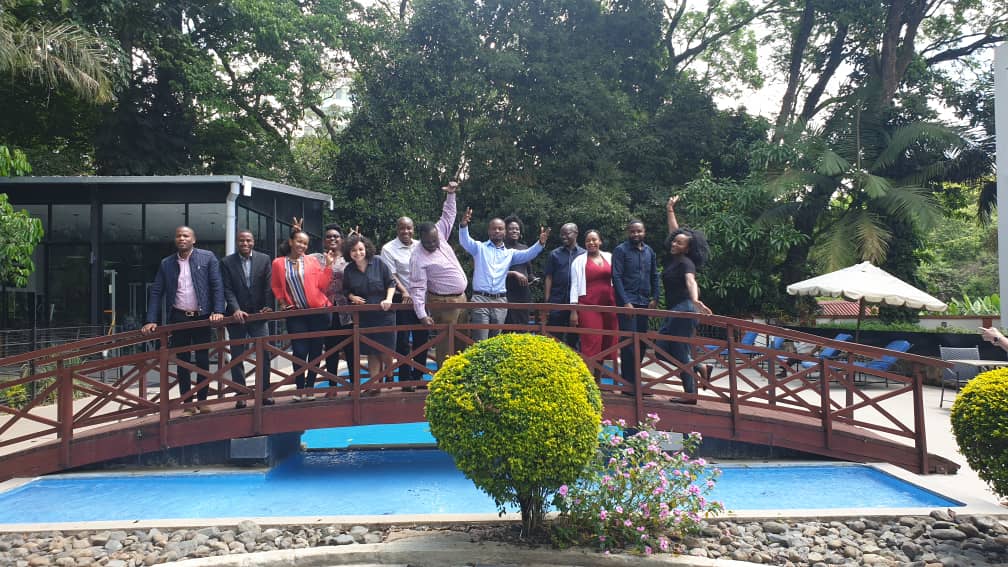
The Raoul Wallenberg Institute of Human Rights and Humanitarian Law’s (RWI) Regional Africa Programme 2024-2027 (the Programme) builds upon RWI’s previous regional cooperation in Africa, most recently the Institute’s regional Africa programme 2017-2024, leveraging the achievements, lessons learned, and partnerships cultivated during that period. The new proposed Programme has been developed in close consultation with concerned partners and stakeholders, including Sida, ensuring alignment with relevant priorities and interests. The programme is funded by Swedish Development Cooperation (Sida)
Overall, the Programme will focus on increasing implementation of human rights decisions, judgments, provisional measures and recommendations from continental and regional bodies in Africa. It centres around enhancing the capacity of key organisations and institutions to, in a regional and national context, monitor and follow-up the implementation of such decisions, judgements and provisional measures.
Programme Strategies
1. Working in cooperation with and supporting key stakeholders who are assessed to be able to exert an influence on how regional human rights decisions are implemented in the region, including by national and regional institutions.
2. Working directly with regional institutions, including related duty-bearers in the region, to address capacity and other gaps to strengthen the monitoring and follow-up of implementation of human rights decisions in the region.
3. Strengthening Partnerships and coordination with stakeholders.
Programme Approaches
1. Regional Approach and Alignment
Cooperation approach in the implementation of its activities- working with key regional actors to follow up and influence the implementation of human rights decisions in the region.
Direct cooperation with bodies of the African Union (AU), Regional Economic Communities, and related duty-bearers in the region, in the area of human rights; and
Multi-level programming approach ensuring, where relevant, that links to the national level are enhanced to ensure effective follow-up and monitoring of the implementation.
2. Human Rights Based Approach
RWI and its partners will be generally guided by the human rights principles of universality, indivisibility, equality and non-discrimination, participation, and accountability as they focus on building synergies and developing the capacities of both ‘duty-bearers’ to meet their obligations, and ‘rights-holders’ to claim their rights.
3. Evidence-Based Programming Approach
The Programme seeks to ensure that initiatives are evidence-based, with a thorough grounding in research, and continuously monitored to ensure their effectiveness.
4. Gender Equality
This approach extends beyond simply trying to have equitable representation of men and women as Programme participants. Rather, the Programme is implemented in a manner which recognises gender inequality and gives special attention to particular needs including the realisation of human rights of women and girls. This is in recognition of the importance thereof for effective follow-up and monitoring on implementation of human rights decisions in Africa.
5. Anti-Corruption
Integrating and addressing issues of corruption and its relationship with human rights is important to achieve expected Programme results. Thus, anti-corruption issues will be incorporated into discussions with all partners at all intervention levels, both as substance components and as dialogue components. In addition to exploring the negative impact of corruption on human rights, the Programme also emphasises the relevance of applying human rights-based solutions aimed at preventing corruption.
Theory of Change
If activities are carried out as per the proposed strategies, then respect for human rights in Africa will improve, because decisions from regional bodies will increasingly be implemented since monitoring and follow-up on the implementation of decisions will have improved as a result of increased capacities of, including cooperation among and between, key regional actors, regional institutions and related duty-bearers.
Key Expected Outcomes
Increased interaction among and between partner institutions, and other main stakeholders, at continental, regional and national levels, regarding experiences and measures for the implementation of human rights decisions, including on human rights of women and girls.
Increased knowledge and skills and amongst targeted regional actors as well as targeted continental and regional institutions and related duty bearers regarding ways and means for the implementation of human rights decisions, including on human rights of women.
Increased availability of systems, processes and tools among targeted regional actors and targeted regional institutions and related duty bearers for monitoring and follow up on implementation of human rights decisions, including on human rights of women and girls.
Implementing Partners
Academic Network – Generating research and resources and developing spaces for inter-sectoral dialogue to influence the follow-up and monitoring of regional human rights decisions, including on the human rights of women and girls.
African Court Coalition (ACC) – Increasing the capacity of national stakeholders to improve follow-up of implementation of decisions of the ACtHPR, including decisions on the rights of women.
East Africa Law Society (EALS) – Increasing the capacity for various stakeholders especially at national level to improve follow-up of implementation of decisions of EACJ and ACtHPR, including decisions on the rights of women.
Equality Now – Increasing knowledge and skills of targeted institutions in the theory and practice of gender equality, grounded on verifiable information about existing human and women’s rights commitments and mechanisms.
Network of African National Human Rights Institutions (NANHRI) – Strengthening the capacity of NHRIs in monitoring and ensuring effective follow-up on the implementation of human rights decisions, with a particular focus on the rights of women, by regional bodies, duty-bearers, and relevant regional actors.
Pan African Lawyers Union (PALU) – Strengthening institutional frameworks and partnerships of regional actors and duty bearers mandated or interested in monitoring the implementation of decisions that impact marginalised groups.
Centre for Human Rights, University of Pretoria – Facilitating increased knowledge and stakeholder engagement on the status of implementation of and judicial application of gender transformative approaches in the decisions of African Union Human Rights Bodies and REC Courts.
Direct cooperation partners
African Court on Human and Peoples’ Rights (ACtHPR)
African Commission on Human and Peoples’ Rights (ACHPR)
African Committee of Experts on the Rights and Welfare of the Child (ACERWC)
African Union Commission (AUC)
Community Court of Justice of the Economic Community of West African States (CCJ, ECOWAS)
Chris Muthuri is Deputy Director of the RWI Regional Africa Programme, Nairobi Office. For the Regional Africa Programme, he is the focal point for: African Court on Human and Peoples’ Rights (ACtHPR), ECOWAS Community Court of Justice, Pan African Lawyers Union (PALU), and Continuous Monitoring and Evaluation. He has over a decade’s experience working with several international, regional and local organisations across Africa. He has extensive experience in advocacy, programme management and fundraising, having taken up leadership roles on several instances. Chris joined the Institute in October 2017 as part of the Regional Africa Programme from RWI’s Nairobi office.
Before joining the Raoul Wallenberg team as a Programme Officer, Mumbi Maina-Murimi worked at the International Commission of Jurists – The Kenyan Chapter, and a private consultancy firm (MAENDELEO Group). She has a BA in law and is currently doing a Master’s programme in Development Studies.
Gilford Kimathi is a Senior Programme Officer at the Nairobi Office supporting the Regional Africa and Ethiopia programmes. He brings a decade of experience in programme management, where he has also contributed to research and human rights capacity development. Before joining RWI, Gilford worked five years with the Network for African National Human Rights Institutions, through which he has gained extensive experience with African human rights mechanisms and frameworks.
Eunice Ogolla is the Finance and Admin Officer at RWI Nairobi regional office and joined the Institute in February 2021. Prior to joining the institute she worked as an Accountant in the Humanitarian sector and supported Accounting across Africa. She has experience in Financial Reporting, Asset management, Treasury management, budgeting, taxation, Auditing and Internal Controls.
Eunice holds a Bachelor of Commerce degree(Accounting) from Strathmore University and is also an ACCA affiliate.
Nick Kioko is the Senior Finance and Admin Officer at RWI Nairobi regional office and joined the Institute in April 2020. Prior to joining the Institute, he worked as a Finance Manager in the humanitarian sector across the East African region. He has over 9 (nine) years of experience and expertise in top-level grant/donor and financial management, leadership, donor reporting and compliance, computerized financial management information systems, program administration, accounting, budgeting, auditing, internal controls, taxation and financial analysis. Nick holds a Bachelor of Arts (Economics, Sociology and Psychology) from Kenyatta University. He is also a Certified Public Accountant of Kenya (CPA- K).
Daisy is a dedicated human rights development professional with over 10 years experience in program design, implementation support, and performance monitoring. Daisy has led capacity building initiatives to enhance the quality of partner interventions and engaged with key donors such as Sida, EU, the Embassy of Sweden, and Danida.