
About the Project
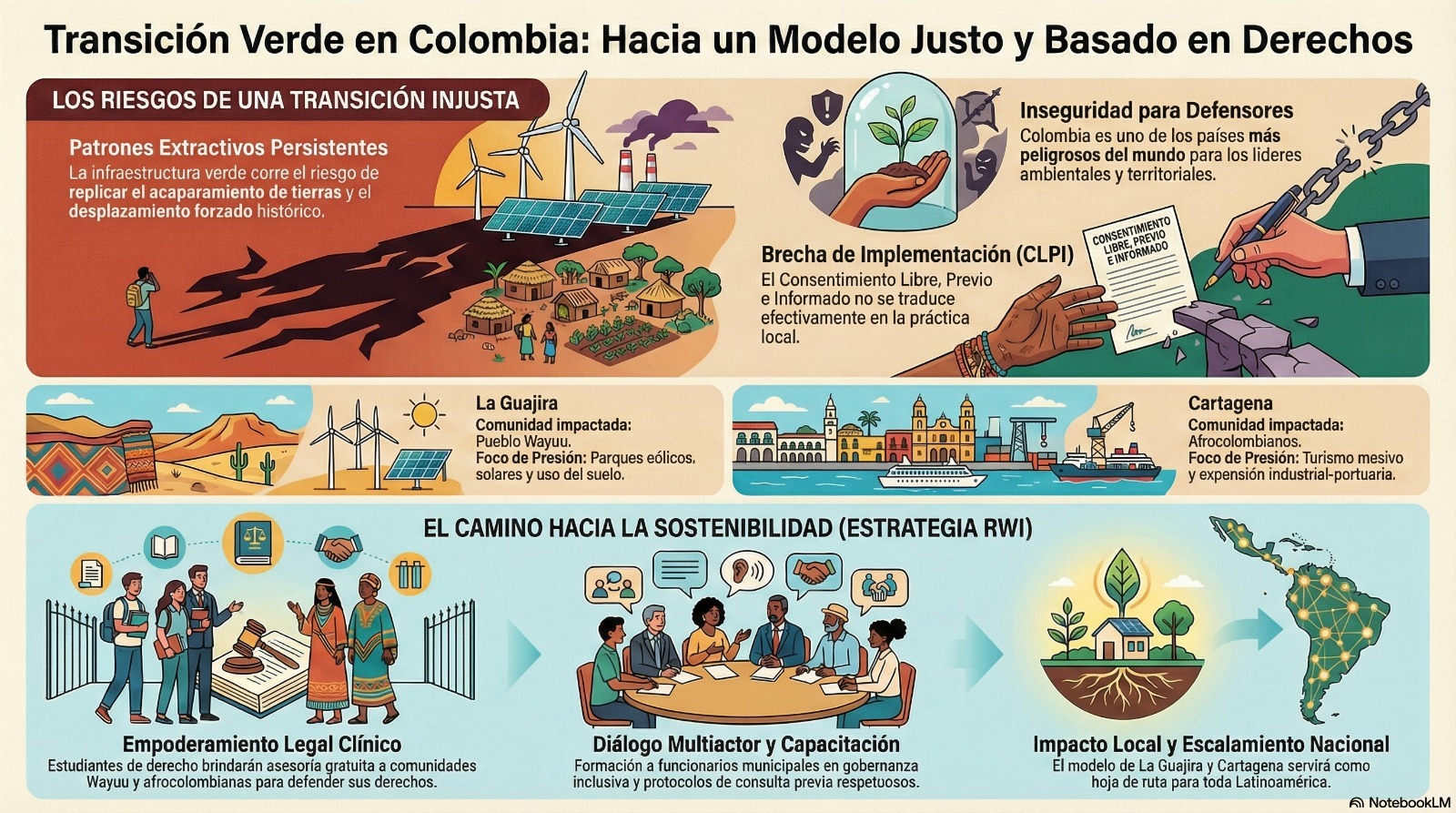
Colombia is expanding renewable energy, while cities and regions face growing environmental pressures linked to development, land use, and resource extraction. These changes can bring new opportunities – but they can also deepen existing inequalities if communities most affected are not meaningfully involved.
This project focuses on how these transitions impact Indigenous Peoples, Afro-Colombian communities, and other marginalized groups. Many of these communities already face social and economic disadvantages and are often excluded from decisions that shape their territories and futures.
By combining research and practical engagement at local level on Colombia’s energy transition, the project highlights real-life experiences and community perspectives. It works with local actors to better understand environmental impacts, participation challenges, and human rights risks, and to develop practical recommendations for policymakers and civil society.
At its core, the project promotes the idea that climate action and development must also advance social justice — by protecting rights, strengthening local voices, and ensuring that benefits are shared more equally.
The project is part of RWI’s broader work on human rights and the environment and is funded by the Swedish Post Code Lottery Foundation (Postkodstiftelsen).
La Guajira
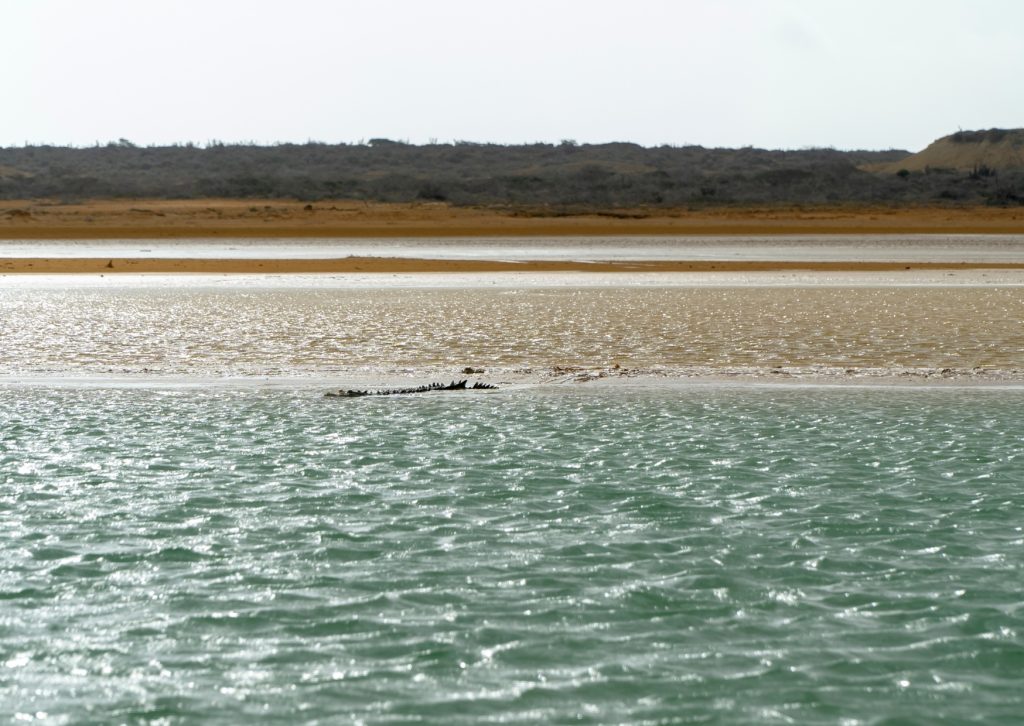
La Guajira is at the center of Colombia’s renewable energy expansion, with large wind and solar projects planned or underway. The region is home to many Indigenous Wayuu communities, whose lands and livelihoods are directly affected. The project examines how energy development impacts local communities, participation processes, access to resources, and benefit-sharing, and explores ways to strengthen rights protections.
Cartagena
In Cartagena, environmental degradation, urban growth, tourism, and other economic activities are putting increasing pressure on ecosystems and communities, especially Afro-descendant and low-income populations. The project focuses on local sustainability challenges, community participation, and accountability, and looks at how local decision-making can better protect both people and the environment.
Get in touch
David Eile

David Eile currently works as a Senior Programme Officer responsible for various projects under RWI’s Europe Office, focusing on different forms of academic cooperation in Europe and Cuba. Since joining RWI in 2006, David worked with various human rights programmes in Africa, Asia, Europe, and Latin America. David has an MA in Anthropology from Lund University and is a doctoral candidate in Cultural Anthropology at the University of Uppsala.
Alejandro Fuentes

Alejandro Fuentes is a Senior Researcher at the Raoul Wallenberg Institute of Human Rights and Humanitarian Law (RWI), an affiliated lecturer at the Faculty of Law at Lund University (Sweden) and –since 2022, a Professor of International Human Rights Law at Africa University (Zimbabwe). He received his Doctor of Laws (PhD) in International law and Master (LL.M) in Comparative and European Legal Studies from Trento University (Italy), and Law degree from the University of Córdoba (Argentina).
His main areas of expertise are international human rights law, with focuses on regional systems of human rights protection, local governance, human rights cities, and sustainable development. Additionally, Alejandro’s expertise convers a diverse set of collective and individual rights questions including cultural diversity, identity, minority, indigenous peoples, and children’s rights.
Some of the foundational questions that currently engage his research are related to balancing potential conflict of rights and how regional human rights courts search for a fair adjudicative balance between conflicting legal interests. For instance, regarding indigenous peoples rights, essential questions relate to how regional tribunals find a fair balance between the protection of their traditional lands and cultural practises, and the interest of national governments to exploit natural resources, support sustainable development and protect environmental rights.
Alejandro also has extensive experience in developing and implementing international development programmes. These programs are aimed at strengthening institutional capacities in partnership with local stakeholders, including governmental institutions and judicial actors, across the globe. These initiatives have largely focused on the advancement of human rights education (HRE) in academia, including the development of clinical legal education (CLE) at partner universities. Alejandro is currently in close collaboration with institutional partners in Africa (Kenya, Egypt, Ethiopia, Nigeria, South Africa, Botswana, Zambia, Zimbabwe); Europe (Belarus, Poland, Armenia, Ukraine, Spain, Italy, and –of course- Scandinavian countries); and the Americas (Mexico, Colombia, Cuba).
For further updates on his research, please refer to his Research profile: