
By Ani Ghulinyan, Communications Associate
We are pleased to announce that we have finalised our selection of two human rights research fellows from Armenia: Mane Madoyan and Tatevik Azizyan.
The Raoul Wallenberg Institute organises the research fellowship programme for established scholars and emerging PhD students examining human rights from a wide array of fields. The fellowship is based in Lund, Sweden, and lasts for three months. The programme aims to deepen understanding and foster innovative approaches in human rights research, and is specifically open to scholars from Armenian universities.
There is a particular focus on cross-sectoral and interdisciplinary investigation of human rights issues, to encourage research that can impact policies and practices.
Fellows have full access to Lund University’s library and facilities, and receive coverage of travel and living expenses. They are also provided with an environment conducive to research, offering peer support and expert guidance.
The Fellowship forms part of RWI’s wider work in human rights and research in Armenia.
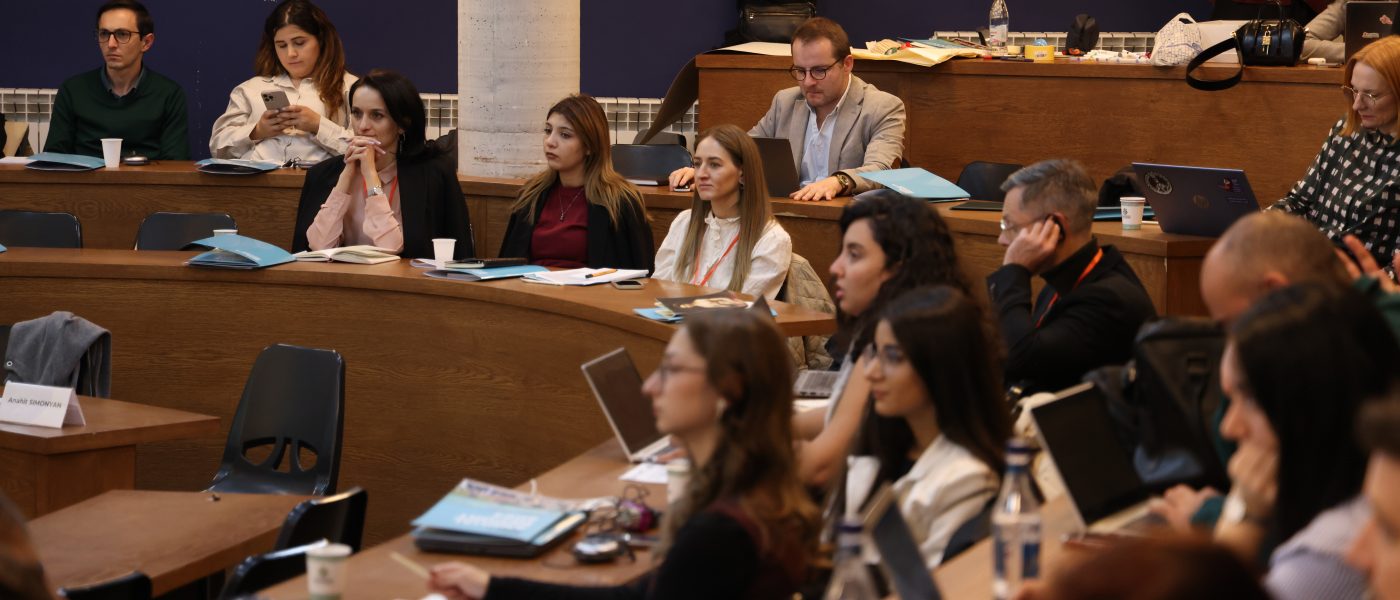
Both Mane Madoyan and Tatevik Azizyan presented their work at the 3rd Human Rights Research Conference in Armenia in November 2025.
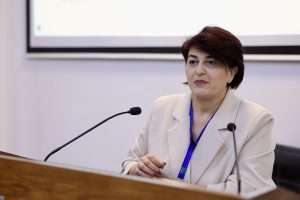 Mane Madoyan is an Armenian communication specialist, researcher, and stakeholder engagement practitioner working at the intersection of access to information, environmental governance, and public participation. She serves as Project Coordinator and Communication Specialist at the Freedom of Information Center of Armenia.
Alongside her civil society work, she is a team member of the Strategic Communication Master’s Programme at the Faculty of Sociology of Yerevan State University and the Biodiversity Research and Conservation Master’s Programme at the International Scientific-Educational Center. She collaborates with a range of organizations on communication and environmental initiatives and is particularly interested in making complex rights-based and policy issues more accessible and practical for wider audiences.
Q1: What motivates you personally to work in the field of human rights?
What motivates me is the understanding that human rights only matter when they can be exercised in real life. In my work in communication, public participation, and access to information, I constantly see that without clear, timely, and accessible information, many other rights remain out of reach. For me, this is not only a theoretical interest but also an institutional and practical one. Through my work with the Freedom of Information Center of Armenia, I have seen from both inside and outside the system how access to information shapes accountability, participation, and trust. I am also deeply interested in bringing a non lawyer’s perspective into human rights work. Legal norms are essential, but they become meaningful only when they are understood, valued, and used by wider professional and public communities.
Q2: What is the focus of your research project on human rights, and why is this topic important today?
My research focuses on access to environmental information as an enabling human right and examines how it affects public participation in environmental decision-making in Armenia. I am particularly interested in the gap between formal information disclosure and the actual usability of information for communities, civil society, media, and other stakeholders. This topic is especially important today because green agendas are becoming more visible globally, while their effective local implementation depends on informed and meaningful participation. Countries may adopt strong legal and policy commitments, but without accessible, understandable, and usable information, participation can remain superficial. For Armenia, this question is especially timely as environmental governance is gaining greater public relevance and international visibility, while global standards and commitments increasingly need to be adapted to local realities through stronger information practices and more inclusive participation mechanisms.
Q3: What impact do you hope your work will have during your fellowship and beyond?
During the fellowship, I hope to develop a practical, rights-based assessment tool that helps measure how accessible and usable environmental information actually is in Armenia. I also see this as a valuable opportunity to learn from experts and institutions that place strong emphasis on participation, transparency, and green governance, and to reflect on how such approaches can be meaningfully adapted to my country’s context. Beyond the fellowship, I hope this work will create a stronger basis for civil society monitoring, especially for the Freedom of Information Center of Armenia’s ongoing work and support more evidence based policy discussions. By identifying concrete gaps, I hope to contribute to targeted solutions that improve the disclosure and communication of environmental information and create better conditions for informed, inclusive, and meaningful public participation.
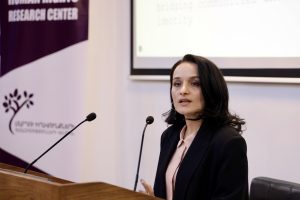 Tatevik Azizyan is a development professional with experience working with international organizations, government institutions, and NGOs in Armenia. She served as an Expert at UNDP Armenia, contributing to gender equality and women’s empowerment projects, with a focus on democracy promotion, participatory policymaking, and advancing women’s leadership in public administration at both local and national levels.
Recently, she has completed a Graduate Certificate in Mediation and Conflict Resolution at the Kroc School of Peace Studies, University of San Diego, as well as an Executive Diploma in Development Policies and Practices at the Geneva Graduate Institute, where she conducted applied research on the United Nations Women, Peace and Security agenda. Her research interests focus on rights-based approaches and the gendered dimensions of governance, democracy promotion, and peace processes in Armenia and the broader South Caucasus region.
Q1: What motivates you personally to work in the field of human rights?
My interest in working in human rights stems from my professional experience and the realities in Armenia. Through my work in gender equality and participatory governance, I have seen how structural barriers and policy gaps directly affect women’s participation at various levels. This has driven my commitment to advancing not only the formal equality of women but also the meaningful realization of their rights in practice, ensuring that women are recognized as rights-holders and active agents in shaping inclusive and accountable systems.
Q2: What is the focus of your research project on human rights, and why is this topic important today?
My research examines the UN Women, Peace and Security (WPS) agenda in Armenia
through a rights-based lens, focusing on how national policies translate international
obligations into practice in post-conflict and displacement contexts. During the fellowship, I
aim to produce evidence-based research that strengthens the integration of human rights
principles into WPS policy and practice in Armenia. Beyond the fellowship, I aim to support
policies that better reflect the needs and rights of vulnerable groups, amplify their voices in
decision-making, and contribute to advancing rights-based, inclusive, and democratic
governance.