
By Arsen Markiv, Advisor for Ukraine Programme
Introduction by Zuzana Zalanova, Senior Advisor
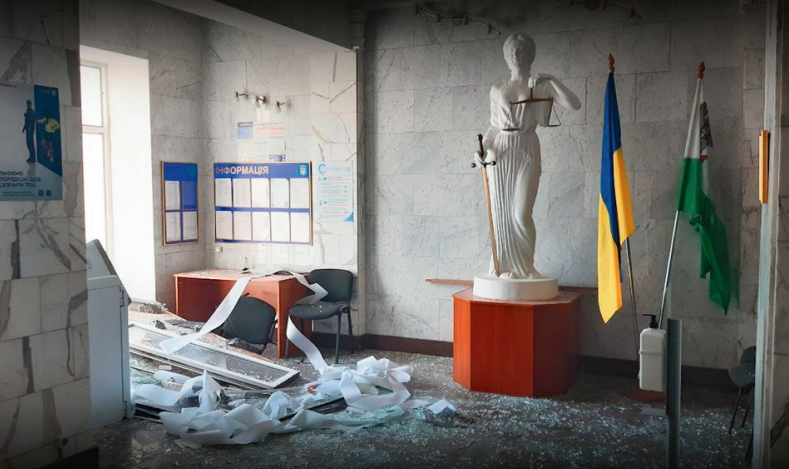
Credit for Image: Suspilne Chernihiv
INTRODUCTION
Imagine Serhii, a 38‑year‑old veteran from a village near Chernihiv, returning home after defending the region from Russian attacks. Recovering from a traumatic injury, he applies for disability status and social benefits, rights guaranteed by law. Yet his application is repeatedly rejected due to incomplete paperwork and unclear medical assessments. He does not know where to appeal or access free legal aid. The nearest legal aid centre is understaffed following wartime displacement, municipal services lack training, and the local court, operating from a partially damaged building, faces months‑long delays.
While illustrative, this example reflects a broader reality. Local conditions: damaged infrastructure, limited institutional capacity, uneven access to information, and staff shortages—directly shape people’s ability to exercise their rights, particularly in frontline regions like Chernihiv in Ukraine.
It also highlights a key point for joining the EU: progress under Chapter 23, one of the core parts of the EU accession process, focusing on the judiciary and fundamental rights, cannot be assessed through legislation alone.
The effectiveness of reforms ultimately depends on how courts, legal aid providers, social services, prosecutors, police, and human rights bodies function in practice at the local level.
Both theory and practice confirm that human rights and justice vary significantly across local contexts, shaped by economic conditions, service availability, governance quality, and demographic factors. These disparities are even more acute in conflict‑affected areas. Contemporary approaches, including people‑centred justice, emphasise the need for context‑specific responses, which are increasingly reflected in the work of international organisations including the EU. The EU’s initiatives, such as datasets measuring rule‑of‑law indicators across its 110 subnational regions or the Fundamental Rights Agency’s framework for Human Rights Cities, place growing emphasis on regional disparities and local implementation of human rights and justice.
This local dimension is equally central to EU enlargement. Local actors are responsible for implementing much of the acquis and translating reforms into practice. Their role proved critical in the successful convergence of the 2004 enlargement countries and in post‑conflict contexts such as Croatia in 2013. Since 2020, the EU’s “fundamentals first” approach has elevated Chapter 23 as the cornerstone of accession, linking progress to tangible, practice‑based outcomes. However, recent experience shows that weak local implementation often undermines reform, leading to slow progress or backsliding in the enlargement process, especially under Chapter 23.
For Ukraine, this has clear implications. Ensuring meaningful progress in human rights and justice requires systematically integrating local perspectives, strengthening coordination across levels of governance, and investing in local capacity. In its EU accession process, the relevance of the local level extends beyond Chapter 22 (Regional Policy) and must be treated as a cross‑cutting priority, particularly for Chapter 23. In this context, assessing regions such as Chernihiv is not peripheral, but essential to understanding Ukraine’s readiness for EU accession.
CORE OBSERVATIONS AND LESSONS
The organisation and functioning of local human rights and justice institutions in Ukraine are increasingly relevant in the context of the country’s EU accession process, particularly under Chapter 23 on judiciary and fundamental rights. While this framework focuses primarily on national-level reforms, it also draws attention to how institutions operate in practice at the regional and local levels. The mapping of Chernihiv oblast provides such a perspective, showing how institutional arrangements translate into service delivery under the conditions of ongoing armed conflict.
The findings presented below reflect patterns observed across the justice and human rights infrastructure. They highlight how institutions function in practice, including their capacity, responsiveness, and ability to maintain operations in a conflict-affected environment.
Human Rights and Justice Infrastructure in Chernihiv oblast
Chernihiv oblast represents an illustrative example of how local human rights and justice infrastructure operates in a conflict-affected environment. Its border location and territorial scale shape access to institutions even under normal conditions, while the impact of the fullscale invasion, including damage to infrastructure, population decline, and disruption of public services, has further intensified these challenges.
At the same time, the region demonstrates how institutions function in practice under such pressure. Core justice functions were restored relatively quickly following temporary relocation, yet the system continues to operate with comtious damage to facilities, staffing gaps, and uneven access to legal aid. This is combined with increasing demand for human rights protection at the regional level. In this context, local authorities, specialised institutions, and civil society organisations (CSOs) play an important role in responding to needs related to social protection, veterans’ support, and gender-based violence.
Taken together, these features make Chernihiv oblast a relevant case for examining how institutional arrangements translate into justice delivery and human rights protection in a complex and evolving environment. Selected casestudies, illustraiting these issues are discussed in further sections.
Capacity constraints across the systems in Chernihiv oblast
The effects of the full-scale invasion are reflected in persistent capacity constraints across different parts of the system. Local judiciary, prosecution, enforcement services, and legal aid all operate with staffing levels that do not fully correspond to their functional needs. In several areas, the availability of personnel has been affected during the war period, while institutional responsibilities have remained the same or expanded.
These patterns suggest that capacity limitations in Chernihiv oblast are not limited to individual institutions but affect the justice and human rights infrastructure as a whole. In the context of EU accession, this draws attention to the importance of human resources and operational capacity at the local level, in addition to formal institutional arrangements.
Increasing demand and workload
At the same time, many institutions in Chernihiv oblast face growing and evolving demand for services. After an initial disruption in 2022, judicial activity recovered and entered a phase of increased workload. Similar trends can be observed in enforcement, where the volume of work has continued to rise, as well as in human rights protection mechanisms, where the number of complaints has grown noticeably.
This increase is linked not only to a recovery of institutional activity but also to the conditions created by the armed conflict. Issues related to displacement, access to services, and interaction with public authorities contribute to a broader and more complex demand for justice and rights protection at the local level.
Continuity of operations under disruption
Despite these pressures, Chernihiv regional institutions have maintained continuity of their core functions. For example, during the initial phase of the invasion, courts adapted by temporarily relocating their jurisdiction, allowing their work to continue while local conditions were unstable. Once the situation allowed, judicial activity resumed in the region.
In the period that followed, local institutions continued to operate under constraints while maintaining stable levels of activity. The ability to continue service delivery in this context reflects not only formal institutional arrangements but also practical organisational responses to disruption.
From the perspective of EU-related reforms, this highlights the importance of looking beyond formal structures and considering how institutions function in practice, especially in environments affected by instability.
Adaptation and Importance of the broader institutional ecosystem
The direct wartime context for Chernihiv oblast has also led to gradual changes in institutional practices. In the judiciary of Chernihiv, the use of remote participation and technical solutions has expanded, complementing traditional forms of hearings.
Professional training across sectors adapted to the changing environment, shifting toward issues related to martial law, digitalisation, and new categories of cases emerging in the context of the war.
In the context of armed conflict, the functioning of the system depends not only on formal state institutions but also on a broader institutional environment. Local civil society organisations in Chernihiv oblast play an active role in providing humanitarian support, legal assistance, and advocacy, often responding directly to conflictrelated needs of the population.
Local authorities and international partners also already contribute to maintaining institutional capacity through training, funding, and recovery programmes. Cooperation with organisations such as UNDP and UNICEF supports service delivery and capacity building at the local level.
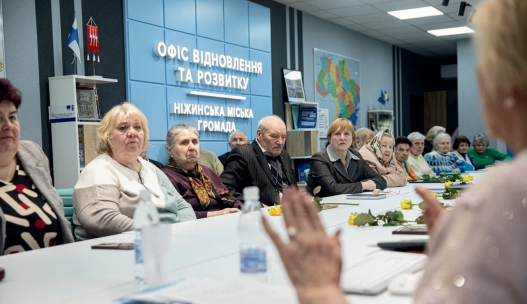
This interaction between state institutions, civil society, and international actors is particularly important in a conflict-affected environment, where not all actors can address all needs independently.
The following sections further illustrate these observations through three selected case studies from the mapping, highlighting how key elements of the local human rights infrastructure in Chernihiv oblast in practice.
COURTS: SUSTAINING ACCESS TO JUSTICE UNDER PRESSURE
Courts in Chernihiv oblast provide a clear example of how formal justice institutions operate under conditions shaped by armed conflict, where disruption, increased demand, and limited human resources intersect. The full-scale invasion in 2022 directly affected the territorial functioning of courts, leading to courts relocating outside their original locations. This arrangement ensured that access to justice was not fully interrupted during the most acute phase of disruption. Jurisdiction was gradually restored once local conditions stabilised, and courts resumed work in the region.
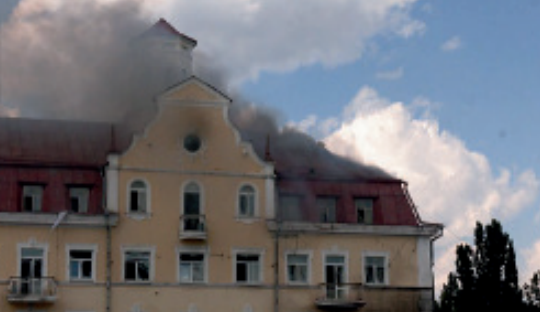
Yet, number of judicial buildings in the region were damaged. Yet, number of judicial buildings in the region were damaged because of hostilities even after deocupation of the region, which further affected the physical conditions for administering justice. In total, six judicial buildings in Chernihiv oblast were damaged during the war, with several of them, including the Territorial Department of the State Judicial Administration, the Commercial Court of Chernihiv oblast, the Chernihiv Court of Appeal, and the Novozavodskyi District Court, sustaining damage more than once.
In the period that followed, judicial activity not only resumed but expanded. By 2024, in the region the total number of cases and materials in work exceeded 104 000, following also a significant rise in workload compared to the immediate post-invasion period. At the same time, courts continued to operate with a substantial gap in staffing, with 84 active judges against an estimated requirement of 161.
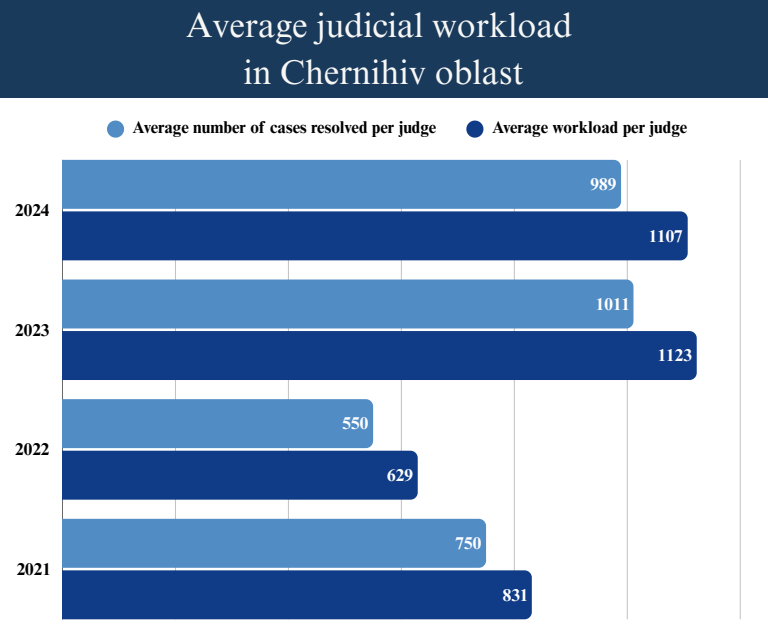
Despite this imbalance, key performance indicators remained relatively stable. The case resolution rate reached approximately 98 percent in 2024, suggesting that courts were able to process incoming cases at a level close to their intake.
The wartime context also contributed to gradual adjustments in working practices. The use of remote participation increased, and courts developed the technical capacity to support online broadcasting of hearings. These tools did not replace in-person proceedings but complemented them, allowing courts to operate more flexibly when physical access was limited. However, the remote hearings take place in around 1% of all the cases, suggesting vast reliance on the physical presence and the need for further expansion of digital tools in justice.
Overall, the functioning of courts in Chernihiv oblast reflects a system that maintains continuity through a combination of relocation measures, and adaptation of working methods. The experience of reassignment and relocation of courts and judges shows a potential for institutional arrangements to be adjusted in a short time to preserve core functions under conditions of disruption. Yet, the substantial gap in staffing and heavy workload remain the biggest challenges for the local judicial system.
PARLIAMENTARY OMBUDSMAN REPRESENTATIVES: RESPONDING TO RISING DEMAND FOR RIGHTS PROTECTION
The Chernihiv regional representative of the Ukrainian Parliament Commissioner for Human Rights (UPCHR) illustrates how oversight mechanisms function in an environment where demand for rights protection increases as a result of armed conflict. The period after 2022 is marked by a sharp growth in the number of complaints originating from Chernihiv oblast. This increase reflects both a higher level of awareness and a greater number of situations requiring intervention, particularly in relation to fair trial guarantees, actions of law enforcement, detention conditions, as well as military-related issues.
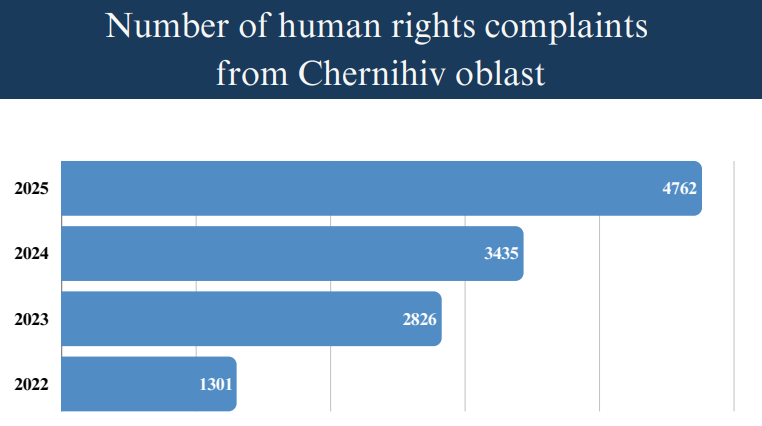
Alongside the increase in complaints, the scope of institutional activity expanded. Monitoring visits became more frequent, especially after 2023, and outreach activities developed as an integral part of the work of regional representatives. Public events, information sessions, and communication efforts contributed to stronger visibility of the institution at the local level.
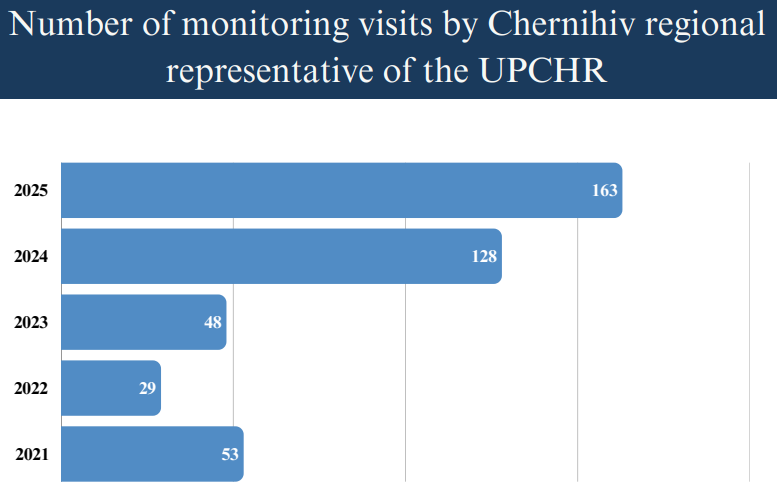
The institutional presence itself has evolved. The gradual strengthening of regional representation improved accessibility and allowed for more direct engagement with local issues. This development is particularly relevant in a conflictaffected setting, where access to central institutions may be limited and local mechanisms become more important.
At the same time, the expansion of activities takes place within a relatively small institutional structure. Although significant staff expansion is planned, the increase in demand is not fully matched by proportional growth in staffing, which places additional pressure on existing capacity. External partnerships, including cooperation with international organisations, contribute to sustaining this activity but also underline the reliance on additional support.
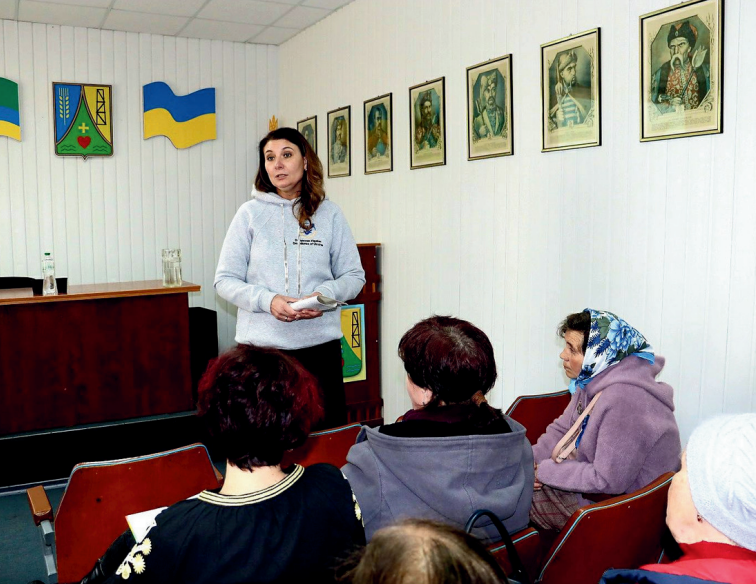
The functioning of the Ombudsman’s regional presence therefore reflects a model of responsiveness driven by rising demand, absence of proportional increases in resources while institutional practices expand in scope.
CIVIL SOCIETY ORGANISATIONS: FLEXIBLE SUPPORT WITHIN THE INSTITUTIONAL ECOSYSTEM
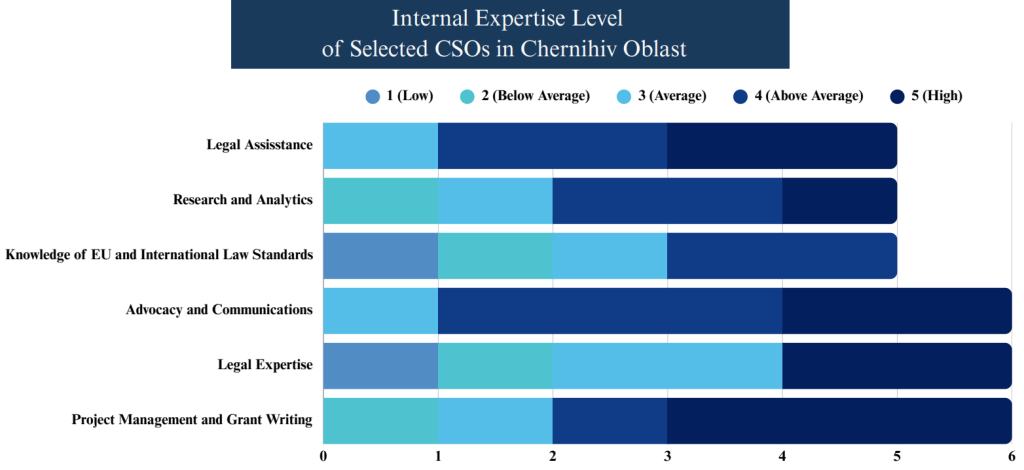
Civil society organisations in Chernihiv oblast play an important role in supporting the broader human rights and justice infrastructure, particularly in areas where state capacity is constrained by the effects of armed conflict. While at least 438 organisations are formally registered in the region as human rights-oriented, only a smaller group is actively engaged in sustained activities in this field. For the purposes of this study, six active civic organisations in the Chernihiv region were identified.
Active organisations operate in a highly flexible manner. Their internal structure often combines a small core group of staff with project-based teams and volunteers, allowing them to adjust activities depending on available resources and emerging needs, but consequently lacking a core workforce. This flexibility though has been important in the wartime context, where organisations have expanded or redirected their work toward humanitarian assistance, legal aid, and support to vulnerable populations.
The range of activities is broad and reflects direct responses to conflict-related challenges. Organisations provide assistance to internally displaced persons, support access to justice, and engage in advocacy on rights-related issues. At the same time, many organisations combine service delivery with awareness-raising and community engagement, linking practical support with longer-term objectives.
Cooperation is a central feature of this sector. Civil society organisations maintain working relationships with local authorities, state institutions, and some international partners, which can be beneficial for them to scale their activities beyond their internal capacity. However, international cooperation of local civic organisations still quite limited, although this networked approach is particularly relevant in a conflict-affected environment, where resources are limited and coordination becomes essential.
At the same time, the sector remains uneven in terms of capacity. While some organisations demonstrate a high level of activity and adaptability, others have limited operational presence due to the lack of resources. Analytical and research functions are generally less developed compared to service-oriented ones.
Read the full report: “Local Human Rights and Justice Infrastructure in Ukraine: A Mapping for EU Accession”