

By: Tatsiana Rahozina, Junior Programme Officer, Lund Office
On October 5-6 2026, a final milestone of the “EUcation – Urban Governance for Human Rights and EU Integration” training programe took place in Lviv, Ukraine. The Conference was co-organised by the EUcation partners to build on and expand the achievements of the training programme, which aimed to empower local government representatives to advance human rights and EU integration through inclusive and barrier-free urban governance.
A wide range of stakeholders contributed to four pannel discussions, three parallel study visits and four parallel practical workshops as part of the two-day Conference. Speakers and moderators at the Conference included a representative from the Office of the Deputy Prime Minister for European and Euro-Atlantic Integration of Ukraine, Lviv’s Deputy Mayors, representatives of Lviv regional authorities, center for social services “Dzherelo”, UNBROKEN ecosystem, Lviv Regional Office of the Ukraine Parliament Commissioner for Human Rights, Lund University, and Ukrainian Catholic University. The panel discussions and workshops also featured representatives of the EU Delegation to Ukraine, EU Fundamental Rights Agency, City of Zagreb, City of Tirana, City of Lublin, City of Rzeszów, Polaris Programme, International Renaissance Foundation, UNDP Ukraine, EU4Reconstruction, EIT Community NEB, NGO “Women’s Perspectives”, NGO “Professional Government Association of Ukraine”.

From Training Programme to Forum for Knowledge Exchange and Experience Sharing
The EUcation training programme, preceding the Conference “Communities on the Path to the EU: Capacity, Resources and Human Rights, targeted local government representatives from different district administrations and municipal institutions in Lviv. During the training programme, these local government representatives learned about the Human Rights-Based Approach (HRBA), relevant human rights instruments such as the Convention on the Rights of Persons with Disabilities (CRPD) and the EU Charter of Fundamental Rights. Participants also learned about the EU’s multiannual budget, Cohesion Policy, and structural funds, which can support further exchanges with their EU peers. During the training programme, participants not only learned, but actively applied HRBA principles in the projects that they were either implementing or planning to implement as part of their work in the local government. The Conference was the next step to share experiences gained by the participants during the training with a wider community of local government representatives in Ukraine.
The Conference also offered an opportunity to deepen the understanding of the role Ukrainian local governments can play in EU accession and human rights advancement. This also forms an essential part of the EU accession process under negotiations Chapter 23 ” Judiciary and Fundamental Rights”.

On behalf of RWI, Theresia Kirkemann Boessen, Country Director, Ukraine Office, gave welcoming remarks at the beginning of the conference, in which she emphasised that, while EU accession-related reforms and legislation, not least within Chapter 23 (Judiciary and Fundamental Rights), are needed at the national level, it is at the local level where human rights become real. Zuzana Zalanova, Senior Adviser at RWI, moderated a panel discussion focused on local and regional perspectives on the rule of law and human rights in the context of EU accession. The discussion helped build a shared understanding of how local governments can promote and implement human rights and the rule of law, and how these efforts contribute to Ukraine’s path towards EU membership. During this discussion, Morten Kjaerum, Affiliated Scholar at RWI, shared a message that while traditionally human rights have been understood as obligations of states, it is becoming more common to understand human rights as part of the local governments’ responsibilities as well, not least thanks to the concept of human rights cities. He also highlighted that human rights can provide a practical framework for sustaining democratic institutions, dignity and social cohesion even in the midst of the full-scale invasion, and guide efforts, including those aimed at increasing inclusion of persons with disabilities, building a stronger culture of anti-corruption, and preventing violence against women. Furthemore, in the panel discussion focusing on inclusion, accessibility, and social resilience, Anna Bruce, Senior Researcher at RWI, referred to the experiences of the EUcation training programme and drew participants’ attention to working with the principles of the Human Rights-Based Approach in local government, while promoting veterans’ integration and protecting the rights persons with disabilities.

Takeaways
Following the Conference, we asked RWI and partner representatives of what they have taken away with them from the Conference.
“Local communities (hromadas) are crucial for closing the implementation gap in EU accession reforms. Their close contact with citizens brings a human perspective to often technocratic processes and provides a reality check on how reforms work in practice. Ukrainian communities are eager to partner with their EU peers, not only to learn from their experience but also to share lessons from managing reforms under extraordinary circumstances. The key challenge in Ukraine is to make reforms not only fast, but also to ensure they genuinely reflect local realities and enjoy local ownership. For that, we need to continue working closely with local communities across Ukraine, including on issues such as human rights and the rule of law, which are often seen as nationally driven but ultimately need to be implemented at the local level.” – Zuzana Zalanova Senior Adviser at RWI
“My main takeaway is that Ukraine’s European integration is not something that happens only at the national level. It is already happening in our cities and communities — through the decisions we make, the services we provide, the projects we develop, and the way we protect and promote human rights. The conference brought together representatives of Ukrainian hromadas from different regions, including the East, South and Centre of Ukraine, as well as Ukrainian and international experts and partners. For me, this exchange was particularly valuable because it connected European integration with the very practical challenges that local governments face every day. It also showed how much knowledge and experience already exists within Ukrainian communities and how important it is to create spaces where this experience can be shared.” – Yuliia Katynska Director, Lviv Bureau for European Integration
“The conference provided a forum for honest and productive exchanges. Initiatives like this can strengthen communities’ agency in Ukraine’s EU accession process. Enlargement does not happen only between Brussels and Kyiv: local communities and individuals must also be recognised as important stakeholders in shaping this journey. Bringing together representatives of municipalities, civil society, the Ombudsman’s office and academia was particularly valuable. This dialogue across different sectors is essential to building a shared and constructive effort towards EU membership. My main takeaway was the strong sense of shared purpose and the determination of Ukrainian participants to move forward on their path towards membership. Their motivation, despite the extraordinary challenges they face, left a lasting impression on me.” – Iveri Kekenadze Gustafsson, PhD Researcher in European Studies and Lecturer in Society Engaged Music, Lund University
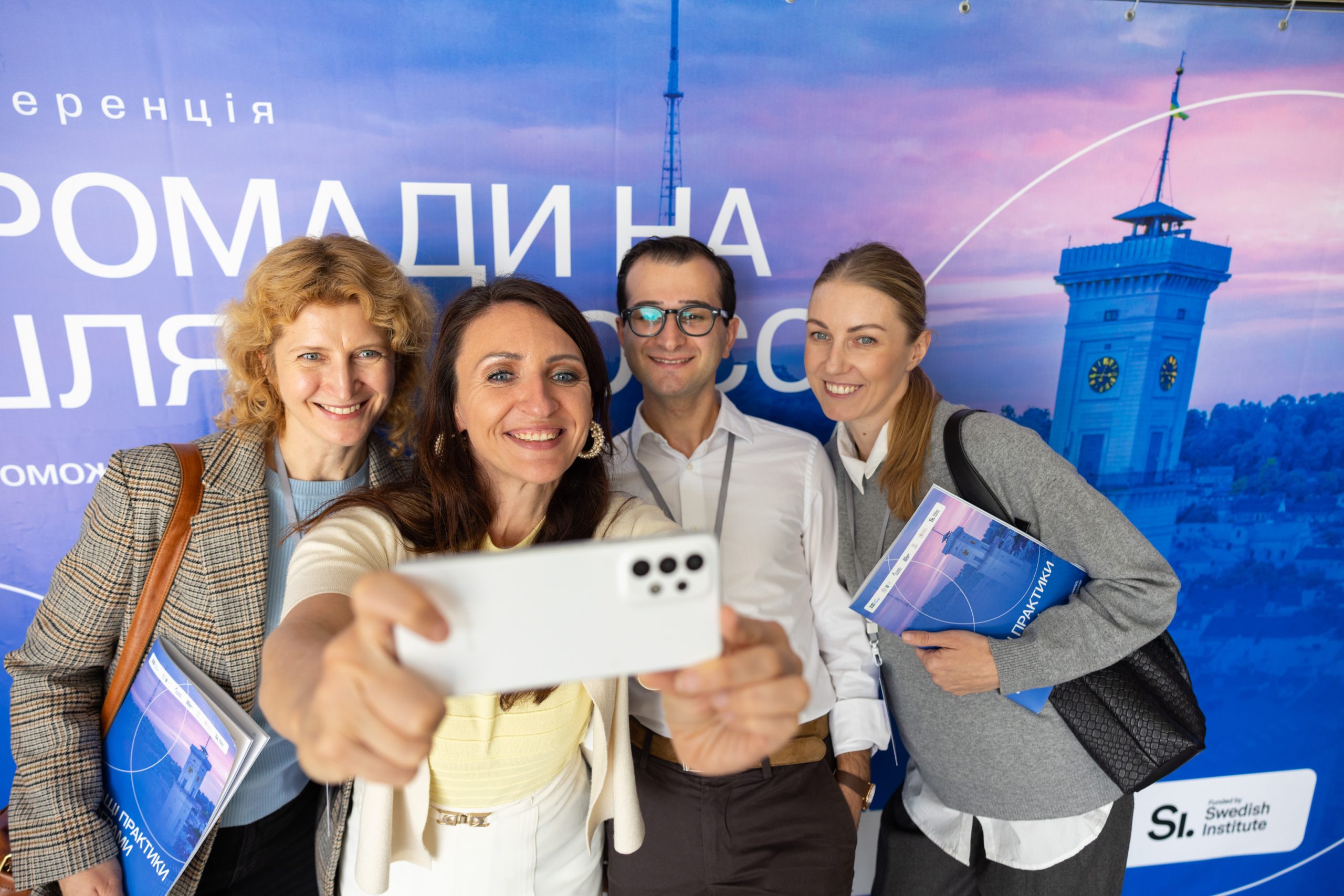
The successful implementation of the EUcation training programme and the Conference “Communities on the Path to the EU: Capacity, Resources and Human Rights” was made possible through the strong partnership between RWI, Lviv City Council, the Lviv Bureau of European Integration, Lund University, and Ukrainian Catholic University.
The Conference was organised as part of the training programme “EUcation – Urban Governance for Human Rights and EU Integration”, implemented by the Lviv Bureau of European Integration (Ukraine) together with Lund University, the Raoul Wallenberg Institute of Human Rights and Humanitarian Law, and Ukrainian Catholic University, and funded by the Swedish Institute. The conference was also organised in partnership with the “Human Rights Infrastructure for Ukraine 2025–2027” programme implemented by RWI, and funded by Sida.
Learn more about RWI’s work in Ukraine: Our work in Ukraine – The Raoul Wallenberg Institute of Human Rights and Humanitarian Law
Learn more about our partners: Lviv Bureau of EU Integration, Lund University, and the Ukrainian Catholic University.
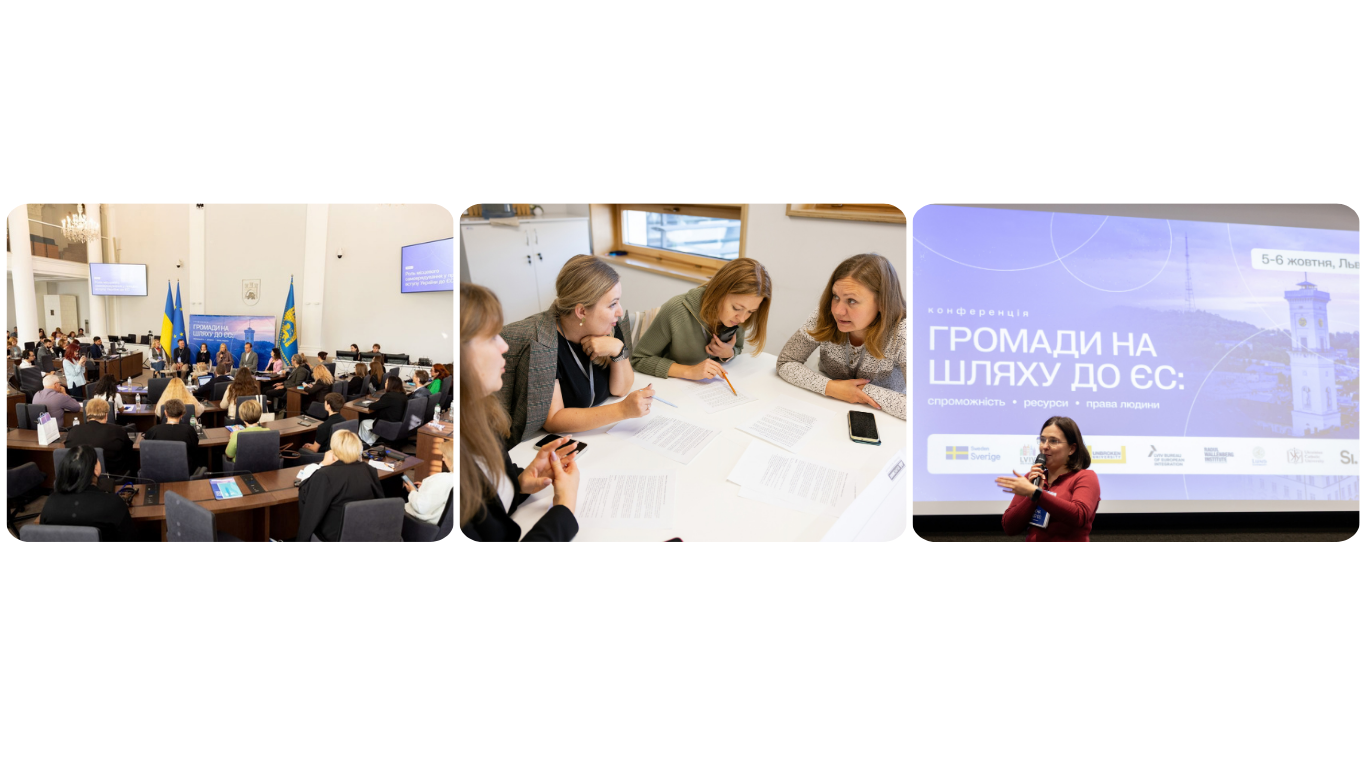
Photos by Andrii Kozak