

By Clemence Velon-Bazzana, Communications Associate
On 15-16 October, the European Commission and the Irish Presidency of the Council of the EU hosted the International Conference on the Protection of Humanitarian Aid Workers in Brussels. Humanitarian organisations, survivors of attacks, policymakers, donors and UN agencies came together to discuss practical ways to keep aid workers safe.
RWI Executive Director Peter Lundberg spoke in the session “Data that Protects: Leveraging Evidence to Strengthen the Safety of Humanitarian Workers”. His message: data saves lives, but only if we coordinate it better.
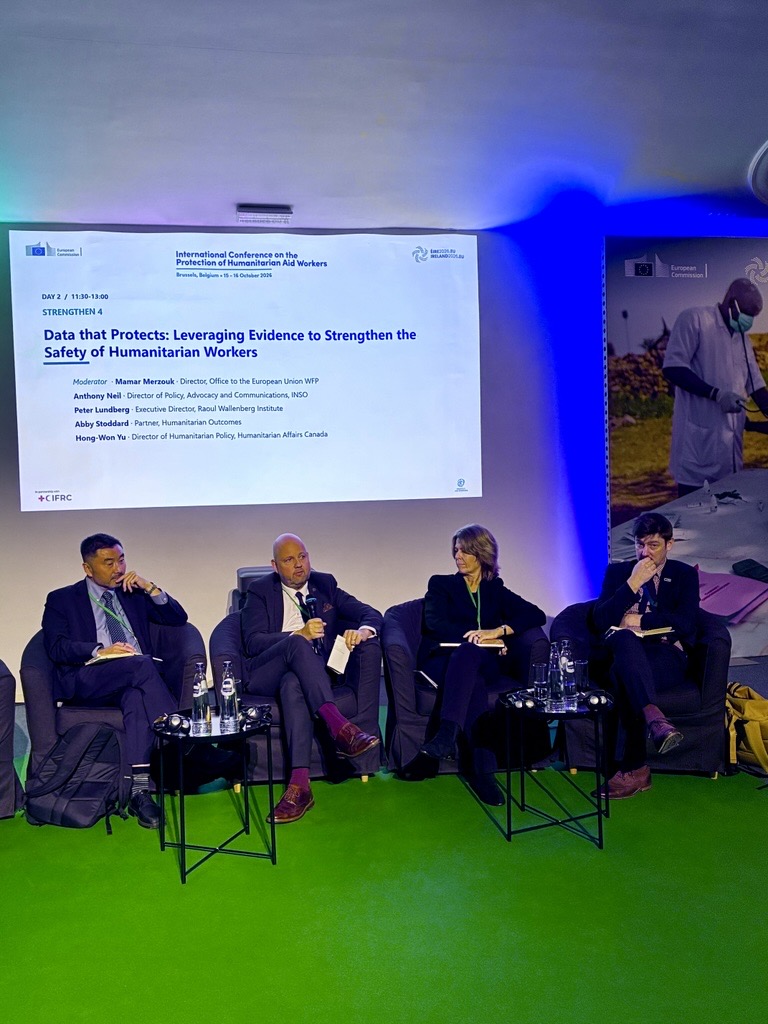
Impunity feeds on fragmentation
Attacks on humanitarian workers are under-reported, inconsistently documented and scattered across sources. Without a comprehensive picture, patterns stay hidden and accountability suffers.
“The key issue is two words: impunity and fragmentation. In the fog of war, incidents relevant to IHL are too often seen as isolated or disputed events rather than as part of a wider pattern.” – Peter Lundberg
The goal is to build the case and raise the price of impunity. If the current trajectory continues, humanitarian operations on the ground may not survive.
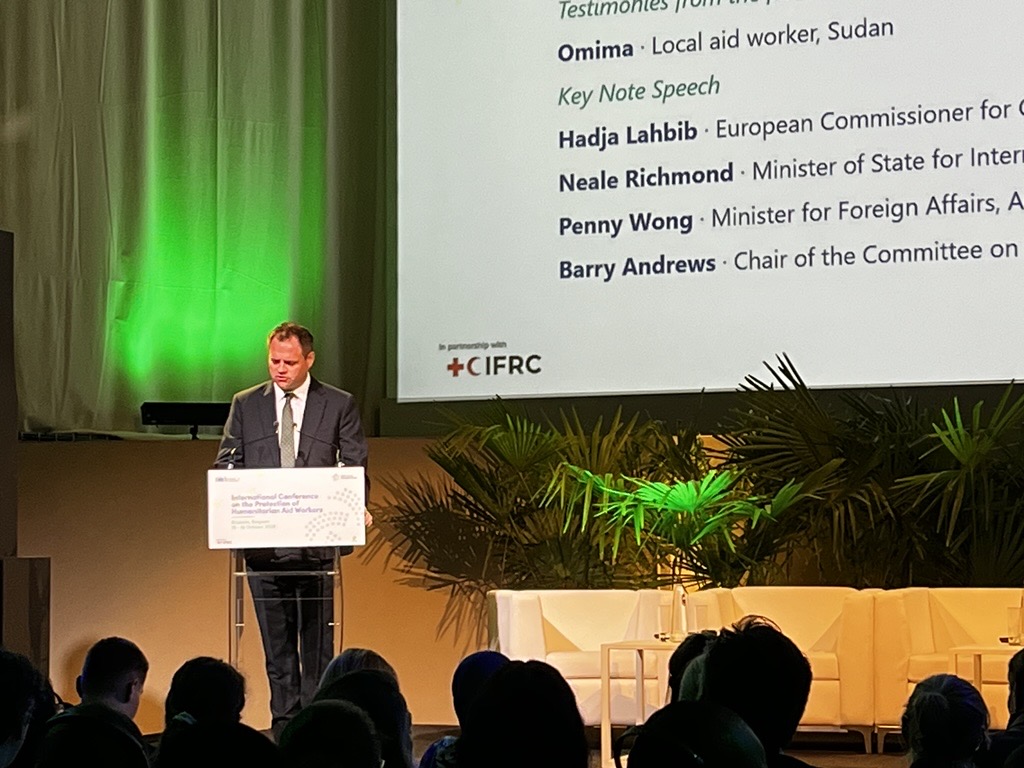
Not just another database
The International Humanitarian Law Compliance Monitoring Database (ICMD) is an RWI initiative that brings together existing information on IHL incidents and analyses patterns and trends across conflicts. It aims to provide a common platform for coordinated incident reporting, strictly grounded in IHL.
“We are not here to invent or ask for another report. We are here to aggregate and display what is already out there.” – Peter Lundberg
Better coordinated data reveals what individual incidents cannot, and makes incidents related to IHL harder to ignore. More information on www.icmd.se