
By: Windi Arini, Country Director, RWI Indonesia.
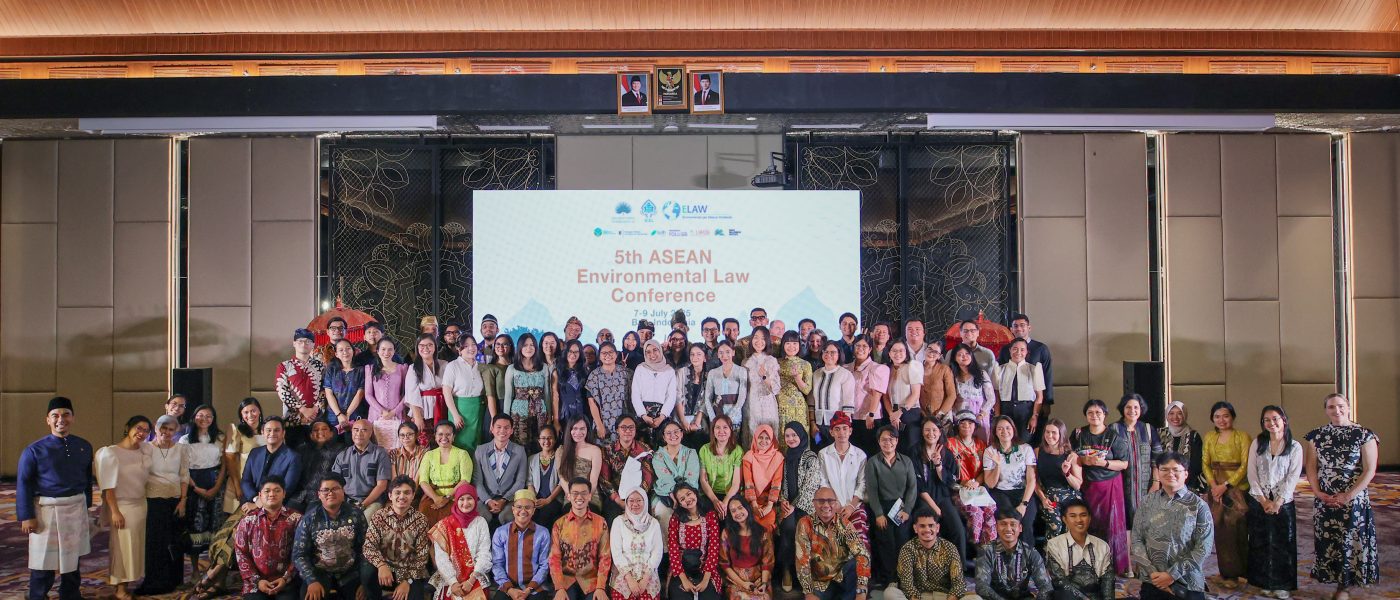
Judges, legal experts, civil society organizations, and academics from across Southeast Asia gathered in Bali, Indonesia to highlight the crucial role of the judiciary in advancing environmental rights, during a dedicated session hosted by the Raoul Wallenberg Institute of Human Rights and Humanitarian Law (RWI) at the 5th ASEAN Environmental Law Conference.
The session, titled “Advancing the Right to a Healthy Environment: The Role of the Judiciary,” focused on innovations in environmental adjudication and the presentation of an upcoming regional guidebook to strengthen procedural frameworks.
Opening the session, Windi Arini, RWI Indonesia Country Director, emphasized that despite legal frameworks, environmental degradation continues. “Courts are not just interpreters of law,” she said. “They are vital institutions in responding to environmental harm and realizing the right to a clean, healthy, and sustainable environment.”
Judge Jorge Manaois Jr. of the Regional Trial Court of La Trinidad presented the Philippines’ landmark Rules of Procedure for Environmental Cases (RPEC). He highlighted special legal remedies developed under the rules, including Writ of Kalikasan (for large-scale environmental harm) Writ of Continuing Mandamus (allowing court oversight of implementation), and Anti-SLAPP (Strategic Lawsuits Against Public Participation) protections for environmental defenders. Judge Manaois also outlined implementation gaps, such as limited designated environmental courts and challenges related to frivolous litigation.
Judge Puan Adria Ikhsan, from the Mataram Administrative Court, emphasized the need for a coordinated approach across civil, administrative, and criminal courts. She shared outcomes from recent judicial training workshops, as well as notable rulings such as the KLHK v. PT Waringin Agro Jaya (2018), PLTU Tanjung Jati (2022) and Robandi v. Republic of Indonesia (2021).
Judge Bambang Hery Mulyono, Head of the Supreme Court’s Education and Training Agency, underscored the judiciary’s critical role in harmonizing environmental protection principles with community rights. While acknowledging progress, he pointed to persistent challenges—including the judiciary’s capacity to interpret complex scientific evidence and the limited integration of environmental human rights into court reasoning. Among the proposed solutions was the need to strengthen knowledge sources and develop an expert pool accessible to environmental judges—a gap that aligns directly with efforts to build supportive procedural frameworks across the region.
Yogi Bratajaya, independent consultant, introduced the Draft Guidebook on Rules of Procedure for Environmental Cases in Southeast Asia, developed jointly by RWI and the International Commission of Jurists (ICJ).
Based on inputs from judges across seven countries, the guidebook aims to support the development and refinement of procedural rules for environmental cases, addressing key challenges such as standing, delay, admissibility of evidence, and protection for public interest litigants.
During the open discussion, participants raised critical issues including access to expert testimony, threats to judges, the cost of litigation for communities, and the need for online and inclusive proceedings. Participants from both the judiciary and civil society—particularly young judges—expressed strong support for the immediate release of the guidebook. Several called for similar resources to be developed for prosecutors and police, recognizing the need for a shared understanding of procedural safeguards and the right to a healthy environment across the entire justice chain.
Photo credit: ICEL


