Corporate Sustainability Regulations and Human Rights Impacts in Türkiye
The Raoul Wallenberg Institute of Human Rights and Humanitarian Law has launched a pilot programme (2025–2026) to strengthen Türkiye’s engagement with the European Green Deal (EGD), with a particular focus on corporate sustainability, human rights due diligence, and the social dimensions of the green transition.
As the European Union’s largest trading partner, Türkiye is directly affected by the EU’s evolving sustainability framework, including new rules on corporate due diligence, sustainability reporting, sustainable finance, and forced labour. While Türkiye has taken important steps to align with the EGD through its Green Deal Action Plan, current implementation remains heavily focused on environmental objectives, with limited attention to social impacts and human rights. This programme addresses that gap.
Programme Focus
The programme supports public institutions and companies to better understand and respond to the human rights implications of EU sustainability regulations in the context of EU–Türkiye trade. It builds on RWI’s long-standing presence in Türkiye and its global expertise in business and human rights, using dialogue-based and practice-oriented methods.
At its core, the programme combines capacity-building for public officials with direct engagement with Swedish companies operating in Türkiye, fostering shared learning and practical solutions across public and private actors.
Professional Training Programme for Public Officials
A certified Professional Training Programme (PTP) will bring together mid-level officials from key Turkish ministries working on labour, trade, industry, environment, energy, and EU affairs. Participants will strengthen their understanding of:
- The European Green Deal and its relevance for Türkiye
- Corporate sustainability and human rights due diligence
- Social and labour dimensions of the green transition
- Policy challenges and implementation trade-offs in EU–Türkiye value chains
The programme blends online learning with an intensive in-person training in Sweden, study visits, and peer exchange. Participants develop real-world case studies drawn from their own institutional challenges, supported by expert mentoring and inspired by the “case method” widely used in business and policy education. Graduates form a cross-ministerial network of EGD Champions, supporting continued dialogue and institutional learning beyond the pilot phase.
Engagement with Swedish Companies
In parallel, the programme works with Swedish companies operating in Türkiye to strengthen preparedness for EU sustainability regulations and human rights due diligence requirements. Through a structured series of workshops, participating companies:
- Reflect on existing ESG and due diligence training practices
- Explore the case method as a tool for internal learning
- Co-develop practical case studies grounded in their operations and supply chains
This engagement supports more responsible business practices while strengthening Sweden–Türkiye value chains and promoting alignment with EU standards.
Looking Ahead
The pilot programme will conclude with a series of stock-taking and forward-looking activities, including two expert roundtables and a multistakeholder conference. These events will consolidate lessons learned and identify pathways for future cooperation. Participants will also explore opportunities to contribute to COP 31, to be hosted in Antalya, Türkiye, from 9 to 20 November 2026. Building on these outcomes, the programme lays the foundation for longer-term institutionalisation and scale-up. By connecting public institutions, companies, civil society, and academia, it creates pathways for sustained cooperation, policy learning, and future multi-year capacity-building support. Through this initiative, RWI contributes to a more inclusive, rights-based approach to the green transition in Türkiye, supporting sustainable trade, responsible business conduct, and constructive EU–Türkiye engagement.
Türkiye Team
Radu Mares
Radu Mares
Thematic Leader Business and Human Rights, Associate Professor, Lund Office
Phone: + 46 46 222 12 43
E-mail: radu.mares@rwi.lu.se
Radu has a background in human rights law, specializing in the business and human rights area, with a focus on regulatory and compliance issues raised by multinational enterprises in developing countries. His main research interest is the protection of human rights through economic relations. Some questions that have engaged Radu for a long time are:
- How does the international human rights system accommodate and interact with the fragmented, overlapping and dynamic landscape of responsible business conduct?
- How does the shift from corporate voluntarism to hard law happen and how do companies affect the emergence, institutionalization, and diffusion of norms of social responsibility?
- Can complex regulatory regimes that reject the ‘command-and-control’ approach deliver on their promise to achieve corporate compliance and respect for human rights?
Radu’s research draws on economic law, corporate governance, risk management, regulatory pluralism and global governance. He has also conducted field work in mining areas in Ghana and Peru. His current focus is on the EU green transition, and the impacts of this legislative framework on human rights and environmental protection globally through EU value chains.
Radu is an Associate Professor at the Raoul Wallenberg Institute of Human Rights, the director of the Research and Education Department, and the thematic leader for the Business and Human Rights area at RWI. He is a Doctor of Law (PhD) and a Docent in the Faculty of Law at Lund University. Radu contributes to RWI capacity-strengthening programs for academics, businesses and/or governmental actors in China, Cambodia, Indonesia, Ethiopia, Zimbabwe, Estonia and Belarus, and Asia region. Since 2007 he has taught and supervised at Lund University’s Faculty of Law and more recently at the Economics Faculty. Radu values opportunities to collaborate with colleagues from other disciplines, to explore new linkages between economics and human rights, in education, research, and outreach.
For further updates on his research, please refer to his Research profile:
https://portal.research.lu.se/en/persons/radu-mares
- dfiFeatured: a:1:{i:0;s:0:"";}, a:1:{i:0;s:0:"";}, a:1:{i:0;s:0:"";}, a:1:{i:0;s:0:"";}, a:1:{i:0;s:0:"";}
Isis Sartori Reis
Isis Sartori Reis
Senior Programme Officer, Lund Office
Phone: +46 79 063 18 25
E-mail: isis.sartori_reis@rwi.lu.se
Isis Sartori Reis is a Senior Programme Officer at RWI in Lund, where she works on the implementation and results monitoring of several projects. Since joining the organisation in 2017, she has contributed to initiatives focusing on Zimbabwe, Global China, Afghanistan, Ukraine, Türkiye, and Regional Africa. In addition to her work with programmes, Isis teaches master’s level students as part of RWI’s Human Rights in Practice course at Lund University’s International Human Rights Law LL.M Programme and the Human Rights Studies Master’s Programme. Isis has a Bachelor’s degree in International Relations from the Pontifical Catholic University of São Paulo and a M.S. in Asian Studies from Lund University.
- dfiFeatured: a:1:{i:0;s:0:"";}, a:1:{i:0;s:0:"";}, a:1:{i:0;s:0:"";}, a:1:{i:0;s:0:"";}, a:1:{i:0;s:0:"";}
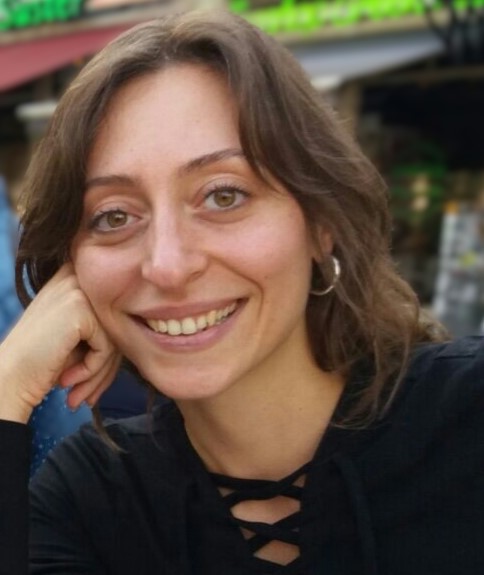
İpek Benek
İpek Benek is a Programme Officer at the Raoul Wallenberg Institute for the Türkiye pilot project supporting public institutions’ engagement with the European Green Deal, corporate sustainability, and the social dimensions of the green transition.
İpek has over ten years of experience in international cooperation and programme management, most recently at GIZ Türkiye where she coordinated projects at the intersection of responsible business conduct, human rights and environmental due diligence, and sustainable supply chains. Her work has involved close collaboration with Turkish public institutions, business associations, companies, civil society and international partners.
Before joining GIZ, İpek worked in environmental policy research in the UK and held roles related to energy markets and international economic relations. She holds a Master of Public Administration in Public and Economic Policy from the London School of Economics (LSE) and a double major in Economics and International Relations from Koç University.
İpek is passionate about climate justice, inclusive development and building practical partnerships that help translate human rights standards into meaningful change. She is based in Ankara.