By: Moreblessing Mbire, Acting Country Director, Harare Office
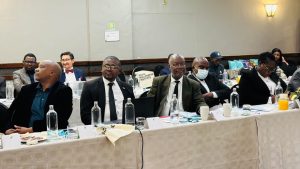
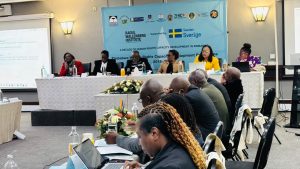
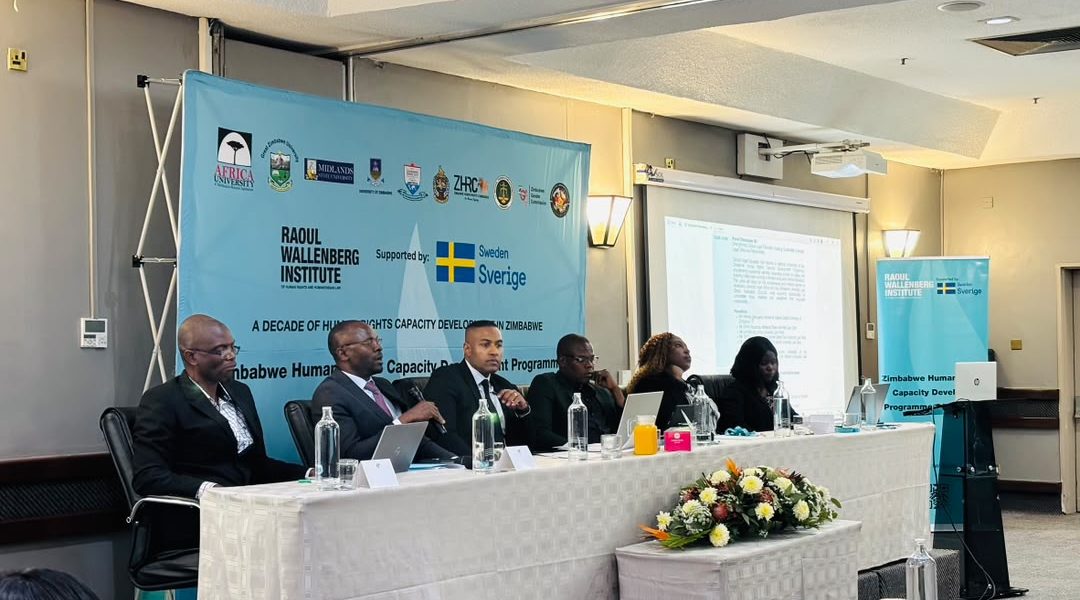
On 21 August 2026, the Raoul Wallenberg Institute (RWI) Harare brought together academic partners, independent commissions, stakeholders in government and civil society organisations to celebrate the End of Programme Event and a Decade of Human Rights Capacity Development in Zimbabwe (2016–2026), supported by the Embassy of Sweden in Zimbabwe.
The event provided an opportunity to reflect on ten years of partnership, innovation, institution-building, and collaboration that have strengthened human rights education, research, access to justice, and institutional capacity across Zimbabwe.
The event was officially opened by the Ambassador of Sweden to Zimbabwe, H.E. Per Lindgärde, the Deputy Minister of Justice, Legal and Parliamentary Affairs, Honourable Advocate Norbert T. Mazungunye, and RWI Regional Director for Africa, Mikael Johansson, who highlighted the Programme’s contribution to strengthening human rights institutions, expanding legal education, supporting justice sector reforms, and fostering meaningful dialogue on human rights.
Over the past decade, the programme has been guided by a simple but powerful belief that strong institutions, locally developed knowledge, and skilled human rights practitioners are essential for the promotion and protection of human rights. Through long-term partnerships grounded in trust, mutual respect, and local ownership, RWI worked alongside universities, independent commissions, justice sector institutions, government departments, and civil society organisations to build sustainable human rights capacities.
Dr. Tarisai Mutangi, independent consultant and lecturer at the University of Zimbabwe, reflected on the programme’s founding principles:
“The programme was built on consultation, cooperation, and local ownership. It strengthened collaboration among universities, enhanced teaching, and learning, and contributed to the development of legal literature that is now being cited by the judiciary.”
Strengthening Independent Constitutional Commissions and Justice Sector Institutions
The first panel discussion brought together representatives from independent constitutional commissions and justice sector institutions to reflect on the programme’s impact.
Panelists highlighted how the programme contributed to institutional transformation in several ways:
Key Achievements
- Strengthened human rights capacities within independent constitutional commissions
- Enhanced prison monitoring, gender audits, and reporting to regional and international human rights mechanisms
- Strengthened investigative and research capacities within select justice institutions
- Improved prosecutorial understanding of fair trial rights and due process
- Supported curriculum development and training programmes within institutions
- Improved inter-agency collaboration and coordination
- Developed practical tools, manuals, and resources that remain in use today
The Zimbabwe Anti-Corruption Commission (ZACC) noted how the cooperation helped strengthen understanding of corruption as a human rights issue while improving investigative practice and coordination with partner institutions.
The National Prosecuting Authority of Zimbabwe (NPAZ) reflected on how the programme shifted perceptions of prosecutors’ roles beyond securing convictions.
“The programme reinforced that the prosecutor’s responsibility is not simply to secure convictions, but to safeguard fair trial rights and uphold justice.” Mrs Tafadzwa Havazvidi, NPAZ
The Zimbabwe Prisons and Correctional Service (ZPCS) highlighted how human rights training contributed to a shift from an incarceration-focused approach towards rehabilitation and reintegration.
Across the discussion, participants agreed that the programme’s most important legacy lies in the development of sustainable institutional systems, stronger networks, and embedded human rights knowledge.
Advancing Human Rights Education and Research
The second panel discussion brought together representatives from five law faculties to reflect on a decade of cooperation in strengthening human rights education, research, and clinical legal education. The discussion illustrated how long-term partnerships have connected institutions, strengthened teaching and research capacities, expanded opportunities for lecturers and students, and fostered collaboration across the five partner universities.
Over the years, the programme supported capacity development in research methodology, pedagogy, curriculum development, grant writing, and interdisciplinary scholarship. Partner universities highlighted how participation in winter and summer schools, research grants, moot courts, community-based research, and professional training programmes enabled both lecturers and students to develop practical skills while engaging directly with contemporary human rights issues.
The partnership also contributed to the development of lasting institutional resources. Human rights textbooks, teaching manuals, specialised library collections, and locally developed learning materials have strengthened teaching and research across law schools. Participants noted that human rights education is now increasingly embedded within legal training and extends beyond the classroom through practical engagement with communities, legal clinics, prison visits, outreach initiatives, and applied research.
Supporting Clinical Legal Education and Expanding Access to Justice
One of the programme’s most significant achievements has been the growth and institutionalisation of Clinical Legal Education (CLE) across Zimbabwe’s universities. Clinical Legal Education moves learning beyond lecture rooms by allowing students to work directly with communities, provide legal information, and develop practical legal skills while expanding access to justice for vulnerable communities.
The Programme contributed significantly to the expansion of access to justice and the strengthening of clinical legal education within university law clinics across Zimbabwe. Through legal aid services, prison visits, community outreach programmes, legal awareness campaigns, and help desks, the clinics collectively increased access to legal information and support for underserved communities. They also developed locally relevant clinical legal education resources, including manuals and training materials, which enhanced institutional capacity, sustainability, and knowledge retention. A major milestone was the establishment and strengthening of the Zimbabwe University Law Clinics Association (ZULCA), which created a valuable platform for collaboration, peer learning, mentorship, and resource sharing among member institutions.
As the programme draws to a close, participants emphasized that its legacy will live on through the institutions, people, partnerships, and systems that have been strengthened over the last ten years.