
The Raoul Wallenberg Institute of Human Rights and Humanitarian Law (RWI) is currently implementing the Regional Asia Pacific Programme: Advancing Just Transitions to Climate-Resilient and Nature-Positive Societies (RAPP 2), focusing on better management of cross-border and sub-regional issues. Financial support for the programme is provided by Sida.
Climate change is driving displacement across South Asia, forcing many to move due to floods, droughts, sea-level rise, and other slow-onset impacts. These shifts disproportionately affect women, children, persons with disabilities, and indigenous communities, increasing their exposure to rights violations.
In October 2025, under RAPP 2, the RWI partnered with the Asia Pacific Forum (APF) and the Faculty of Legal Studies at South Asian University (SAU) to strengthen the capacity of National Human Rights Institutions (NHRIs) in the region.
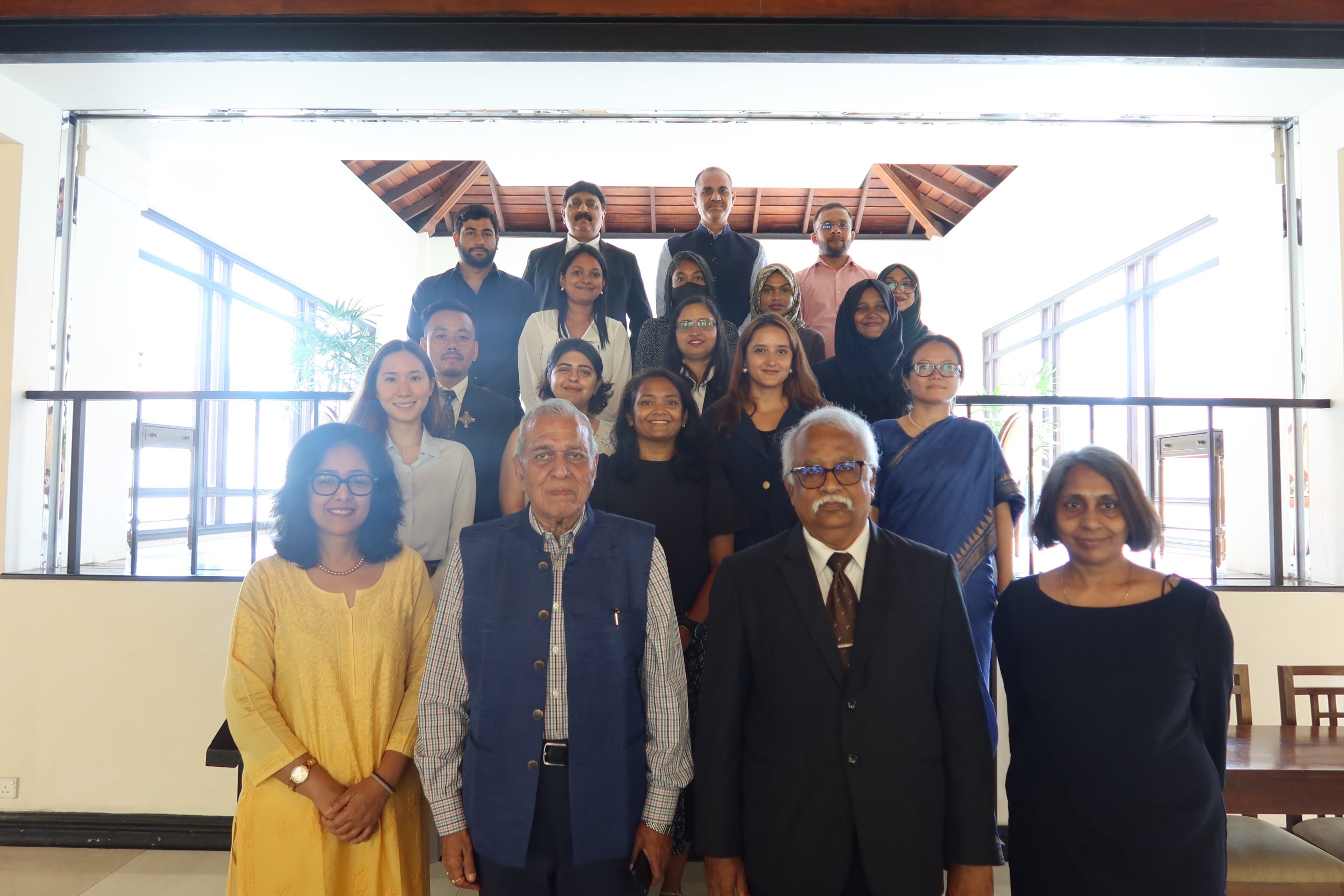
Together, they conducted a regional gap analysis, developed a gender-responsive Monitoring Toolkit, and launched a blended learning course to support its use. The course included a four-week online phase (September 2025) and a three-day in-person workshop in Colombo, Sri Lanka (14–16 October), focused on Toolkit uptake and rights-based action planning.
A Transformative Shift for NHRIs
The Colombo workshop marked a key entry point for NHRIs in South Asia to engage with climate change. Through the blended learning course, participants gained foundational knowledge of climate science, regional impacts, and both slow- and sudden-onset events, essential for linking climate risks to their legal mandates.
The course also strengthened capacity to apply human rights-based and gender-responsive approaches to climate-induced mobility, reframing climate change as a human rights crisis demanding institutional response.
Each NHRI left the workshop with a draft action plan aligned to its national context and priorities:
- Pakistan will develop a National Climate and Human Rights Action Plan, with a focus on legal review, baseline data, and coordination.
- Nepal is adopting the Monitoring Toolkit to track rights violations and advocate for gender-sensitive, durable relocation policies.
- Sri Lanka is establishing a climate focal point and integrating climate data, policy review, and fieldwork into NHRI operations.
- Maldives will focus on internal displacement and identity loss caused by saltwater intrusion and embed climate into its work plan.
- India is mapping slow-onset impacts and reviewing disaster protocols to better understand rights implications across geographies.
This initiative sparked regional momentum, moving NHRIs from climate awareness to accountability. As the SAU President and Sri Lankan High Commissioner put it: “Protecting rights in a climate crisis demands urgent action and stronger regional cooperation.”
Next Steps
RWI will gather insights from NHRIs in five countries on how they are applying the Monitoring Toolkit, focusing on relevance, challenges, and opportunities. With input from APF and SAU, these findings will be published in a regional report.
An online event will follow to share lessons and promote regional uptake, supported by distribution through NHRI and academic networks.