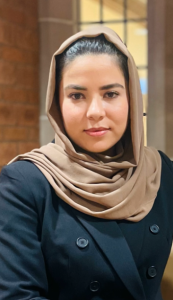
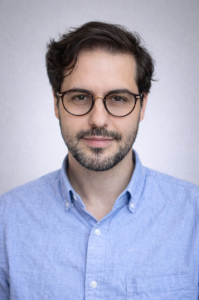
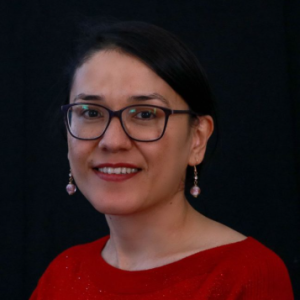
A key resource for the Afghanistan programme is our Afghan Research Fellows. The fellowships have the format of one-year scholarships, where incumbents are supported in conducting individual research, supported by mentors and with access to the RWI library and related resources. The fellows also play the role as experts and contribute as such both in RWI activities and in external forums.
RWI Research fellows are selected through a thorough, independent process, where a committee reviews all applications against qualification criteria set out in the advertisement of the open call for applications, and with a view to ensure as wide representation as possible in terms of gender and ethnic groups.
Research Fellows 2025
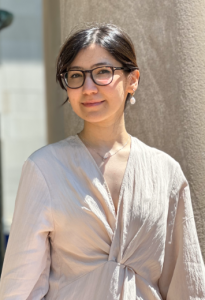
Fatema Ahmadi
Fatema D. Ahmadi is a human rights advocate with over 15 years of experience promoting women’s and children’s rights, focusing on policy and advocacy with various international organizations across different countries. Currently, she is a Research Fellow at the Raoul Wallenberg Institute, where she studies the political economy of child labor in Afghanistan for female-headed households through a feminist political economy lens. She is also an independent consultant and is currently at Rawadari, where she leads an accountability initiative related to the potential Afghanistan case at the International Court of Justice (ICJ) for violations of CEDAW by the Taliban. From 2022 to 2024, she served as a Fellow and Adjunct Instructor at American University’s School of Public Affairs in Washington, D.C., teaching Women’s Rights Movements in the Global South.
Ahmadi was a Fulbright Hubert H. Humphrey Fellow (2018–2019) at American University’s Washington College of Law, focusing on laws and policies concerning human trafficking and their effects on women and children. Through her fellowship, she provided consultancy for the World Bank and the International Republican Institute on the rights of women, minorities, and vulnerable communities in Afghanistan.
Ahmadi is pursuing an MSc in International Human Rights Law at the University of Oxford, holds a Master of Public Affairs in Global Management and Development from American University, and earned a bachelor’s degree in Microbiology.
Nazeela Elmi
Nazeela Elmi is a human rights scholar and professional specializing in conflict-affected regions, with a particular focus on gender, transitional justice, and inclusive peace-building. She has served as a Professional Specialist at the Afghanistan Policy Lab at Princeton University, centering human rights advocacy and policy research in her work.
Nazeela holds a Master’s degree in Human Rights Studies from Columbia University, where her research examined human rights abuses and reporting in Afghanistan, with an emphasis on marginalized and understudied communities. Previously, she worked with the Centre for Information Resilience – Afghan Witness, conducting open-source investigations and human rights monitoring, with a particular focus on the surge in women’s suicides, honor killings and extremist propaganda.
Nazeela has contributed to global policy discussions, engaging with high-level experts on Afghanistan’s evolving political and humanitarian landscape. Her commitment to human rights extends beyond research and advocacy to humanitarian initiatives, including fundraising efforts for displaced communities both within Afghanistan and in the diaspora.
Her scholarship includes publications in English, German, and Turkish critically analyzing the status of human rights and women’s situation under the Taliban rule. Her research interrogates dominant narratives on Afghanistan and explores gender issues through an intersectional lens, with particular attention to women’s resistance movements, the gendered impact of forced displacement, and youth engagement in peace and justice initiatives.
Nazeela’s lived experience as an Uzbek, Afghan woman, and young advocate deeply informs her scholarship and activism. She remains dedicated to advancing inclusive peace and justice programs for Afghanistan’s most marginalized communities.
Atal Ahmadzai
Dr. Atal Ahmadzai has been a dedicated advocate for environmental security and human rights. He earned his degree from Kabul University before pursuing further studies at Mahidol University in Thailand. His professional career includes working with the United Nations Development Program (UNDP), where he worked on human development initiatives in Afghanistan and co-authored the National Human Development Report for the country. Following this, Dr. Ahmadzai continued his education at Rutgers University, where he obtained a second master’s degree and a Ph.D. in Global Affairs, focusing on Environmental and Human Security. Since 2015, he has held various academic roles, including adjunct instructor, post-doctoral scholar, and visiting professor. During his time as a post-doctoral researcher at the University of Arizona, Dr. Ahmadzai examined the governance systems of armed non-state actors in South Asia. As a subject matter expert, he has also contributed to the work of the International Criminal Court (ICC) in The Hague. Dr. Ahmadzai’s research and teaching interests center on the intersection of environment, development, and conflict. Currently, as a Visiting Assistant Professor, he teaches environmental courses at Colby College. His scholarly and non-scholarly works have been published in numerous academic journals and respected publications. At the Raoul Wallenberg Institute (RWI), he examines the nexus between climate shocks and human rights in Afghanistan.
Mohammad Mustafa Raheal
Research Fellow, RWI Afghanistan Programme
E-mail: muhammad_mustafa.raheal@rwi.lu.se
Mohammad Mustafa Raheal is a dedicated activist and researcher specializing in human rights and social development. He holds a Master’s degree in International Development with Conflict and Humanitarian Action, achieved through the prestigious Chevening Scholarship and currently a Ph.D. candidate in the Humanities and Social Policy department at the University of Bath under a British Council Scholarship. His research focuses on urban-rural disparities and their impact on sustainable peace and human rights in Afghanistan.
With over seven years of experience in international development and humanitarian work, Mustafa has held key leadership roles with organizations such as the Swedish International Development Cooperation Agency (Sida) and the Folke Bernadotte Academy (FBA) at the Swedish Embassy in Kabul, the Civil Peace Service Program of the Deutsche Gesellschaft für Internationale Zusammenarbeit (GIZ), and the Migration for Development Program of the International Psychosocial Organization (IPSO). His expertise includes program development, risk assessment, multi-agency collaboration, refugee resettlement, and conducting research on equitable aid distribution and sustainable peacebuilding.
Mustafa served as a Research Consultant with the University of Bath’s Centre for Development Studies (CDS), focusing on fostering equitable partnerships in academic research and currently a Quantitative Researcher with University College London’s Institute of Education (IOE), Department of Education and Society, contributing to critical studies on refugee integration in England.
Through the RWI Fellowship, Mustafa will examine horizontal inequalities in aid distribution in Afghanistan, aiming to highlight systemic challenges. As a passionate advocate and researcher, Mustafa combines his professional and academic expertise to support marginalized communities and contribute to sustainable development.
Tahmina Sobat
Tahmina Sobat is a Ph.D. student in the Department of Gender, Women, and Sexuality Studies at the University of Minnesota-Twin Cities, where she is also a Fellow at the Interdisciplinary Center for the Study of Global Change (ICGC). She earned her law degree from Herat University in 2015 and went on to complete an LLM in International Human Rights Law at the University of Notre Dame in 2020. As a Fulbright Scholar, she obtained her second master’s degree in Gender and Women’s Studies at Minnesota State University, Mankato.
Tahmina’s interdisciplinary research centers on transnational feminist theory, epistemic violence, politics of representation, and peacebuilding. Her dissertation critically examines the Paradoxical Representation of Elite Afghan Women within Feminist Empire, exploring the complex intersections of gender, imperialism, and postcolonial thought. She employs feminist and postcolonial research methodologies, to challenge systems of power and exclusion.
Her scholarly contributions include publications in Contending Modernities at the University of Notre Dame, the Gender and Policy Report at the University of Minnesota, SIGMA: The South Asian Journal, and the Agitate journal. These works address issues such as gender apartheid, Afghan women’s struggles for transnational feminist solidarities, and the structural inequalities embedded in global peacebuilding efforts.
Professionally, Tahmina has held significant roles in human rights advocacy and women’s empowerment. She is currently serving as a board member for the Afghan Cultural Society in Minnesota. Previously, she worked as Monitoring and Evaluation Deputy for the Women Empowerment Program at Zardozi Organization, and Ombudsperson at the Afghanistan Independent Human Rights Commission (AIHRC).
Tahmina’s work reflects a deep commitment to advancing feminist scholarship and the field of Afghanistan studies, advocating for human rights, and fostering transnational solidarities to address the challenges facing marginalized communities in Afghanistan and beyond.
Kaweh Kerami
Kaweh Kerami is a political scientist whose work bridges politics, (digital) media and human rights. He earned his PhD in Development Studies from SOAS University of London, where he investigated how power dynamics and competing interests shape political competition and cooperation in post-intervention Afghanistan (2001–2021). Drawing on comparative and narrative analyses, supported by extensive primary data and elite interviews, his research offers nuanced insights into political bargaining and (in)stability in conflict-affected contexts.
As a Research Fellow at the Raoul Wallenberg Institute (RWI), Kaweh examines how journalists use digital technologies to document human rights violations, focusing on challenges such as verification, security, and legal admissibility. His work also addresses the role of misinformation, including AI-driven disinformation, in shaping political discourse and media landscapes. Through these investigations, he aims to support international accountability efforts by developing secure, credible documentation methods and strengthening pathways for peace and justice.
Kaweh taught at the American University in Kabul (2019–2021) and currently serves as a Master’s thesis supervisor at SOAS University of London. He has worked as a journalist for the BBC World Service, covering politics, war, and women’s rights, and most recently served as a specialist researcher for BBC Media Action on a U.S.-funded project examining media under Taliban rule. In his free time, he enjoys iPhone photography, capturing moments of beauty and reflection.
Yalda Bari
Yalda Bari, a human rights advocate and expert in women’s economic empowerment from Afghanistan, holds a Master’s degree in International Economics from Berlin School of Economics and Law (Hochschule für Wirtschaft und Recht Berlin). With over seven years of experience working with international organizations such as GIZ, BMZ, the International Labour Organization (ILO), USAID, and the German Center for Integration and Migration (DeZIM), her work spans development, business development, human rights, migration, and capacity building, with a particular focus on Afghan women’s empowerment.
Yalda’s research is centered on “Afghan Women-Led Businesses in Crisis: Addressing Human Rights Challenges and Recommendations,” in which she analyzes the impact of the current socio-political situation on Afghan women-led businesses. Through this research, she explores the human rights challenges these businesses face and formulates policy recommendations to support their resilience and economic empowerment.
Yalda previously served as a Human Rights Project Manager at an NGO in Berlin, where she worked on the Feminist Development Policy Towards Afghanistan project. In this role, she contributed to feminist policy development focused on Afghanistan, collaborating with international stakeholders to advance women’s rights and human rights initiatives while advocating for a feminist approach to policy-making in the context of Afghanistan’s evolving situation. She also worked as a Women’s Economic Empowerment Project Officer at GIZ, where she designed and managed projects aimed at enhancing Afghan women’s economic participation and strengthening women-led businesses.
Yalda is a Certified Trainer and Certified Master Trainer on Start and Improve Your Business (SIYB), recognized by the International Labour Organization (ILO). She has trained approximately 500 entrepreneurs and trainers across Afghanistan, helping small businesses start and grow by supporting them with business plan development and providing long-term capacity-building efforts.
As the founder of Bari SearchPath, a company that supported Afghan women’s labor market participation through job placements and capacity-building initiatives, Yalda led projects that provided training and development opportunities to enhance women’s skills and promote their economic independence. With a strong commitment to women’s empowerment and human rights, Yalda continues to advocate for Afghan communities both in Afghanistan and in exile.
Research Fellows 2024
Mitra Tanomand
Mitra Tanomand, a dedicated human rights advocate from Afghanistan, holds a Master of Arts & Humanities specializing in Gender Studies from the University of East Anglia, attained through the Chevening Scholarship. Currently pursuing a Ph.D. in Global Development with a focus on Education in the UK, Mitra is also a certified Project Management Professional (PMP)®.
With a background spanning over a decade in the human rights field, Mitra’s expertise encompasses gender and children affairs, human rights activities, research, Monitoring and Evaluation (M&E), as well as project development and management. Her research focuses on the critical issue of Gender-Based Violence in Afghanistan, utilizing a comprehensive critical discourse analysis approach. Proficient in feminist research methods, gender dynamics, social development, globalization, and business and development, Mitra brings a multifaceted skill set to her work.
Currently, Mitra is researching human rights issues in Afghanistan, focusing on girls’ education and “Unveiling the post-2021 Realities within Women’s Protection Shelters in Afghanistan: Navigating Challenges Amidst Socio-Political Shifts”.
Having worked primarily in national and international organizations, Mitra served as a Gender Consultant at Colombo Plan, making significant contributions to Women’s Shelters and Children Shelters projects in Afghanistan. Progressing in her career, she assumed the role of Chief Program Officer at The Colombo Plan, where she oversaw the Gender Affairs Program across Afghanistan. Her primary focus was advocating for women’s rights and combating gender-based violence.
As the founder and CEO of the Afghan Businesswomen Organization, a non-profit dedicated to women’s economic empowerment in Afghanistan, Mitra developed strategic business plans and managed projects aimed at empowering vulnerable women through income generation. Under her guidance, small to medium-sized home-based businesses were established in remote areas of Afghanistan. Mitra excelled in handling comprehensive research reports for fundraising and donor engagement.
With an unwavering commitment to human rights, gender studies, and community development, Mitra Tanomand stands as a beacon of change, contributing positively to critical issues in Afghanistan and beyond.
Maliha Shirzay
Maliha holds a Bachelor’s degree in International Relations from Malmö University, and two Master’s degrees in Asian Studies and Gender Studies from Lund University, Sweden. Currently, she is working as a Research Fellow in the Afghanistan Program at the Raoul Wallenberg Institute of Human Rights and Humanitarian Law in Lund. In this role, she collaborates with other research fellows to support the mandate of the Special Rapporteur Richard Bennett on Human Rights in Afghanistan. Although she has temporarily paused her work on her third Master’s thesis in International Migration and Ethnic Relations (IMER), Maliha remains committed to completing it in the near future.
Maliha is dedicated to investigating the rights of Afghan women, particularly focusing on education and empowerment. Additionally, she delves into the marginalized position of ethnic groups, specifically the Uzbeks in Afghanistan, and the obstacles encountered by Muslim women. Her research delves into the intricate nature of intersecting identities and the vulnerabilities experienced by these women. Maliha underscores the significance of cultural values in formulating strategies to advocate for their rights and emphasizes the importance of preserving their supportive identities while striving for empowerment. Her work underscores the significance of upholding the integrity of intersecting identities when examining how these women overcome societal barriers and work towards equality and agency.
Maliha has been actively engaged as a research assistant on various projects within the SASNET South Asian Studies Network since 2020, affiliated with Lund University. She played a significant role in the cultural research project titled “Vad Hände Sedan” where she conducted interviews with Afghan participants, translated them into Swedish, and facilitated the informed consent process. She also contributed to the ‘CARE’ research project from 2022 to 2023,at Malmö University, which focused on the study of “Inequality and Wellbeing in Transnational Families in Europe.”
Maliha is a highly dedicated individual who is actively involved in community initiatives in Malmö, Sweden, while also pursuing her academic interests. Though she has recently stepped down from her leadership position in the Afghan Forum Afghanska Akademiska Kulturcentrum i Sverige due to her busy schedule, she continues to be an active member of the organization. Her primary focus is on promoting the integration of Afghan women in Malmö. Maliha is also associated with two UK-based NGOs, Rahela Trust and Omid International, both dedicated to promoting women’s right to education and empowering women from disadvantaged backgrounds to become leaders. Additionally, they encourage women’s participation in post-conflict peace-building efforts and are committed to advancing women’s empowerment globally. Furthermore, Maliha is a founder and the President of the International Afghan Enlightened Women organization, where she advocates for women’s rights and supports young girls in their pursuit of higher education in Afghanistan.
Overall, Maliha perceives her academic journey as a humble pursuit of knowledge while striving to make meaningful contributions both within academia and through community service.
Hamid A. Formuli
Hamid A. Formuli is a human rights practitioner and a former career diplomat.
His tenure at the Afghan foreign service spans over 8 years, boasting an impactful career across various roles, starting from a consular associate, law and treaties officer to special aide to the deputy foreign minister for economic cooperation.
Hamid previously served as the Head of the Human Rights Section of the Permanent Mission of Afghanistan to the UN in Geneva, and alternative permanent representative to the Human Rights Council during Afghanistan’s first ever membership of the body and as an expert at its Bureau during Afghanistan’s vice–presidency in 2020.
Since 2022 Hamid Formuli has been a founding member and Senior Fellow at the Center for Dialogue and Progress – Geneva, where he leads activities on human rights monitoring and advocacy through research, legal analysis, and events organization.
Academically, he holds a Bachelors in Law and Political Science from Kabul University and earned a Master (Summa Cum Laude) of International Studies from Seoul National University, South Korea, focusing on International Development Cooperation Policy and Global Governance.
His research interests include nexus between conflict and development, International and UN-mandated accountability mechanisms, politics of international human rights action, and management of diversity in pluricultural societies.
Hamid is fluent in Dari/Pashto and English, proficient in German and has basic knowledge of French and Spanish.
Kobra Moradi
Kobra Moradi is a lawyer with a focus on human rights and international law. She has previously worked on international criminal accountability at the Australian Centre for International Justice, Afghanistan Human Rights and Democracy Organization, UN Assistance to the Khmer Rouge Trials, and Clooney Foundation for Justice.
Kobra is a law and international relations graduate. She also holds a Master’s degree in International Law and Diplomacy from the Australian National University, where she wrote her research dissertation on victim-centered transitional justice and Islamic law.
Haroun Rahimi
Haroun Rahimi is an Associate Professor of Law and the interim chair of Law Department at the American University of Afghanistan. Rahimi is also a Global Academy Scholar at the Middle East Studies Association (MESA). Rahimi’s research focuses on economic laws, institutional reform, Islamic finance, and divergent conceptions of rule of law in Muslim and modern thoughts, and religious authority. Rahimi’s research has appeared in reputable local and international journals. Rahimi has also collaborated as an independent consultant with a number of research firms and policy think tanks conducting policy research on institutional development and good governance in the South Asia context. He was a visiting professor at Università Bocconi. At the Oxford Centre for Islamic Studies, Rahimi has worked on Islamic finance as a poverty alleviation strategy, the legal history of Afghanistan, and the ways that legal transplantation is legitimized in Muslim countries. Rahimi was a visiting scholar at the International Institute for the Unification of Private Law (UNIDROIT) in Rome. Haroun Rahimi obtained his B.A. in Law from Herat University, his LLM in Global Business Law, and his Ph.D. from the University of Washington.
Humaira Rasuli
Humaira Rasuli is an Afghan human rights lawyer and women empowerment activist. Humairahas a Master degree in Law and Political Science, practiced as an attorney in Afghanistan, and registered with the Afghan Bar Association as a Human Rights Attorney. She is also a certified psychosocial counselor and has a diploma in Business Administration. She is currently engaged in a fellowship at the Raoul Wallenberg Institute (RWI) in Sweden. She with some other Afghan fellows also works in support of Richard Bennett (UN Special Rapporteur on the situation of human rights in Afghanistan)
Humaira has over 20 years of experience working in Afghanistan on issues related to gender, human rights, civil society development and rule of law. Her extensive experience includes senior management positions, development and leading two prominent NOGs in Afghanistan, training and mentoring lawyers and activists to increase women’s access to justice, uphold the rule of law in Afghanistan.
Humaira Rasuli started her social justice journey at the age of 16 when she was an Afghan refugee in Pakistan after the fall of the Taliban in 2001. For 20 years, she cofounded and let two local organizations programs in Afghanistan providing psychosocial counseling and legal support to survivors of violence against women across five provinces to serve, assist, and empower tens of thousands of women and girls affected by the war and crisis.
Humaira performed as a leading lawyer in investigating and trying some of the most high-profile sex-crime cases in Afghanistan involving warlords, politicians, drug lords and the criminal mafia. She has frequently travelled nationally to give trainings to women at grass-root level andinternationally. Humaira attended and contributed to workshops and conferences in regards to women’s rights agenda
Since the Taliban took over, she been at the frontlines from protesting, to mobilizing resources, to creating networks of support, educational opportunities to advance women’s rights and navigate the challenges of human rights progress and gender equality within Afghanistan.
Currently, she conducts lawyering skills trainings to law graduated students, provides on the job trainings to fresh lawyers and counsellors and participates in campaign to End Gender Apartheid crimes in Afghanistan and participate in meetings to encourage the UN member states to address systematic gender-based discrimination against women and girls in Afghanistan.
Research Fellows 2023
Voices of Research Fellows 2023
Research Fellows 2022
Voices of Previous Research Fellows
Below are Farima Nawabi and Massoud Adrakhsh, previous research fellows at the Raoul Wallenberg Institute in 2022.
Below you can find articles written by Farima Nawabi, as well as a podcast on the Taliban's Ban on Girl's Education 2022
The programme is financially supported by:
![]()
![]()