

Our work with the Ukrainian Parliament Commissioner for Human Rights
RWI has cooperated with the Ukrainian Parliament Commissioner for Human Rights (UPCHR) since May 2025. This cooperation focuses on strengthening human rights protection as Ukraine advances in its reconstruction and European Union (EU) accession process. In September 2025, the relationship between the RWI and UPCHR was strengthened through the signing of a Memorandum of Understanding to foster long-term cooperation between the two organisations. This cooperation occurs in the context of RWI’s Sida-funded “Human Rights Infrastructure for Ukraine 2025–2027“ (HRIU) project.
Workshops
The cooperation between RWI and UPCHR has included various workshops to strengthen the UPCHR and its regional office’s capacity in implementing its mandate in line with international human rights standards and Ukraine’s EU accession goals.
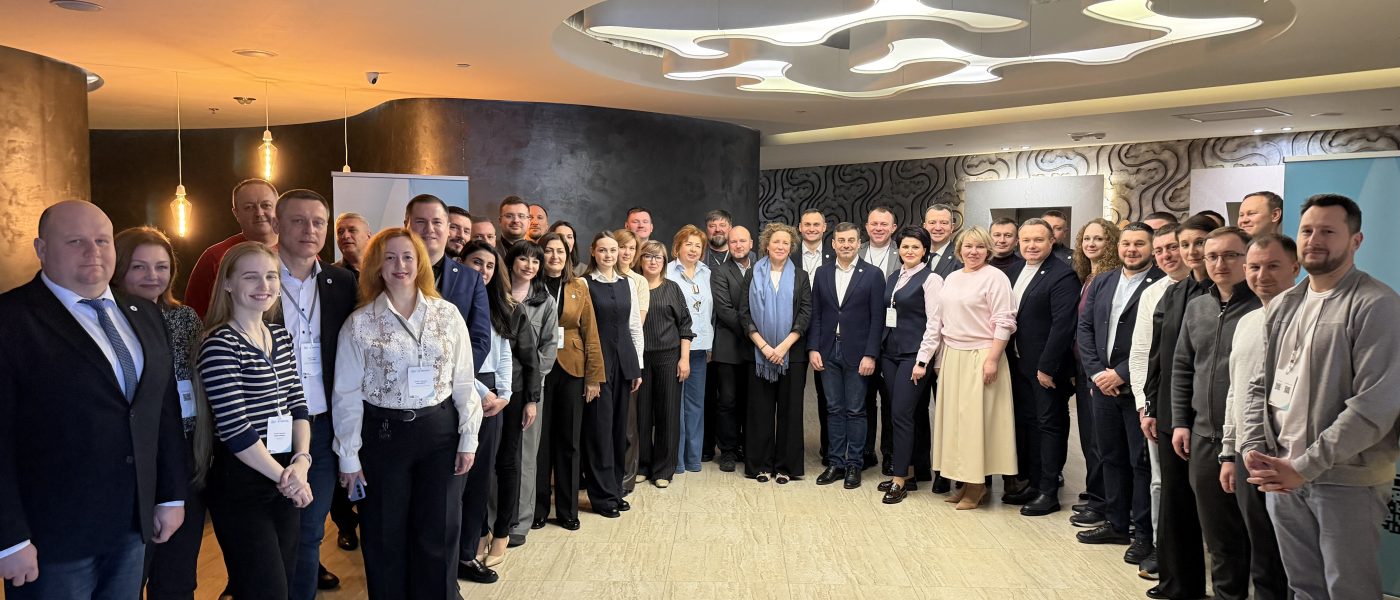
The first of these was a three-day workshop held in Kyiv from 29-31 October 2025, which focused on identifying institutional strengths and capacity gaps and enhancing coordination and communication mechanisms. Following the event, the UPCHR developed a Strategic Map to guide the institution forward and the outcomes of the workshop were compiled into a report to share with relevant Ukrainian stakeholders and potential donors, providing a clear overview of priority areas for support.
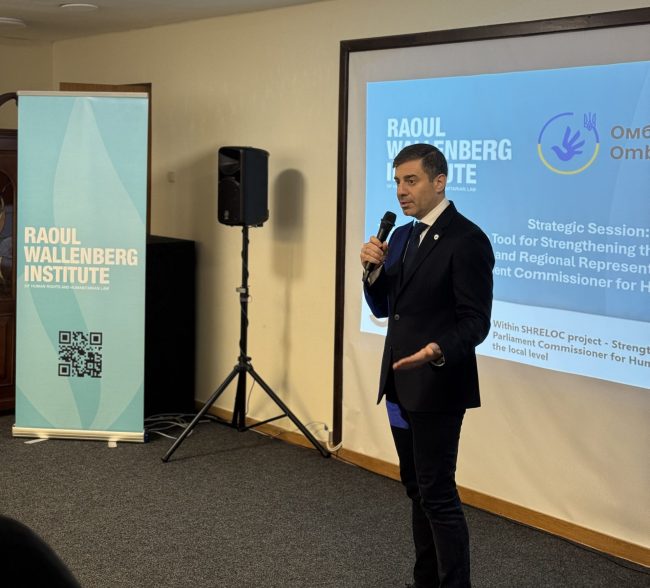
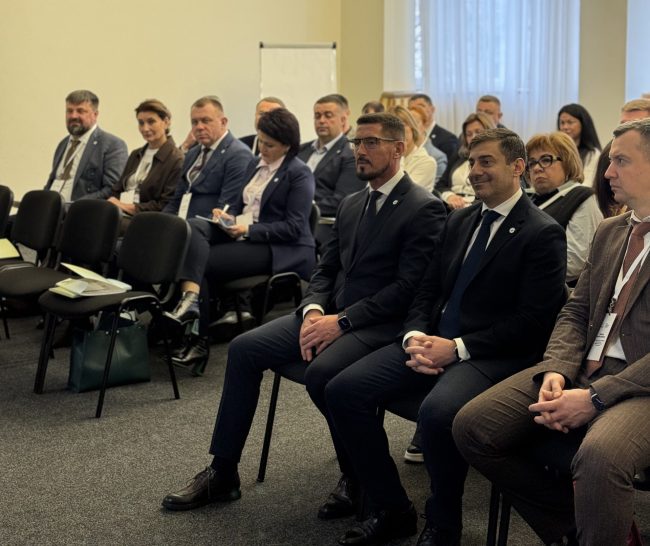
A second two-day training was held in Truskavets in early March 2026 for staff of UPCHR and its regional representatives that aimed to strengthen leadership capacities, improve internal management and coordination processes and to promote the use of innovative and digital solutions to enhance UPCHR’s effectiveness. These trainings focused on topics such as the role of managers as strategic leaders and AI and human rights.


International Exchanges
In addition to workshops, RWI has organised and facilitated international exchanges by the UPCHR to develop knowledge exchanges between NHRIs in Europe. These have strengthened UPCHR’s international relationships and has resulted in deeper understanding of key issues that NHRIs face.
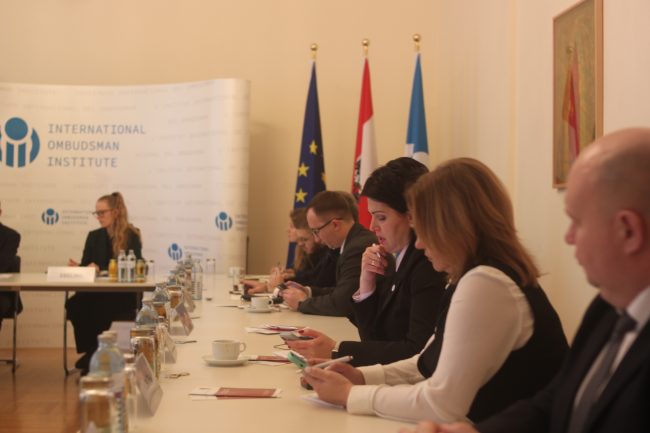
The first exchange was held in Austria in December 2025. UPCHR met the Austrian Ombudsman and was able to take part in in-depth discussions on topics such as human rights protection and implementation at the local level, the rule of law, and public sector reform. The study visit also took UPCHR to the city of Graz’s Human Rights Advisory Board, the Austrian National Preventive Mechanism, the International Centre for Migration Policy Development, and the Ludwig Boltzmann Institute of Fundamental and Human Rights. These meetings allowed extensive dialogue on common issues, as well as issues specific to Ukraine during the ongoing war. The visit culminated with a session on key takeaways that demonstrated increased understanding of important issues and the beginnings of ongoing communication and cooperation. A follow-up meeting was held to promote the integration of these findings.
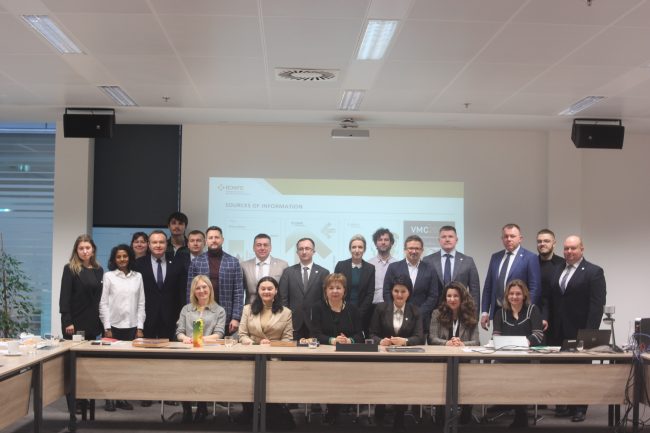
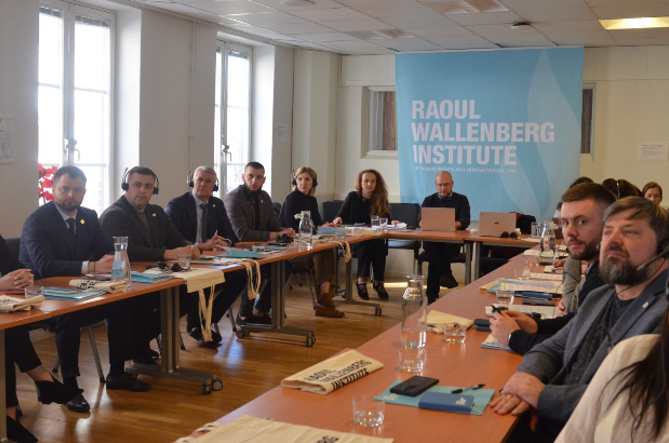
A second exchange took place in Lund, April 2026, where the UPCHR regional representatives met the Swedish Institute for Human Rights, Lund Municipality, Lund University and the Danish Institute for Human Rights, as well as RWI experts. These sessions covered the role of NHRIs during crisis and conflicts, human rights and artificial intelligence, the implementation of the Convention on the Rights of Persons with Disabilities, and Human rights work at regional and local levels. This resulted in the development of a concrete, needs-based action plan which will serve as a guide in improving UPCHR’s monitoring and enforcement mechanisms. The exchange gave participants a deeper understanding of international best practices for human rights implementation and monitoring and strengthened international networks.
GANHRI Reaccreditation Support
In addition to trainings and international exchanges, RWI has also provided technical assistance in UPCHR’s Global Alliance of National Human Rights Institutions (GANHRI) reaccreditation process. Accreditation by GANHRI constitutes the internationally recognized mechanism for assessing compliance of NHRIs with the Paris Principles. Attainment of ‘A’ status accreditation is essential for ensuring full participation rights within the UN human rights system, including speaking rights before the Human Rights Council and treaty bodies, and for reinforcing the credibility, authority, and institutional resilience of the UPCHR. The UPCHR faced re-accreditation review at the 47th Sub-Committee on Accreditation (SCA) session, which took place from 20 April to 1 May 2026 in Geneva.
RWI provided advisory support in the run-up to UPCHR’s GANHRI reaccreditation session, which resulted in UPCHR being reaccredited with ‘A’ Status. RWI is now working together with UPCHR on activities to further strengthen compliance with the Paris Principles, which set out the minimum standards for NHRIs to be considered credible and to operate effectively.
This support not only assists UPCHR with its own institutional capacity-building but also forms part of RWI’s wider cooperation with Ukrainian institutions to support the Ukrainian EU accession process.