
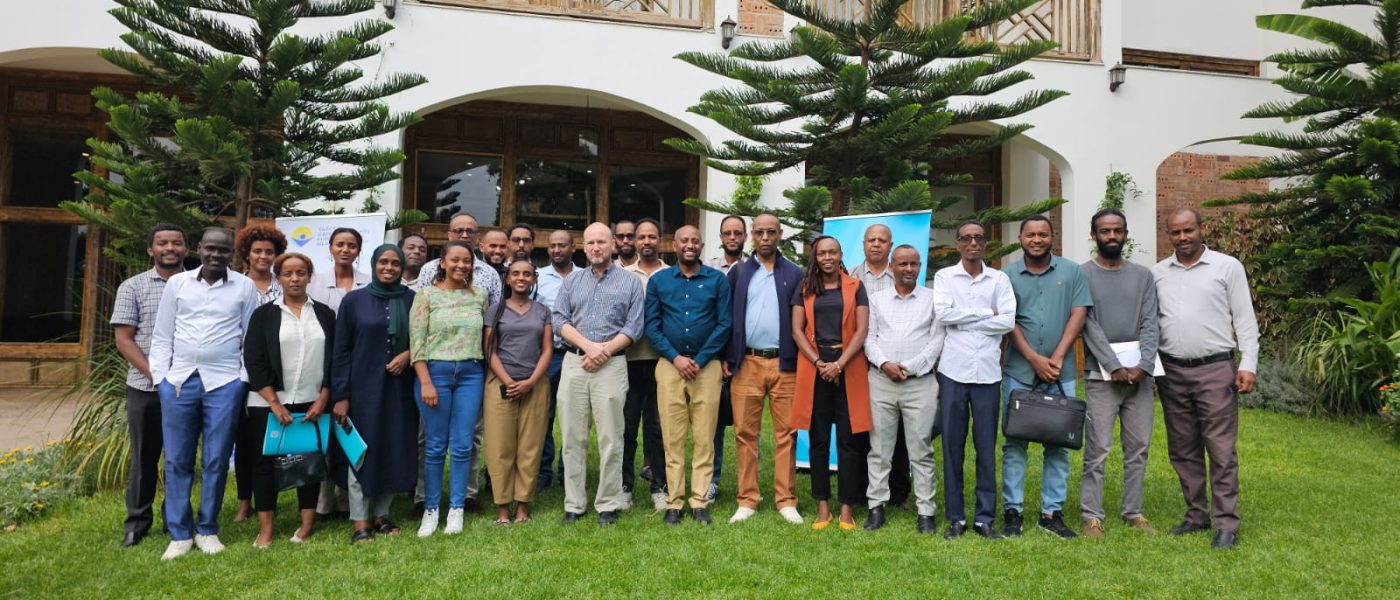
From 2024-25, RWI in partnership with the Ethiopian Human Rights Commission (EHRC), implemented a project aimed at strengthening the Commission’s ability to carry out its mandated functions of Human Rights Education and Human Rights Monitoring and Reporting, with the overall aim of contributing to the promotion of human rights in Ethiopia. The project was designed to enhance EHRC’s operational effectiveness and improve its ability to respond to emerging human rights concerns. Through targeted technical support and institutional capacity building, the project contributed to the broader promotion and protection of human rights in the country.
The project was implemented through 3 central components—turn EHRC’s module on women’s rights into an online course, develop an online course on detention monitoring, and contribute towards establishment of EHRC’s resource centre. Through these components, the project aimed to enhance EHRC’s operational efficiency in fulfilling its mandates, with a focus on detention monitoring, digital learning, and civil society engagement. As a result, EHRC has improved its ability to ensure more enhanced detention monitoring practice among its relevant staff and better public access for human rights education.
Some of the specific achievements of the project include the development of two online courses on detention monitoring: Basic and Advanced Detention Monitoring courses targeting EHRC staff and selected CSO stakeholders as well as the conduct of an in-person training for EHRC staff and CSO actors on detention monitoring. A total of 73 EHRC staff members and 12 civil society organization (CSO) experts received advanced detention monitoring training enhancing their critical skills in identifying human rights violations, drafting reports, and advocating for compliance with international standards. The development of an online version of EHRC’s course on Women’s Rights to ensure scalability and wider accessibility forms another achievement in addition to the establishment of a resource centre based on the premises of the EHRC as well as a digital library. Through the project, the resource centre has been supplied with key human rights materials including books, journals, online subscriptions to human rights platforms, as well as necessary hardware such as computers and other furniture. These efforts have strengthened EHRC’s institutional capacity and expanded its reach in human rights education.
The project also reinforced EHRC’s monitoring and reporting capabilities through follow-up visits to detention facilities, carried out by five city offices: Asossa, Gambella, Jigjiga, Mekele, and Semera. These missions assessed compliance with human rights standards and tracked progress on prior recommendations, demonstrating EHRC’s growing effectiveness in driving systemic improvements. Through this partnership, EHRC has taken significant steps toward becoming a stronger, more responsive national human rights institution.
This activity has been financially supported by Swedish Institute. RWI gratefully acknowledges Swedish Institute’s commitment to advancing human rights in Ethiopia.
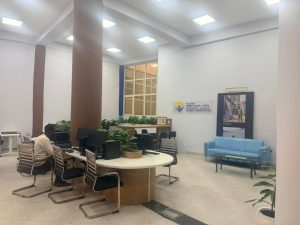
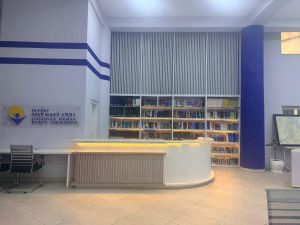
The EHRC’s Resource Centre, established with support from the RWI