
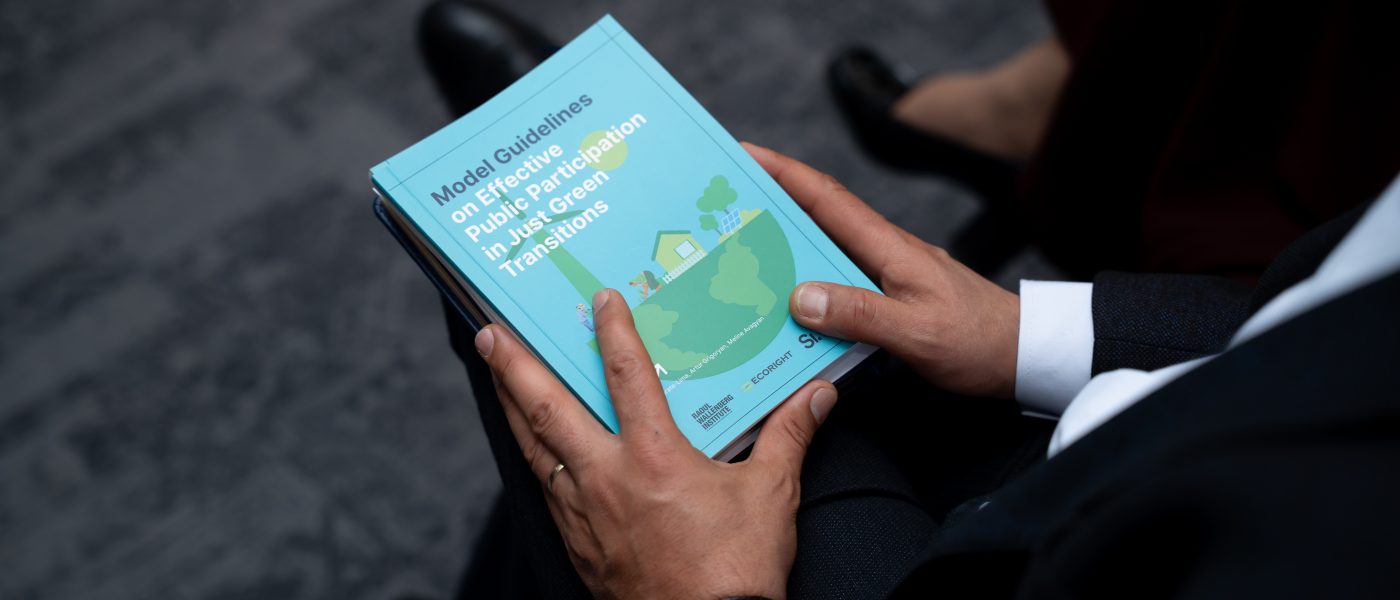
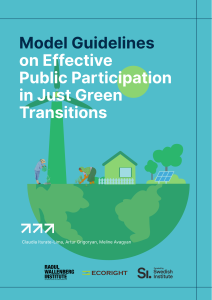
Designed for policymakers, practitioners, and civil society, these Model Guidelines provide practical tools to enhance public participation in environmental decision-making. The Guidelines were developed as part of the Effective Public Participation in Environmental Decision-Making in the EU and Eastern Partnership project, implemented by RWI and Ecological Rights NGO (Armenia) and funded by the Swedish Institute.
The Guidelines offer a practical, human rights-based framework for ensuring that communities, civil society, and affected groups can meaningfully participate in decisions about critical mineral extraction and just green transitions. They are available in both English and Armenian, making them accessible to local communities, civil society organizations, policymakers, and practitioners across the region.
The Guidelines, authored by Dr Claudia Iturate-Lima (RWI), Artur Grigoryan (Ecological Rights NGO) and Meline Avagyan (RWI), translate obligations from international human rights law which includes the Aarhus Convention, the International Covenant on Civil and Political Rights (ICCPR), the International Covenant on Economic, Social and Cultural Rights (ICESCR), the Convention on the Elimination of All Forms of Discrimination against Women (CEDAW) and ILO Convention No. 169 into concrete procedural steps for public participation in Environmental Impact Assessments (EIAs) involving critical minerals.
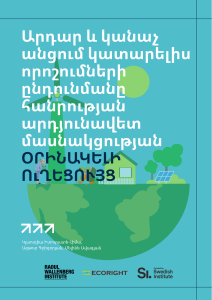
Community-Tailored Guideline
 Alongside the international Model Guidelines, we developed a community-tailored Armenian version to address the specific social, legal, and ecological context of Armenian communities affected by or at risk of mining activities. The guidelines are based on direct community engagement in Vayk, an area with confirmed but unexploited mining deposits where communities are involved in winemaking and tourism, and in Ayrum village in northern Armenia, where long-standing mining has already affected the environment and public health. Insights were also gathered from public hearings in Zaritap village regarding the Azatek gold deposit and in Karaberd village related to a gold mine geological study. These locally based guidelines help community members to understand their legally defined rights during public consultation processes, equipping them to engage meaningfully with EIA procedures.
Closing Event, Yerevan
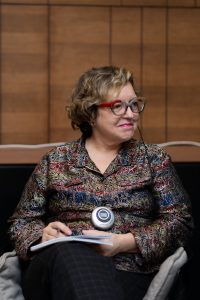
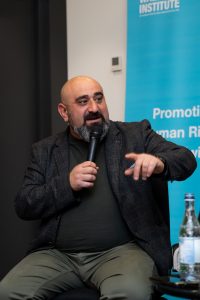
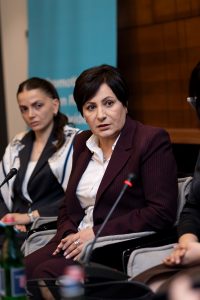
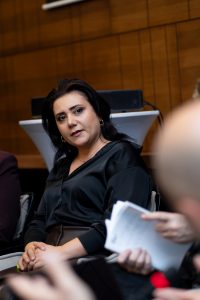
The project concluded with a closing event on November 25, 2025. The event brought together representatives from government institutions, civil society, academia, and international partners.
The event formally launched the Model Guidelines and highlighted the project’s key achievements and lessons learned.
The main highlights were a presentation of the project outcomes by Meline Avagyan (RWI), an online introduction of the Model Guidelines by Dr. Claudia Iturate-Lima (RWI), and an introduction of the community-tailored Armenian guidelines by Artur Grigoryan (Ecological Right NGO).
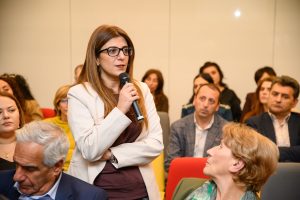
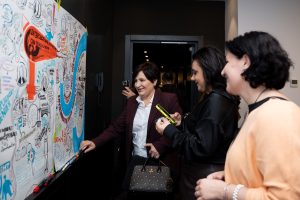
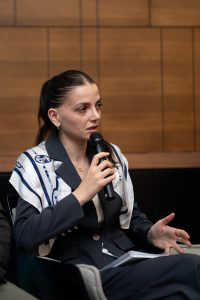
We held a panel discussion titled “From Engagement to Impact: The Future of Public Participation in Environmental Policy,” will bring together voices from the Ministry of Environment, youth environmental organizations, community support NGOs, and international academia.
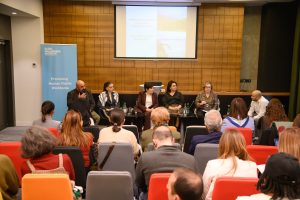
The event provided both an opportunity to celebrate the project’s accomplishments and a chance to initiate discussions about potential collaborations and the integration of these guidelines into Armenia’s ongoing environmental governance processes.
Youth Outreach Events
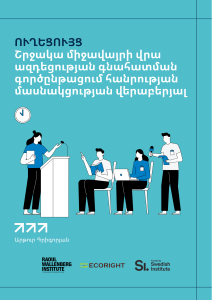
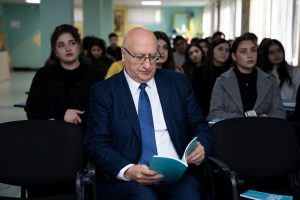
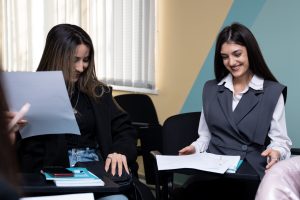
Following the closing event in Yerevan in December, the guidelines were presented to young people through community events held in Goris and Vanadzor. The trainings on “Model Guidelines on Effective Public Participation in Just Green Transitions” were held on 15 December 2025 at Vanadzor State University in Vanadzor and 17th of December in Goris Impact Hub.
The events were organized to present model guidelines for effective public participation in environmental decision-making, engage students in practical exercises, and foster civic awareness about the role of individuals in shaping sustainable outcomes.

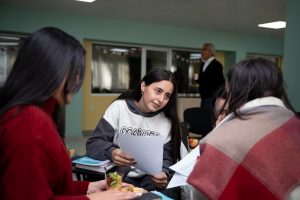
The trainings aimed to enhance participants’ understanding of public participation principles, demonstrate the practical benefits of engagement in environmental decision-making, and encourage enthusiasm for active civic involvement. Approximately 30 students participated in each training.
RWI Armenia’s Work on Environmental Rights
This project and these guidelines are part of the Raoul Wallenberg Institute of Armenia’s broader commitment to environmental human rights. RWI Armenia works at the intersection of human rights law, environmental governance, and community empowerment, supporting civil society, strengthening legal frameworks, and promoting the rights of individuals and communities to participate meaningfully in decisions that affect their environment and their lives.
Through our Sida-funded programme, we advance human rights-based environmental and climate governance by translating international standards into concrete national action, working closely with multiple units of the Ministry of Environment. Our work strengthens inclusive participation in COP17, with targeted support to women, youth, journalists, and civil society to ensure rights‑based and accountable climate action.