
By Halyna Kokhan, Programme Officer
In late May 2026, a 19-person delegation from Ukraine’s Ministry of Justice, the State Criminal-Executive Service, the Penitentiary Academy of Ukraine and the National University “Ostroh Academy” travelled to Stockholm and Helsinki on a study visit, organised by the Raoul Wallenberg Institute of Human Rights and Humanitarian Law. Over five days, the delegation met with the Swedish and Finnish Prison and Probation Services, visited remand and closed prisons, and held in-depth discussions with SPPS Training Unit, Finland’s Training Institute for Prison and Probation Service, Laurea University of Applied Sciences, the Office of the Parliamentary Ombudsman and the Finnish Ministry of Justice — examining how the Mandela Rules and the European Prison Rules are translated into everyday practice and staff training in both countries.
Since then, the Penitentiary Academy of Ukraine (PAU) has been turning those lessons into concrete training and outreach for its own cadets, staff and partners. Three recent activities, reaching 125 participants in total, show how the exchange is being carried forward.
Combining crisis response with human rights standards
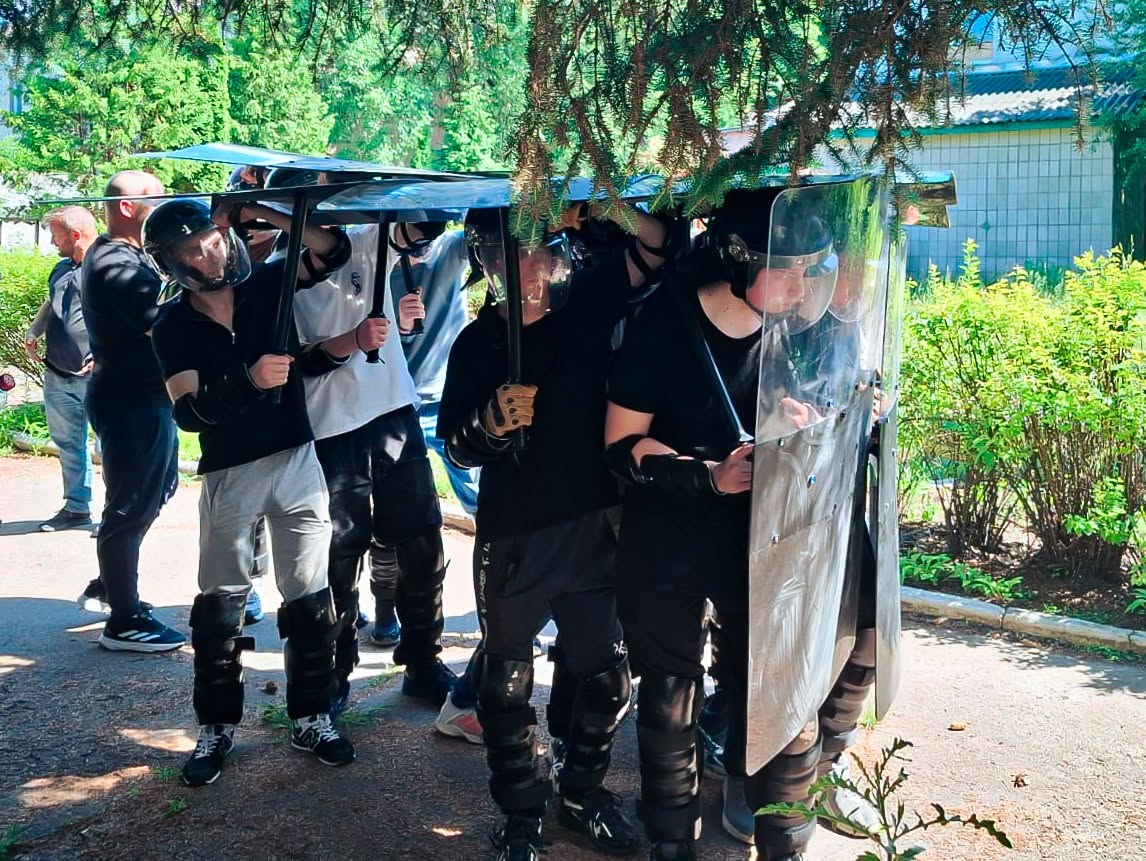
On 10–11 June, PAU’s training centre and practice range hosted a two-day course on responding to force-related threats in penitentiary institutions, bringing together instructors, cadets and members of the State Criminal-Executive Service’s territorial paramilitary units. The training combined analysis of Swedish and Finnish approaches to safeguarding prisoners’ rights and de-escalation in confrontational situations with hands-on physical and tactical preparation, including full-equipment exercises in crowd-control scenarios at the practice range. The aim, as the Academy put it, was to build clear, practised responses to crisis situations that hold to international human rights standards even under conditions of physical confrontation pairing professional skill with respect for human rights and personal safety.
Presenting the Nordic model of dynamic security
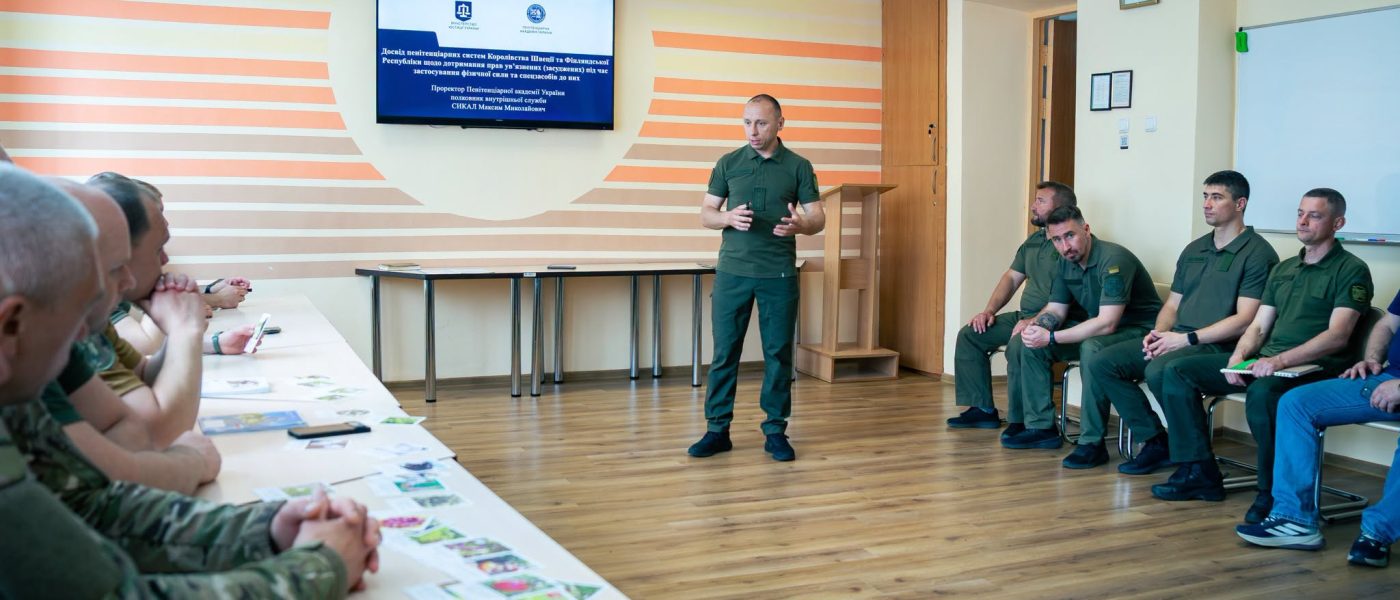
On 16 June, PAU held a practical session for cadets and staff introducing the safety, human rights and staff-training approaches used in the Swedish and Finnish penitentiary systems. PAU Vice-Rector Maksym Sykal and Vyacheslav Bosakevych, Head of the Academy’s International Cooperation and Project Work Department, shared what the delegation had observed at Nordic penitentiary institutions and training centres during the study visit.
The session centred on the concept of dynamic security — a cornerstone of the Nordic model, which relies less on physical barriers and technical controls and more on staff’s professional presence, ongoing communication with prisoners, relationship-building and early risk detection to keep institutions safe, reduce conflict and support rehabilitation. Participants also examined how Sweden and Finland structure staff training around human rights, psychology, professional ethics and conflict management, and how European standards on the use of force and special means — grounded in legality, necessity, proportionality and accountability — balance safety with the protection of fundamental rights.
Bringing the exchange to young people in Chernihiv region
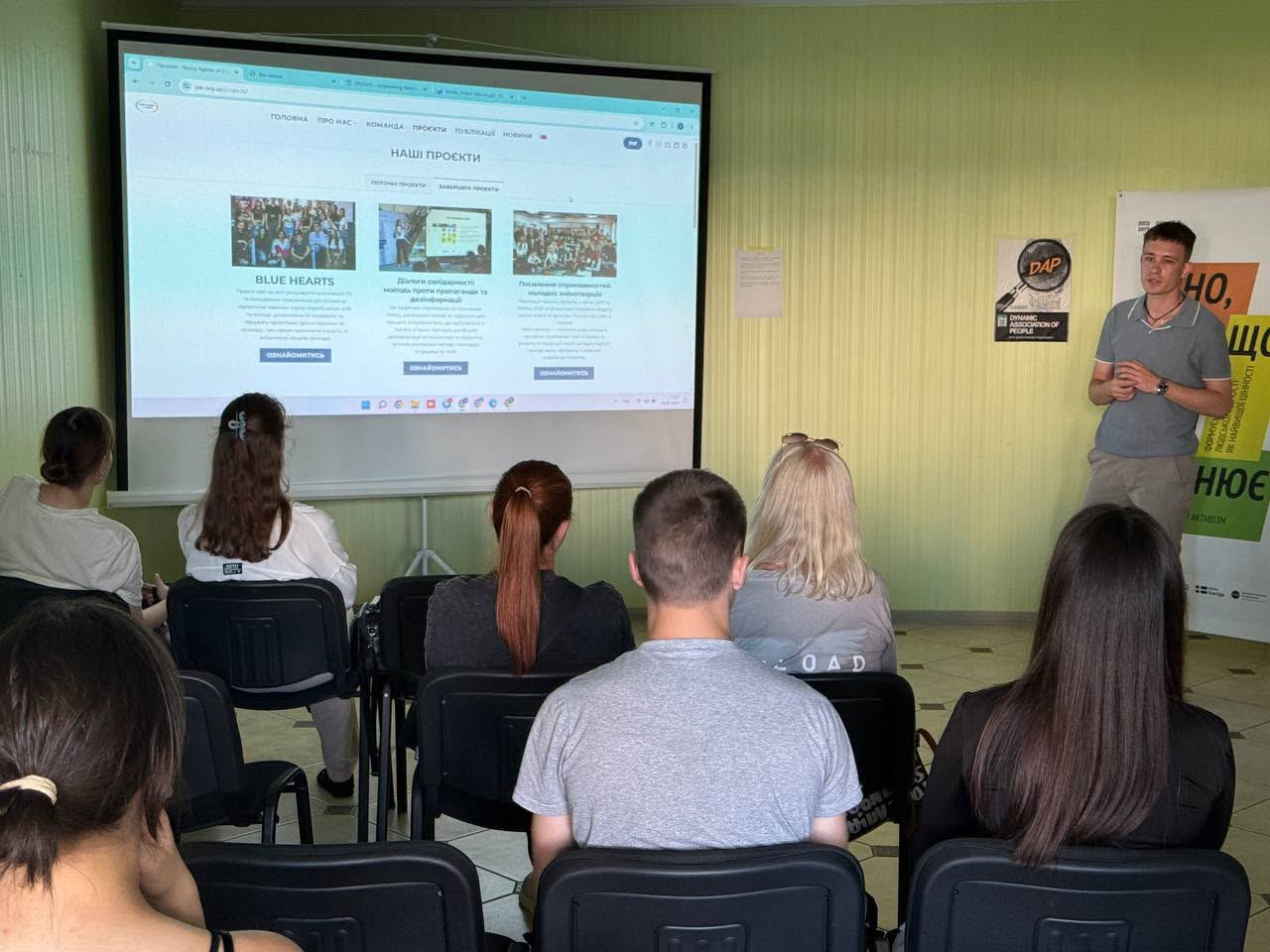
On 22 June, PAU’s legal clinic brought the study visit’s findings to a wider audience, organising an online exhibition and thematic lesson for clinic members and young people from Chernihiv region on international standards for protecting human rights in the penitentiary system, including a comparative look at the Ukrainian, Finnish and Swedish systems. The session drew directly on PAU representatives’ participation in the RWI-organised visit to Helsinki and Stockholm, highlighting how the Nordic model’s emphasis on human dignity, rehabilitation and constructive staff–prisoner relations can inform Ukraine’s own reforms.
The lesson was held alongside an online exhibition from the Erasmus+-funded INSIGHT project, developed with the NGO Young Agents of Change, which draws on interviews with people in Kolomyia and Zhytomyr correctional colonies to explore resocialisation, stigma and the protection of prisoners’ rights.
A continued exchange
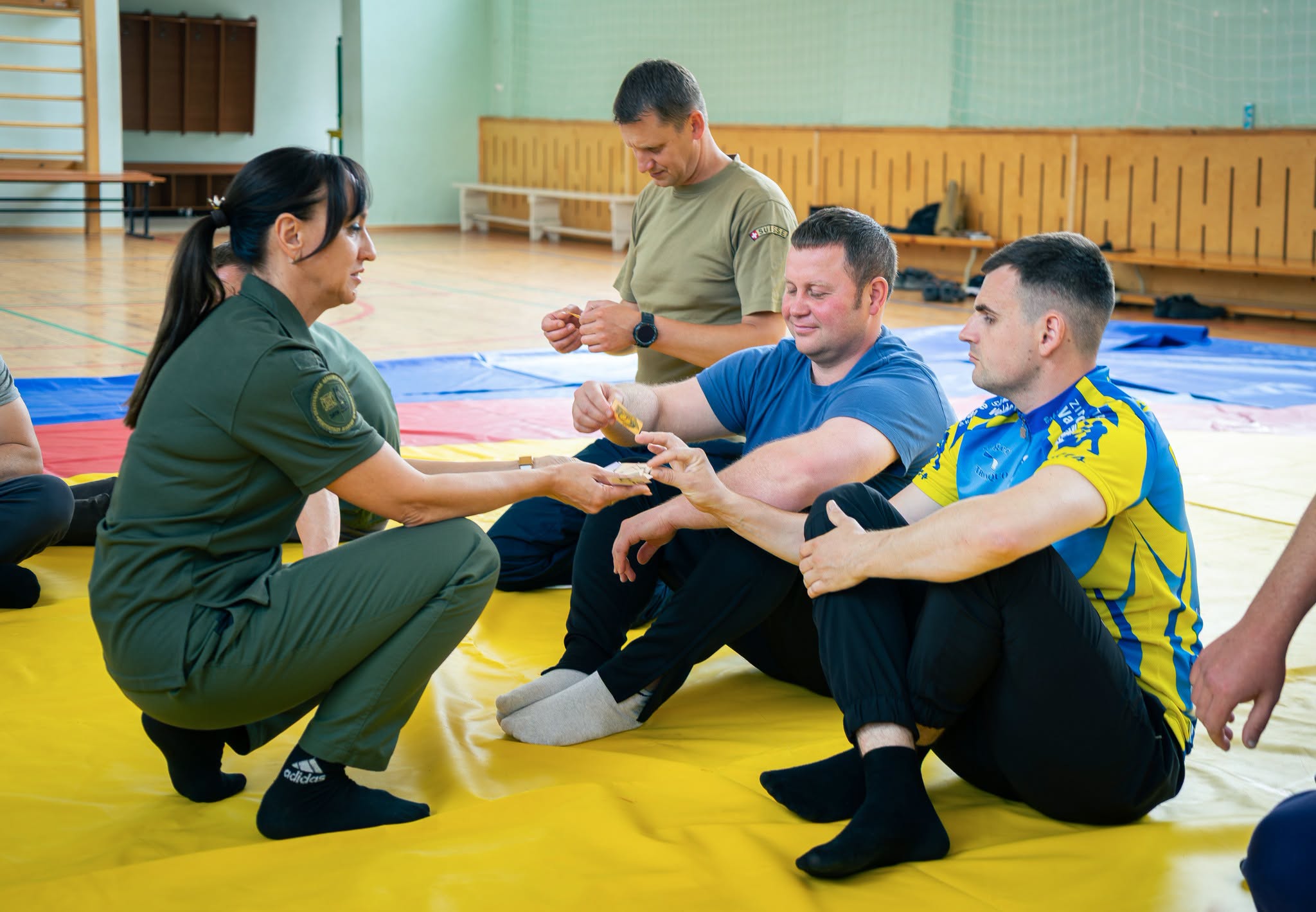
Together, the three activities reflect a deliberate effort by the Penitentiary Academy of Ukraine to embed the Nordic experience into its own training, operational practice and public outreach, reaching cadets, serving officers and young people alike. The study visit and its follow-up were carried out within RWI’s Human Rights Infrastructure for Ukraine Programme for 2025-2027, and RWI looks forward to continuing to support the Academy and its partners as they build these lessons into Ukraine’s penitentiary reform.
Learn more about our work in Ukraine: https://rwi.lu.se/ukraine/