
RWI and its partners disseminate a locally grounded teaching case on Responsible Business Conduct in Indonesia’s nickel sector, and find appetite well beyond the room to put it to use.
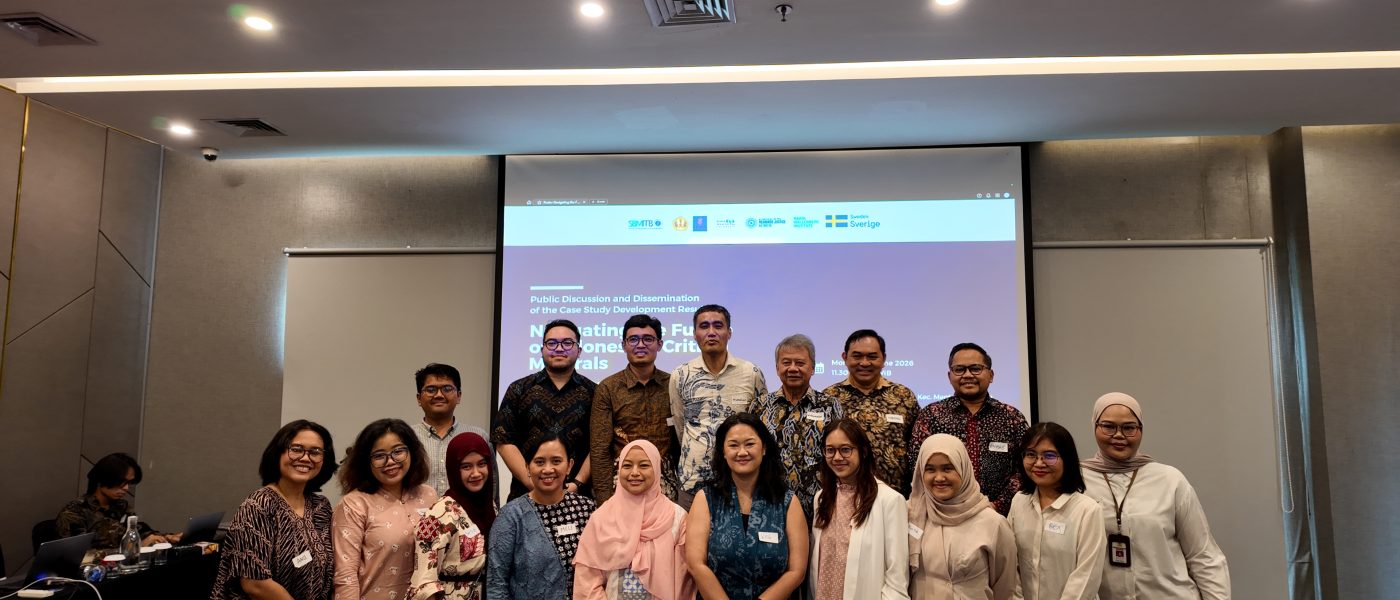
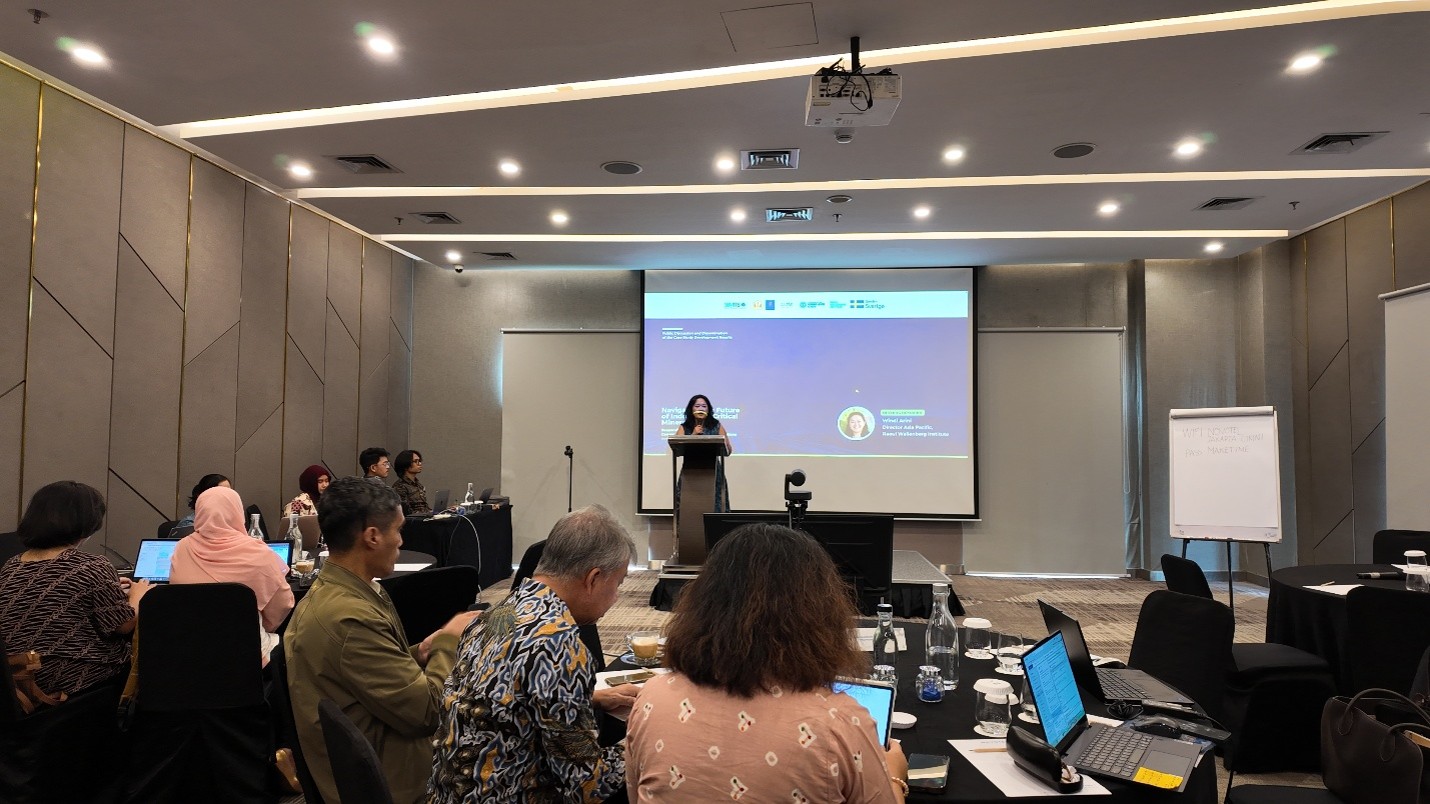
On 22 June 2026, the Raoul Wallenberg Institute (RWI) convened a public discussion in Jakarta. The event disseminated the results of a case study and teaching notes co-developed since September 2025: “Vale Indonesia: Responsible Business Conduct in the Critical Mineral Mining Sector.” RWI worked on it together with Publish What You Pay (PWYP) Indonesia as lead organiser, the School of Business and Management of ITB (SBM ITB), and the Centre for Human Rights of Universitas Padjadjaran (PAHAM UNPAD). The hybrid event brought twenty participants into the room. They came from universities and business case study centres, a national human rights institution, civil society organisations, ESG consultants, and an industry association. A representative of the Initiative for Responsible Mining Assurance (IRMA) joined online.
The timing is not incidental. Indonesia holds roughly 42% of the world’s nickel reserves and supplies around 51% of global production. That places it at the centre of the global energy transition. It also puts the industry under intensifying expectations on responsible sourcing, human rights, and environmental protection, including the “dirty nickel” narrative now shaping market access.
Built to teach, not to assign blame
At the heart of the initiative is a deliberate choice about purpose. The case study is built to help learners reason, not to assign blame. It draws on the business-school case method. It presents a real-world scenario and factsheets that pose a genuine dilemma, and positions learners as the protagonist who must make a decision at a defined decision point. The learning context is PT Vale Indonesia, a pioneer in nickel mining and down streaming, now undergoing assessment against the demanding IRMA standard. The case surfaces a central question. Must competitiveness and responsible business conduct always pull against each other? Or can they be made complementary as responsible conduct becomes the shared global language of the sector? Keeping the focus on learning rather than on apportioning fault matters. It protects the integrity of the case method, and it reflects how politically and socially sensitive these issues are.
Locally grounded teaching cases of this kind remain scarce in Southeast Asia. Business and law educators have largely relied on materials drawn from other contexts. The dissemination was the culmination of a longer process. The case was first tested through Training of Trainers sessions led by SBM ITB and PAHAM UNPAD, drawing faculty from both universities and from other institutions and disciplines. It was then piloted in real classrooms, with MBA and professional executive students at SBM ITB and undergraduate students at PAHAM UNPAD.
From simulation to reality
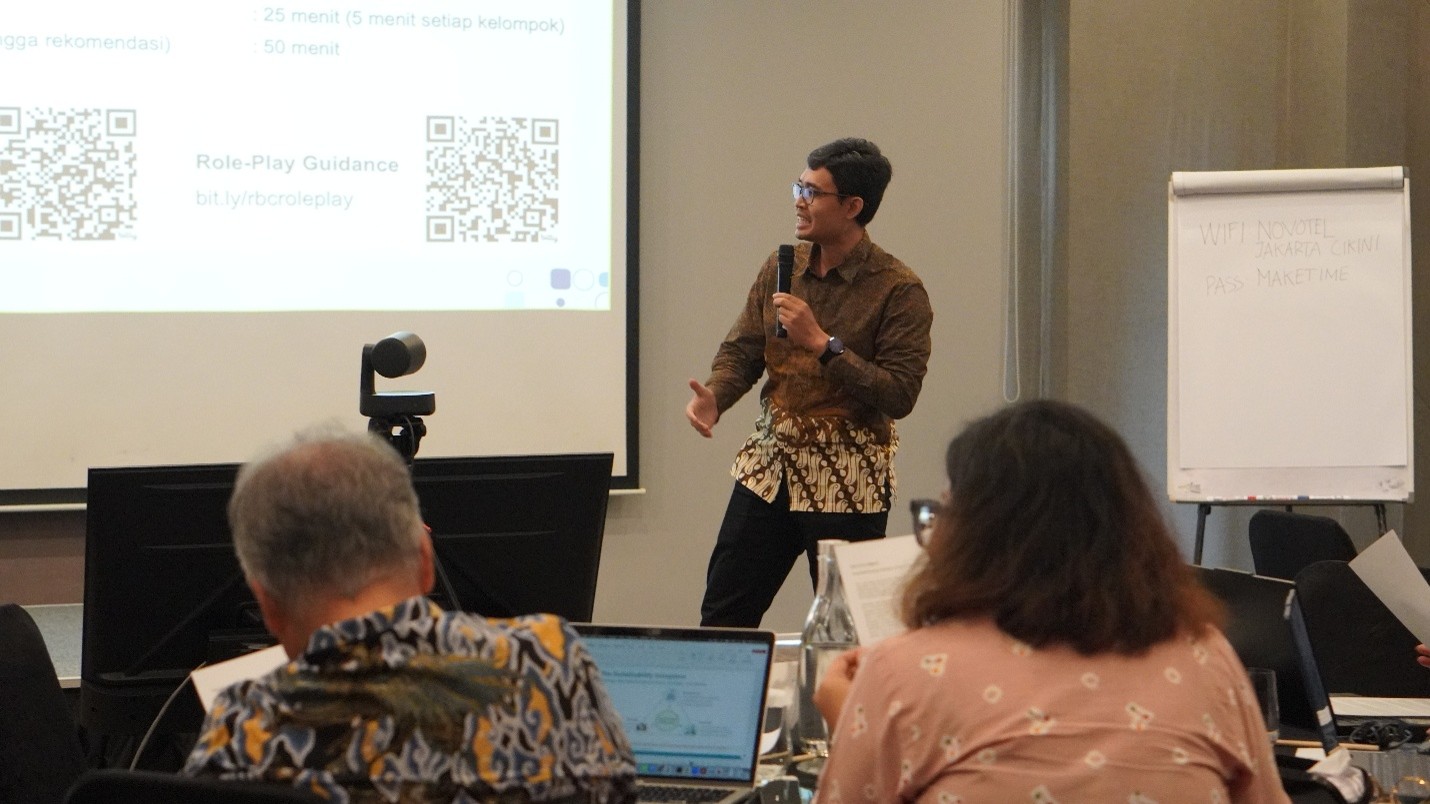
Rather than simply presenting findings, the event let participants experience the method. In a live role-play, the room was divided into stakeholder groups: company, government, community, civil society, and academia. Each group argued its position on a single decision point. This surfaced the real frictions the case is designed to expose. An expert panel then carried the discussion from the classroom into the sector itself.


Several reflections stood out. Andre Barahamin of IRMA described responsible-mining assurance as a kind of “shared currency.” It is a common language across global supply chains. Its value lies less in any price premium than in a “premium of trust” that helps open access to leading international buyers. In that framing, responsibility is becoming a determinant of competitiveness, investment readiness, and long-term resilience, rather than its opposite. Atina Rizqiana of the Center of Economic and Law Studies (CELIOS) pointed to a constraint closer to home. She described a landscape of fragmented, largely voluntary self-assessment instruments and uneven enforcement, where company performance on environmental and human rights measures is often weak. Widhyawan Prawiraatmadja of SBM ITB underlined how weak governance and vested interests can raise costs. This erodes the very national competitiveness the sector seeks to protect. Together, the panel made the case that realising responsible business conduct depends on complementary roles across sectors. Government provides political will, regulatory certainty, and transparency. The business sector stays accessible and engaged. Academic and civil society communities stay active.
A further insight was methodological. Co-developing a single coherent case across business academics, law academics, and civil society is not how these disciplines usually work. It was a deliberate experiment, and a difficult one. The collaboration held. It produced one balanced teaching tool that can serve business, law, governance, and community learners alike, with only the teaching note changing between them. That is itself among the initiative’s important results.
Growing appetite for uptake
The most encouraging signal came at the close. RWI gathered expressions of interest from participants. Eleven institutions responded, all consenting to further contact. Interest extended well beyond the original consortium. It came from a national human rights institution (Komnas HAM), civil society organisations (ICEL and FIHRRST), an industry association (APNI), a sustainability and social-impact consultancy (A+CSR Indonesia), and law and business faculties including the Faculty of Economics and Business of Universitas Indonesia. Respondents were drawn not only to receiving the materials. They also wanted to pilot the case, join facilitator orientation, and adapt it to their own institutions. Several were open to exploring regional scaling.
The Indonesia workstream also concludes a broader effort. A parallel case-based learning initiative began earlier in Cambodia, where business and law schools developed and integrated their own case studies through a different approach. Together, the two point towards a model for embedding responsible business conduct into business and law education across the region.

This initiative is supported by the Swedish International Development Cooperation Agency (Sida) under RWI’s Regional Asia Pacific Programme (RAPP II). The programme works to strengthen the capacity of academic institutions and civil society to teach Responsible Business Conduct and Business and Human Rights through locally grounded, interdisciplinary learning. RWI extends its sincere thanks to all partners, speakers, and participants for their openness, expertise, and insight.