Program Overview
SAYP 2025 aims to equip young professionals from the Eastern Partnership countries, including civil servants, policymakers, civil society representatives, and researchers, with the knowledge, tools, and networks needed to promote EU rapprochement and democratic governance to address these challenges. The programme provides practical training on governance, human rights, and socio-economic justice in the context of Just Transition, ensuring that climate and economic policies are inclusive and rights-based.
Despite their potential, many professionals in the EaP region face challenges related to limited institutional capacity, policy fragmentation, and weak stakeholder engagement in transitioning toward sustainable and democratic governance models. They need specialized knowledge, policy tools, and international best practices to ensure that economic and climate transitions are inclusive, equitable, and rights-based.

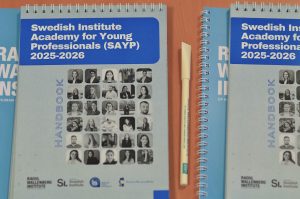
By providing practical training in socio-economic justice, human rights-based policymaking, and environmental democracy, SAYP 2025 will strengthen its ability to drive reforms that align with EU policies and democratic principles. This directly contributes to the overall SAYP programme objective of promoting EU rapprochement and democratic governance, ensuring that young professionals are equipped to support transparent, accountable, and participatory decision-making processes in their home countries.
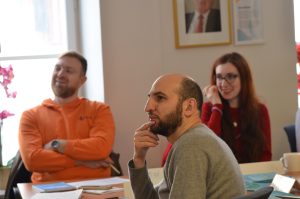
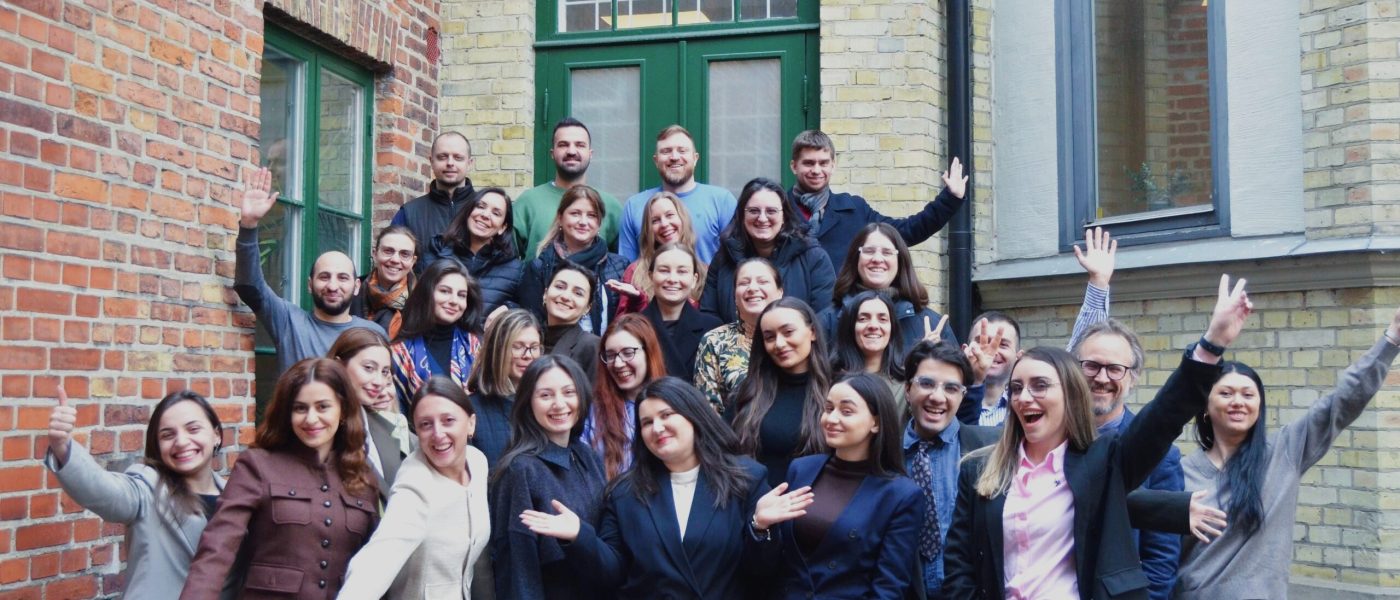
This year’s training in Lund on March 8-15 brought together young professionals from Armenia, Ukraine, Georgia, Moldova, and Azerbaijan working in government, civil society, academia, and the private sector for a week of learning and exchange on issues connected to Just Transition. They participated in workshops, expert discussions, and peer-learning to learn, share, and explore solutions to pressing human rights problems in their countries and globally. Through these interactive sessions, participants will:
- Analyze multi-level governance challenges in Just Transition policymaking.
- Explore human rights and labor rights dimensions of sustainable economic reforms.
- Develop practical strategies for stakeholder engagement and policy innovation.
- Strengthen cross-border cooperation and learn from Swedish and EU experience.
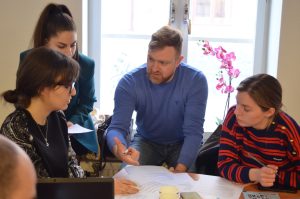
By fostering regional collaboration and interdisciplinary learning, the programme empowers emerging leaders to design and implement policies that protect vulnerable communities, promote fair economic transitions, and align with EU sustainability goals. Ultimately, SAYP 2025 contributes to building resilient, inclusive governance frameworks that advance social justice, economic equity, and environmental sustainability across the region.
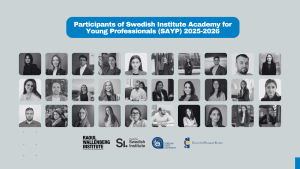
Partners
The Centre for European Studies (CES) at Yerevan State University (YSU) is our regional partner for SAYP 2025/2026. With its expertise in EU studies and its Human Rights and Democratisation in the Caucasus Master’s programme, CES brings valuable academic resources and regional networks to the programme.
CES will support outreach by engaging its broad alumni network, contribute to participant selection, and help contextualize Just Transition discussions within the specific realities of the EaP region. CES will also deliver expert lectures on the EU’s engagement in the Eastern Neighbourhood, covering EU democracy support strategies, legal frameworks, environmental human rights, displacement, and just transition challenges, including relevant case studies.
The Raoul Wallenberg Institute was involved in the program both in coordinating the work—bringing different people together—and in shaping the content, where our team designed and delivered a significant part of the training.
We asked some of our participants How SAYP and a human rights–based approach would help them in their day-to-day professional work.
I work for the Georgian Farmers Association, which is an umbrella organization that unites farmers. We also work on climate and environmental issues. Human-based approaches are a new and exciting area for me, and I am excited to learn more about looking at environmental and climate-induced disasters from a human rights perspective. I have been trying to learn more about this and incorporate it into the CSR strategy that I am about to develop for the organization, so this is an important takeaway for me.
Nino Jibuti
I work with young people, particularly those who have experienced child abuse or child trafficking. This training on environmental justice, science and the just transition in business will allow me to apply my skills to emphasize the importance of these issues. During our activities with young people, we can consider social entrepreneurship and the issue of environmental displacement in our region. It is important to me to apply this expertise when working with youth, so that in the future, they can empower their communities and their peers.
Gubat Abdullaev
I work as a mentorship facilitator for the Young European Ambassadors Network in Armenia, working with young people from different regions. I am planning to share the knowledge I have gained here with youth, particularly with regard to climate change and just transition. I hope that they will be able to implement changes in their own villages and regions afterwards. I believe that a human rights-based approach is essential in all areas of our work, and the strategies we learned here can be implemented at different stages of it. Perhaps starting at the local level, it can impact national decision-making policies.
Anush Mkrtchyan
I am planning to implement all the knowledge that I have received here, both from the lecturers and from the other participants, directly into my work with the rapid response in Ukraine. This will involve responding to the challenges of war in terms of working with veterans and emergency preparedness in communities. I will implement human rights approaches and all the tools we received from the lecturers and other participants. During my work in Ukraine, if I needed international expertise in environmental or human rights issues, I knew where to go. For example, I can go directly to the Raoul Wallenberg Institute at Lund University to speak to my amazing colleagues, and this expertise is very valuable.
Viktoriia Klymchuk
Participation in the SAYP program “Just Thrive” strengthened my capacity to design a project that integrates human rights principles into environmental policies, supported by follow-up mentorship from the Raoul Wallenberg Institute lecturers. Through the program’s practical learning approach and the valuable exchange of experiences with participants from the Eastern Partnership countries, I gained important perspectives on addressing shared regional challenges. Last but not least, this valuable experience, together with the in-depth knowledge, collaboration, and networks built through SAYP, has enhanced my understanding and strengthened my ability to contribute and to advance rights-based development initiatives in Moldova.
Irina Cojocaru
The program will help me incorporate human-rights-based approaches into my work on hydrogen infrastructure and financing, particularly in developing guidelines for responsible and inclusive investment in clean hydrogen value chains. The training on climate governance, environmental justice, and displacement will inform my research on hydrogen deployment by ensuring that infrastructure planning and investment decisions consider equity, community impacts, and labor transitions. Through engagement with experts and mentors from the Raoul Wallenberg Institute and partner institutions, I aim to translate my research into practical policy recommendations, potentially contributing to collaborative work on sustainable finance frameworks for hydrogen projects.
Aliaksei Patonia