
By Clemence Velon-Bazzana, Communications Associate
Bringing together 25 leading IHL experts, scholars and policymakers from five continents to help shape the legal, methodological, and institutional foundations of a new initiative for evidence-based monitoring of international humanitarian law.
As armed conflicts generate unprecedented volumes of information and competing interpretations of events, the need for independent, methodologically rigorous, and evidence-based approaches to monitoring and analysing incidents relevant to international humanitarian law (IHL) has never been greater. The International Humanitarian Law Compliance Monitoring Database (ICMD) seeks to address this challenge by establishing a trusted framework for collecting, assessing, and analysing information relevant to international humanitarian law across contemporary armed conflicts.
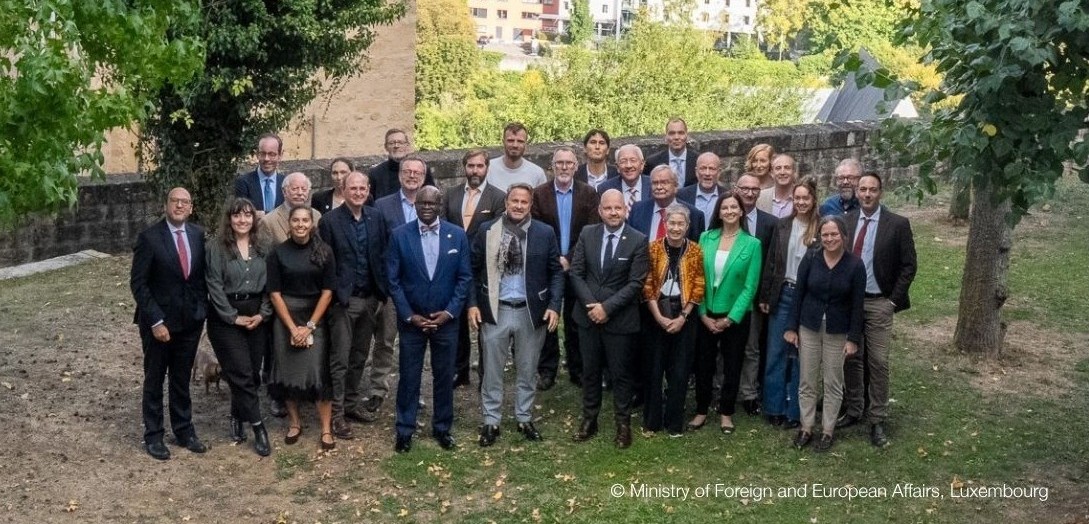
Against this backdrop, the Government of Luxembourg, in partnership with the Raoul Wallenberg Institute (RWI), hosted the fourth international expert consultation on the development of ICMD in Luxembourg.
The consultation brought together a carefully selected group of 25 leading experts from five continents, including internationally recognised scholars of international humanitarian law, legal practitioners, technologists, and policy specialists. Their participation reflects both the significance of the initiative and a growing recognition within the international community that effective monitoring of compliance with international humanitarian law requires rigorous methodologies, strong institutional safeguards, and global expertise.




At a time when facts are increasingly contested and information environments are becoming more complex, the ability to produce independent, evidence-based assessments grounded in transparent and credible methodologies has become increasingly important. The experts gathered in Luxembourg were invited to provide critical advice and deep insights into the legal architecture, methodological framework, and institutional design of ICMD, helping ensure that the initiative is built on empirical evidence, sound legal reasoning, transparency, and internationally recognised standards.
“International humanitarian law can only be as strong as our collective ability to understand how it is implemented in practice. ICMD seeks to contribute to that effort by building a rigorous, transparent, and evidence-based system for monitoring patterns of compliance and violations. Bringing together 25 leading experts from five continents was an invaluable opportunity to test our assumptions, challenge our methodologies, and strengthen the foundations of the initiative.” – Peter Lundberg, RWI Executive Director
Participants examined key questions concerning evidentiary standards, incident assessment methodologies, review processes, legal qualification, quality assurance, and approaches to communicating findings. Discussions also addressed a range of substantive areas relevant to contemporary armed conflicts, including the conduct of hostilities, protection of civilians, occupation, cyber operations, and incidents affecting combatants. Throughout the consultation, experts provided detailed recommendations aimed at strengthening the legal, methodological, and institutional foundations of the initiative.


The consultation reflects a growing international recognition that stronger compliance with international humanitarian law requires not only legal commitments, but also credible, independent, and evidence-based mechanisms capable of monitoring and analysing incidents relevant to IHL at scale. More than a technical exercise, it demonstrated the value of bringing together leading expertise from across regions and disciplines to help develop practical tools that can strengthen transparency, support informed policymaking, and contribute to a better understanding of how international humanitarian law is applied in contemporary armed conflicts.
Concluding the consultation, Luxembourg’s Deputy Prime Minister, Minister for Foreign Affairs and Foreign Trade, and Minister for Development Cooperation and Humanitarian Affairs, Xavier Bettel, reaffirmed Luxembourg’s commitment to the initiative:
“Luxembourg is proud to be the first country to financially support ICMD, recognising the growing need for rigorous and independent monitoring of compliance with international humanitarian law. The gathering of distinguished experts in Luxembourg this week reflects our shared commitment to strengthening respect for the law and protecting human dignity in times of conflict.”
Luxembourg was the first state to support the ICMD initiative and continues to play an important role in advancing international efforts to strengthen respect for international humanitarian law through innovative and evidence-based approaches.
Launched in 2024, the International Humanitarian Law Compliance Monitoring Database (ICMD) is a collaborative initiative led by RWI to develop a publicly accessible database of incidents relevant to international humanitarian law. By bringing together information from multiple sources and applying rigorous methodologies, the initiative seeks to facilitate monitoring, analysis, research, and reporting while contributing to a deeper understanding of patterns related to compliance with IHL.
This consultation forms part of a broader international process designed to ensure that ICMD is informed by leading expertise in international law, data science, technology, and humanitarian practice.
To learn more about ICMD, visit the ICMD website.
ICMD is funded by the European Commission’s Directorate-General for European Civil Protection and Humanitarian Aid Operations (DG ECHO), the Government of Ireland, Justa Gardi Foundation and the Ministry of Foreign and European Affairs, Defence, Development Cooperation and Foreign Trade of Luxembourg. The initiative is further supported by the Governments of New Zealand, Mexico, Thailand, and Colombia, reflecting a growing international commitment to strengthening evidence-based approaches to monitoring compliance with international humanitarian law.