
The views and opinions expressed in this blog are those of the author and do not necessarily reflect the official position, policies, or views of the Raoul Wallenberg Institute.
By: Ajmal Ramyar and Janani Balasubramaniam
Ajmal Ramyar is the Executive Director of Afghans for Progressive Thinking (APT), a youth-led nonprofit organization focused on human rights, peacebuilding, and promoting girls’ education in Afghanistan. Ajmal participated in the Raoul Wallenberg Institute’s Afghanistan Programme’s Afghan Human Rights Research Fellowship Alumni Conference 2026, where he contributed as a youth expert.
Janani Balasubramaniam is a social impact professional with experience in international development, social and economic inclusion, human rights, and inclusive philanthropy. Her work focuses on advancing equitable and participatory approaches to social change.
The Real Cost of Education for Afghan Women: When Scholarships Are Not Enough
We all see the headlines. It has been more than 1,890 days since Afghan girls were banned from attending secondary school [1]. Today, approximately 2.2 million girls in Afghanistan are denied their fundamental right to education, and the country ranks last on the Women, Peace, and Security Index [2].
What the headlines often fail to capture is the severe psychological toll of this exclusion. Stripped of their right to participate in public life, the vast majority of Afghan women now report worsening anxiety, isolation, and depression.
Yet, in the shadows of this immense trauma, a quiet but powerful form of resistance has emerged.
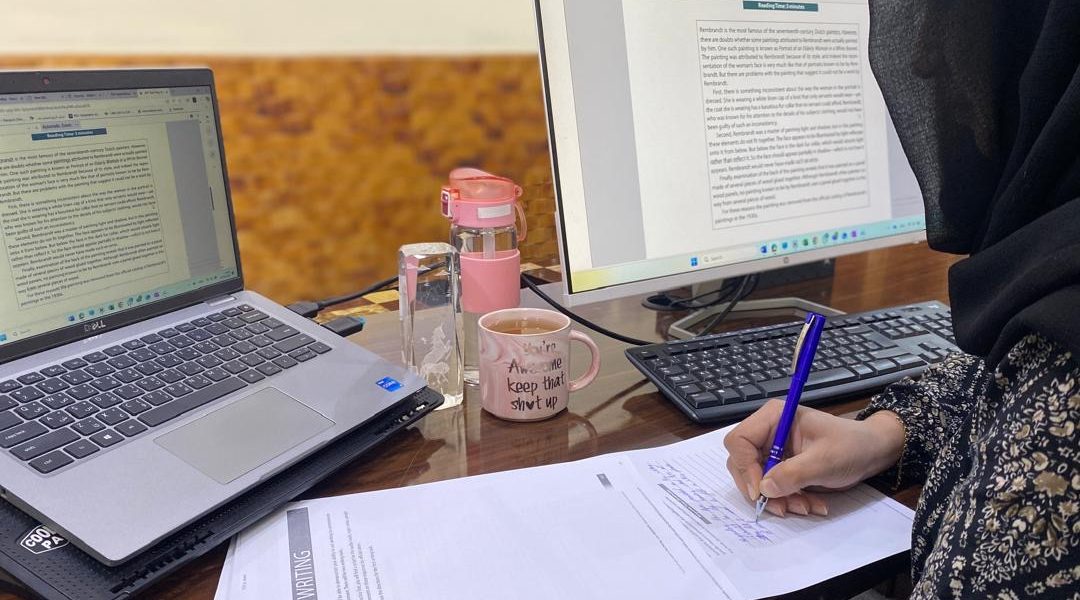
I have watched young women achieve what many believed was impossible. When universities closed, they turned their bedrooms and living rooms into digital classrooms. Through online learning, e-books, and other forms of self-directed education, they have created new pathways to continue learning. Despite limited internet access, the high cost of data, frequent electricity outages, and the constant fear of surveillance, these women continue to log on to platforms such as WhatsApp, Telegram, Google Meet, and Zoom to pursue their education.
They study in secret. They prepare for rigorous English language proficiency tests and apply to dozens of highly competitive universities. Against all odds and after years of unwavering determination, some secure fully funded scholarships to institutions around the world.
You would think that receiving a scholarship is the finish line. Instead, for many young Afghan women, it is often the beginning of a heartbreaking new obstacle.
Because foreign embassies no longer process visas inside Afghanistan, scholarship recipients must travel to a third country for visa interviews, biometrics, and other consular requirements. Yet many cannot even begin that journey. They are often unable to travel alone from Afghanistan, even after receiving a visa, and Traditional transit routes through neighboring countries such as Pakistan and Iran have also become increasingly difficult. Across the region, Afghan travelers face changing entry and visa requirements, difficulties obtaining visas, border closures, security concerns, and periods of conflict or instability. These conditions can change quickly, leaving students with very few safe and practical routes to reach a consular appointment.
The financial burden of this extra step is overwhelming. With most Afghan families already living below the poverty line, the cost of obtaining transit visas, international flights, and long-term accommodation is simply beyond their means.
I see this struggle firsthand. I know families who have sold household belongings or borrowed heavily just to afford a journey to Pakistan, Iran, and Tajikistan for a visa interview. For them, a scholarship is a hard-won dream. But it is brutal to watch these brilliant students get stuck at the very end, not because they lack talent or drive, but simply because they cannot afford to reach an embassy.
If these women can find the courage to study in secret under the constant threat of surveillance, we must find the will to meet them halfway.
It starts with universities giving these students more time and flexible deadlines so they don’t lose their admission while waiting for paperwork. Scholarship programs must also include travel and visa costs in their funding, because a fully funded spot is useless if you cannot afford to claim it. Governments need to simplify visa processes and create safe pathways for these scholars. And for anyone reading this: we can raise our voices, share their stories, and help raise travel funds to cover these hidden costs.
This is about more than just a few academic opportunities. It is about making sure Afghanistan does not lose its next generation of leaders. These women have already done the hardest part by studying in secret and winning their scholarships. It is up to us to make sure the door is actually open when they arrive.
References:
[1] UNESCO, Banned from Education: A Review of the Right to Education in Afghanistan (Paris: UNESCO, 2025), accessed July 27, 2026, https://www.unesco.org/en/articles/banned-education-review-right-education-afghanistan. [2] Elena Ortiz et al., Women, Peace, and Security Index 2023/24: Tracking Sustainable Peace through Inclusion, Justice, and Security for Women (Washington, DC: Georgetown Institute for Women, Peace and Security and PRIO Centre on Gender, Peace and Security, 2023), accessed July 27, 2026, https://giwps.georgetown.edu/wp-content/uploads/2023/10/WPS-Index-full-report.pdf